.svg&w=384&q=75 "Naijagoal logo")
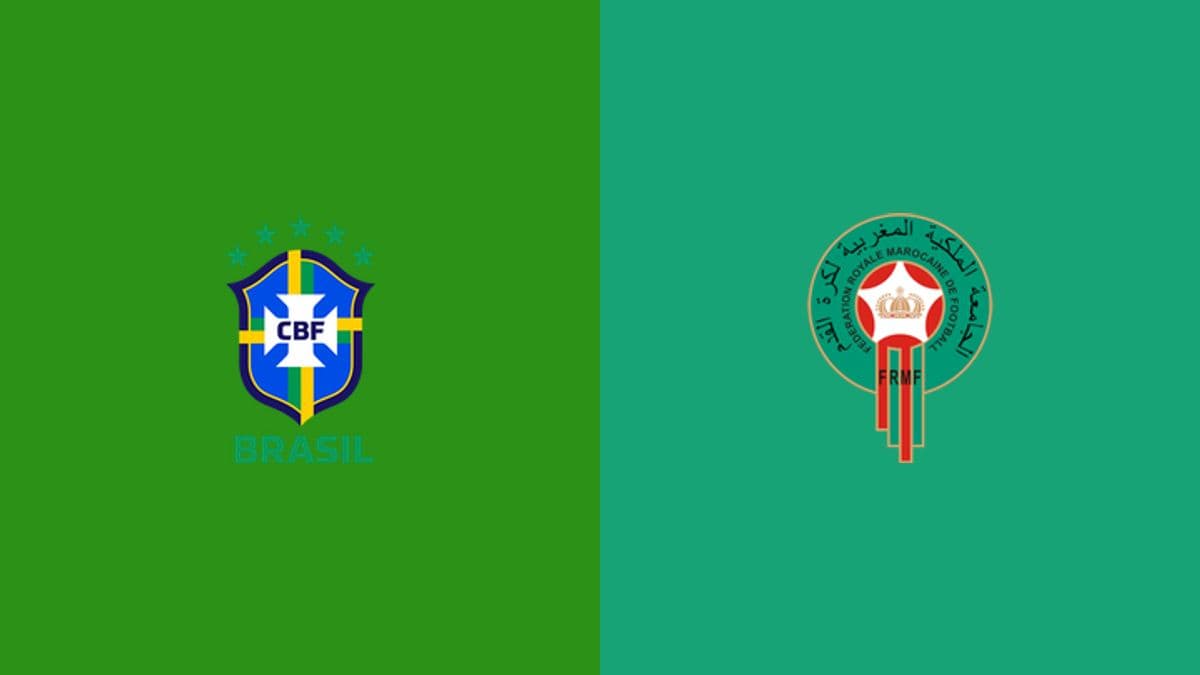

Brazil vs Morocco: World Cup 2026 Opening Clash in New Jersey
When Brazil and Morocco walk out at New York New Jersey Stadium on 13 June 2026, this will not feel like a gentle introduction to a World Cup. It will feel like a verdict.
Group C is brutal. Scotland lurk with their heavyweight reputation, Haiti bring chaos and energy, and any slip on matchday one risks turning the rest of the group into a knife-edge scramble. So the opening whistle in East Rutherford is not just ceremony; it is a starting gun for two nations carrying very different kinds of pressure.
Brazil: a giant searching for its edge
Brazil arrive in North America with their aura dented but not destroyed. Their qualifying campaign through CONMEBOL was messy, disjointed and, at times, alarming. A 4-1 humiliation against Argentina under previous management did more than bruise pride; it forced a rethink of what the Seleção should look like in the modern game.
The answer, or at least the gamble, came in the shape of Carlo Ancelotti.
The Italian, one of the most decorated managers in football history, stepped into a national team job for the first time and into a country that treats the World Cup like a birthright. He inherited a side stuck in fourth place on 21 points, short on conviction and long on questions. By the end of qualifying, Brazil had steadied themselves into fifth, just enough to secure automatic passage and preserve their perfect record of World Cup appearances.
It was not a triumphant march. It was a salvage operation. Now comes the attempt at redemption.
Ancelotti’s Brazil is built on a 4-2-3-1 that snaps quickly into a vertical, counter-attacking machine. He wants the ball won, then played forward, not sideways. Midfielders are instructed to punch passes through lines, not caress them around them. His full-backs push high, his attackers roam, and the double pivot behind them must hold the entire structure together.
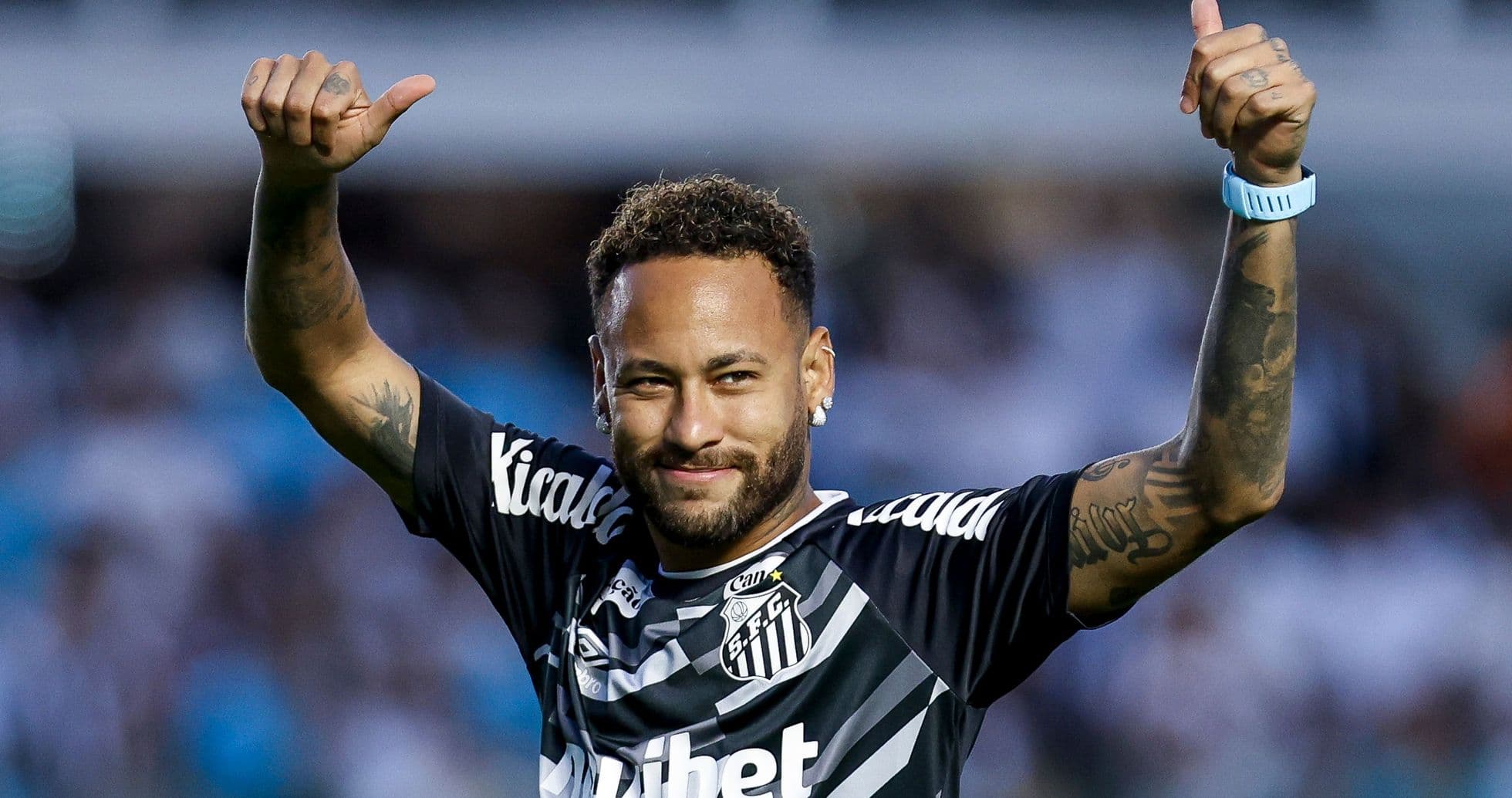
The great unknown is Neymar Jr.
The talisman returns to the World Cup after a two-and-a-half-year absence from the international stage, but he does so under a cloud of doubt. A minor muscle edema picked up with Santos has forced Brazil’s medical team into careful management. Ancelotti has kept him with the group, protecting him for the later stages if needed, but the opening game may come too soon for him to shoulder the full creative burden.
So the keys, at least for now, pass to Vinicius Junior and Raphinha.
Vinicius, the Real Madrid superstar, arrives with Ballon d'Or talk swirling around him and a reputation as one of the most devastating one-on-one attackers in the sport. Raphinha, reborn at Barcelona, has been singled out by Ancelotti as the world’s finest weapon at attacking deep space. The Italian has hinted at a flexible, advanced role for him, almost as a space-hunting midfielder operating on the edge of the defensive line.
Behind them, Marquinhos, a Champions League finalist, wears the armband and anchors the back line alongside Arsenal’s Gabriel Magalhães. Brazil’s defensive stability will depend heavily on that pairing holding firm while the rest of the side races forward.
Morocco: from fairytale to full-on contender
On the other side of the halfway line stands a team that no longer sees itself as an underdog.
Morocco’s run to fourth place at Qatar 2022 changed the way the football world looked at them. Their qualification for 2026 confirmed that the shift was no illusion. In CAF qualifying, they turned Group E into a personal showcase, winning all eight of their matches. No slip-ups, no jitters, just ruthless control.
Walid Regragui, the architect of that World Cup fairytale, built a team defined by defensive discipline and emotional cohesion. He then chose to walk away in March 2026, stepping down to “allow for the team’s natural evolution” and leaving behind a group that no longer flinches at the sight of big names.
Into the void stepped Mohamed Ouahbi.
Fast-tracked from the U-20s after leading Morocco to a global youth title in 2025, Ouahbi arrives with a reputation for bold ideas and a fearless embrace of youth. He inherits an elite, fully tuned squad and, crucially, one with no significant injury concerns after a confident 2-1 warm-up win over Kosovo.
Ouahbi respects the compact, low-block identity that made Morocco such a nightmare to break down in 2022, but he is not content to simply absorb and counter. His Morocco want the ball. They press second balls with a highly athletic three-man midfield, then overload the flanks with full-backs and inverted wingers combining at speed. The shape is more expansive, the intent more vertical.
The squad reflects that blend of continuity and evolution. Achraf Hakimi remains the structural pillar at right-back, the reference point in both defence and attack. Around him, a familiar core returns, but Ouahbi has also pulled through teenage talents from his U-20 triumph, including Othmane Maamma and Yassir Zabiri. Both are expected to start on the bench, but their energy and fearlessness could become vital late in games.
The squads in full
Brazil’s 26-man group underlines their depth and star power:
- Goalkeepers: Alisson, Ederson, Weverton
- Defenders: Alex Sandro, Bremer, Danilo, Douglas Santos, Gabriel Magalhães, Roger Ibañez, Léo Pereira, Marquinhos, Wesley
- Midfielders: Bruno Guimarães, Casemiro, Danilo Santos, Fabinho, Lucas Paquetá
- Attackers: Endrick, Gabriel Martinelli, Igor Thiago, Luiz Henrique, Matheus Cunha, Neymar Junior, Raphinha, Rayan, Vinicius Junior
Morocco’s roster, meanwhile, showcases a blend of hardened internationals and emerging quality:
- Goalkeepers: Yassine Bounou, Munir El Kajoui, Ahmed Reda Tagnaouti
- Defenders: Noussair Mazraoui, Anass Salah-Eddine, Youssef Belammari, Achraf Hakimi, Zakaria El Ouahdi, Nayef Aguerd, Chadi Riad, Redouane Halhal, Issa Diop
- Midfielders: Samir El Mourabet, Ayyoub Bouaddi, Neil El Aynaoui, Sofyan Amrabat, Azzedine Ounahi, Bilal El Khannouss, Ismael Saibari
- Attackers: Abde Ezzalzouli, Chemsdine Talbi, Soufiane Rahimi, Ayoub El Kaabi, Brahim Díaz, Gessime Yassine, Ayoube Amaimouni
Tactical brains on the touchline
This is not just a clash of squads; it is a clash of managerial eras.
Ancelotti, calm and unflappable, has built his legend on man-management and structural flexibility. He gives his stars the freedom to express themselves but insists on iron discipline without the ball. His Brazil will try to hurt Morocco quickly, skipping the slow build-up that once defined the Seleção in favour of fast, vertical surges.
His biggest headache in East Rutherford will be balance. With full-backs pushing high and wide, the double pivot must protect the space in front of Marquinhos and Gabriel. Any hesitation there, any late shuffle across, and Morocco’s wide combinations can rip open the channels.
Ouahbi, 49 and Belgium-born, stands at the opposite end of the managerial spectrum: a rising coach unafraid to rip up a script mid-game. His teams play with energy and intent, happy to hold the ball, but ruthless when it is time to break lines. He leans on a three-man midfield to swarm loose balls and then uses his full-backs and inverted wingers to attack from the outside in.
He has not abandoned Morocco’s defensive roots. He has simply added more risk, more ambition, and more ways to hurt opponents.
Where the game will be won
Three duels tower over the rest.
Down one flank, Vinicius Junior versus Achraf Hakimi is pure box office. Vinicius wants isolation, space, and the chance to drive at a defender with the world watching. Hakimi is one of the few full-backs on the planet with the pace, strength and tactical reading to stay with him stride for stride. Whoever edges this battle will tilt the entire geometry of Group C.
Inside, Raphinha’s positioning becomes a problem Morocco must solve. Ancelotti wants him close to the defensive line, slipping into pockets where he can receive on the half-turn and release runners. The responsibility to shut that down falls heavily on Sofyan Amrabat and the Moroccan midfield block. If they allow Raphinha to receive cleanly between the lines, Brazil’s attack will start to hum.
At the other end, Gabriel Magalhães against Youssef En-Nesyri promises a bruising contest in the box. En-Nesyri thrives on crosses, constant movement and relentless pressing of centre-backs. Gabriel must dominate his territory in the air and on the ground, especially at set pieces. One lost duel, one mistimed jump, and Morocco will pounce.
A pressure cooker under the lights
By the time the floodlights fully bite into the New Jersey night, the stakes will be obvious to everyone inside the stadium. Brazil chase validation for a new era under their first high-profile foreign manager in decades. Morocco chase confirmation that 2022 was not a one-off miracle but the beginning of something far more permanent.
One side seeks redemption. The other seeks elevation.
In a group this unforgiving, three points in East Rutherford will feel like gold. The question is simple, and the answer will echo through the rest of the tournament: who handles the heat of the opening night better, the five-time champions or the Atlas Lions who no longer fear anyone?