.svg&w=384&q=75 "Naijagoal logo")

Boavista: A Celtic Foe's Fall from Grace
Boavista are gone. Not relegated. Not rebuilding. Extinct. A club that once stood between Celtic and a European final has been wiped from Portuguese professional football by the one opponent no side can outplay: debt.
A court order delivered on 16 July 2026 instructed Boavista to cease all activities by 31 July and hand over their premises, drawing a brutal line under more than a century of history. Years of financial mismanagement and unpaid obligations finally caught up with the Porto club that once dared to break Portugal’s old order.
For Celtic supporters, the name Boavista still triggers sharp, vivid memories.
From Hoops and Numbers to Heroes in Lisbon
The first meeting came in 1975, in the Cup Winners’ Cup. It was a different era. Different shirts, different stakes, but the same Celtic Park roar.
Celtic went to Porto first and ground out a 0-0 draw, the kind of European away result that sets the stage rather than steals the headlines. The real drama arrived a fortnight later in Glasgow.
On 5 November 1975, under the lights at Celtic Park, the Hoops won 3–1 to take the tie 3–1 on aggregate. Kenny Dalglish, Shuggie Edvaldsson and Dixie Deans all found the net, names that still carry weight in the club’s folklore. That night had another quiet milestone: it was the first time Celtic had worn squad numbers on the back of those famous green-and-white hoops.
Boavista left Glasgow beaten but respected. They would be back.
Larsson, Lisbon and a Semi-Final That Still Stings
Most Celtic fans, though, think of Boavista and jump straight to 2003.
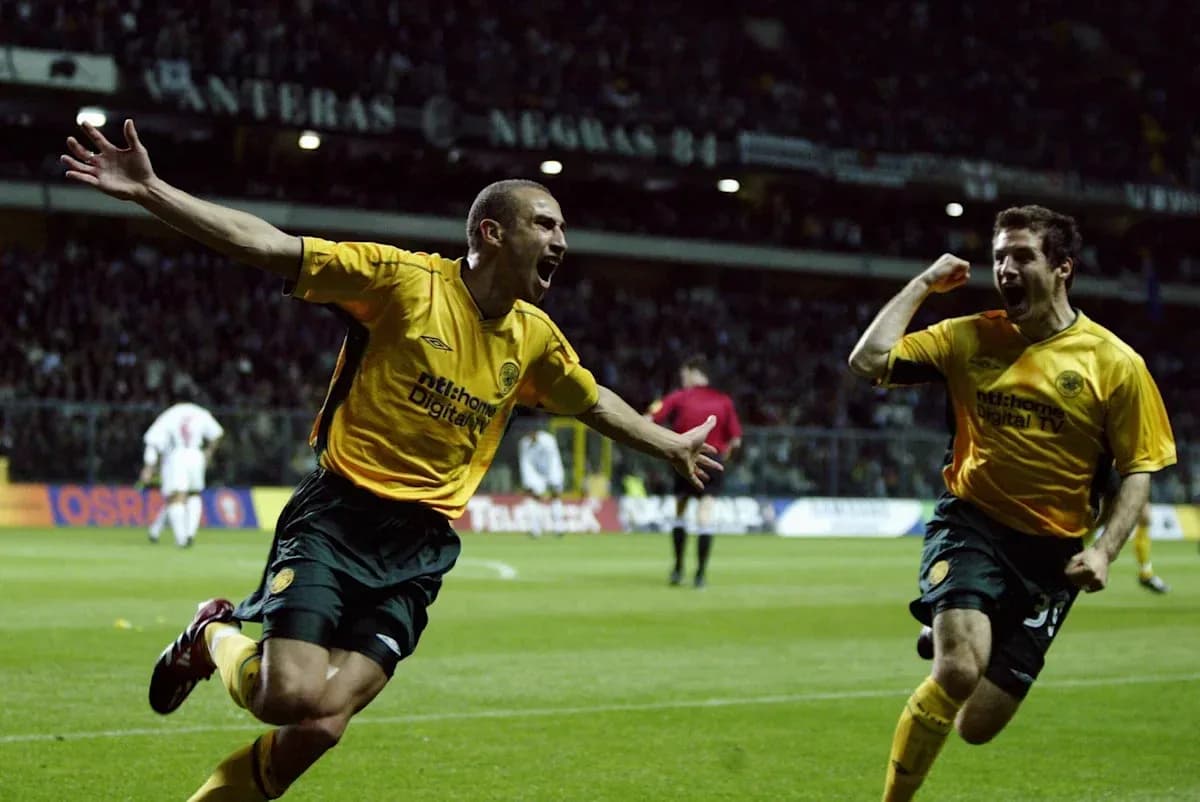
Martin O’Neill’s Celtic were on a charge through Europe, a team with a spine of iron and a talisman in Henrik Larsson. The UEFA Cup semi-final brought Boavista to Celtic Park again, this time with a place in a major European final on the line.
The first leg in Glasgow finished 1-1. Larsson scored the equaliser, as he so often did when Celtic needed him most, keeping the tie alive and the dream intact.
Two weeks later in Porto, at the Bessa Stadium, the tension was suffocating. Boavista, organised and awkward, tried to smother Celtic’s rhythm. One goal would settle it. One moment.
It belonged, inevitably, to Larsson. He struck in the second leg to secure a 1-0 win on the night and a 2-1 aggregate victory. Celtic were heading to a European final in Seville, against Boavista’s city rivals Porto. The final itself still carries a bitter taste for many in green and white, but the semi-final remains a cherished chapter, and Boavista were central to it.
The Club That Broke the Old Order
Boavista were never just a supporting act in someone else’s story. Founded in 1903, they carved out their own place in Portuguese football.
They won nine major honours, the peak coming in 2001 when they stunned the country by lifting the Primeira Liga title. In doing so, they became the first – and still the only – club outside Benfica, Porto and Sporting Lisbon to be crowned champions of Portugal. For a time, they stood as proof that the so-called “big three” could be challenged and beaten over a full season.
That achievement now feels even more distant, given how far and how fast the club have fallen.
A Slow Collapse, Then the Final Blow
Boavista’s problems did not arrive overnight. Their decline has been long, messy and public.
Transfer bans crippled their ability to build a squad. The club were prohibited from signing players across five transfer windows, a punishment that spoke to the depth of their financial and regulatory issues. When the restriction finally lifted, Boavista lurched in the opposite direction, signing nine players in a single day in February 2025. It looked less like strategy and more like desperation.
On the pitch, the slide continued. In the 2024/25 season, Boavista finished bottom and were relegated after a 4–1 defeat away to Arouca on the final day. The result sparked a pitch invasion from some of the 2,000 travelling fans, a raw, emotional reaction from a support watching their club crumble.
Relegation usually offers a chance to reset. Boavista never got it. The Portuguese league authority barred them from playing in Liga Portugal 2, handing a reprieve to relegated side Oliveirense. It was another door slammed shut.
The blows kept coming. In 2025, Boavista were refused registration for both the third tier and the fourth-tier Campeonato de Portugal. To stay alive in some form, there was a change of company structure, and the badge reappeared in the Liga Pro, the new elite competition run by the Porto Football Association.
The “club” itself tried to field a team in the fourth division of the district leagues. It was a stripped-back, survival move, a nod to tradition more than a serious sporting project. Failing to show up for games led to defeats by default. By the end of October, that team had withdrawn from competition altogether.
The legal and financial noose tightened. The insolvency process, tied to unpaid debts to creditors despite earlier attempts at restructuring, left Boavista with nowhere to turn. The court order in July 2026 simply made official what many had feared: the Boavista that once battled Celtic in Europe and stunned Portugal at home no longer had a place in the professional game.
A Name, a Memory, and a Question
Boavista did not lose a final match. They lost a fight with the balance sheet. They failed to pay what they owed, and the system swallowed them.
For Celtic fans, the club’s disappearance carries a strange echo. The black-and-white chequered shirts were part of some of the most intense European nights in modern memory. Larsson wheeling away in Porto. Dalglish, Edvaldsson and Deans scoring at Celtic Park. A name on old ticket stubs, on TV captions, in match programmes – now consigned to history.
Could there one day be a “The Boavista FC”, a reborn version rising from the ashes under a slightly altered name? Portuguese football has seen reinventions before. Supporters’ groups have already tried to keep the flame alive at lower levels.
For now, though, the reality is stark. The champions of 2001, the semi-final opponents of 2003, the club that once broke the Lisbon-Porto duopoly, have been ordered to switch off the lights and walk away.
In an era when financial fair play, ownership models and sustainability dominate the conversation, Boavista’s fate hangs in the air as a warning. Who will be the next club to discover that history, passion and famous nights in Europe are no defence when the numbers stop adding up?