.svg&w=384&q=75 "Naijagoal logo")

A Beautiful Obsession: Guardiola's Struggles at Manchester City
Pep Guardiola has never looked so raw on screen. Not in the polished Manchester City documentaries, not in the title parades, not even in those carefully manicured post-match dissections.
In A Beautiful Obsession, Amazon’s four-part series charting the final two seasons of his Manchester City reign, the gloss is stripped away. What’s left is a manager in freefall, a club rattled to its core, and a cold reminder that even the most sophisticated “machine built for winning” can grind and splutter when real life tears through the dressing-room door.
The winter when City broke
The heart of the series is the brutal, joyless winter of 2024-25. Nine defeats, one win, 13 games that shredded an aura built over a decade. City, the side that had made relentlessness an art form, suddenly looked ordinary. Worse, they looked lost.
This is not a soft-focus retelling controlled by the club to protect reputations. City filmed it, City signed off on it, but they do not hide. The decision to jettison Kevin De Bruyne, the greatest player in the club’s modern history, is not airbrushed. Nor is Khaldoon al-Mubarak’s fury at Guardiola’s baffling choice to change 10 players for a Champions League tie at home to Bayer Leverkusen – a 2-0 defeat that left the chairman so angry he admits he could not even speak to his manager.
The cameras stay close as Guardiola searches for answers and finds none. They stay closer still when the story stops being about tactics and starts being about a man whose life is coming apart.
“I’m fucking divorced…”
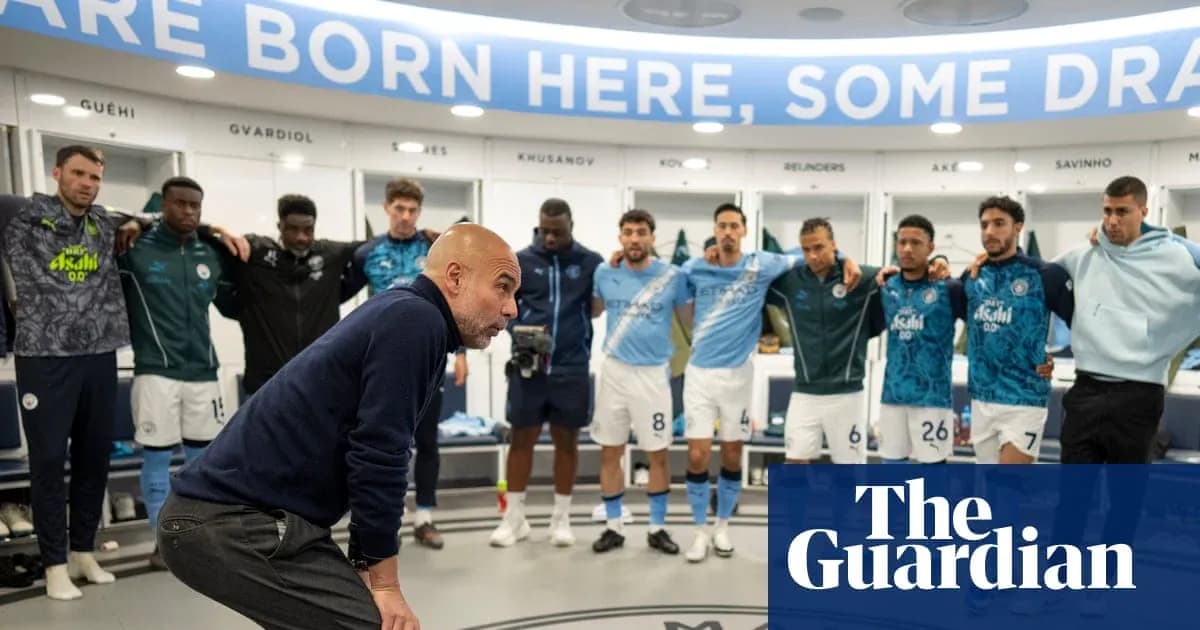
The most startling moment arrives after a 2-0 defeat by Juventus on 11 December 2024, City’s seventh loss in 10 games. In a bid to jolt his team out of their slump, Guardiola reaches for something deeply personal – and drags it into the middle of the dressing room.
“I’m fucking divorced from the most beautiful woman on your planet,” he tells his players. “I love her unbelievably, but we lost the passion. How do you play football, because you are paid? Or because of something inside? Where is the passion?”
It is a remarkable choice. Guardiola has every right to speak about his private life. Yet the moment lands awkwardly, almost painfully. This is a manager who has run out of traditional motivational tools, now crossing a line between the professional and the personal that risks making him look exposed rather than inspirational.
Later he spells out what he believes a No 1 must be: someone who can convince his players to “go to the penthouse, the roof and jump down” for him. In this context, the confession feels like a desperate attempt to reclaim that kind of devotion.
A year on, after those infamous 10 changes against Leverkusen, he returns to the same theme. “I leave my life, my divorce and my family is away, and everything for all of you. And what do you give back?” he demands. The plea sounds less like a rallying cry and more like a man asking if the sacrifices have been worth it.
A human being, not just a coach
The documentary leans into that vulnerability. In episode two, The Rebuild, Guardiola’s long-time confidant Manuel Estiarte, City’s director of first-team operations, reveals he took it upon himself to tell the players about the divorce.
“I said to the team: ‘Please, you have to understand, you’re not playing with a coach who can be a bit impulsive, intense, sometimes a bit up and down. You’re seeing a human being. He’s getting a divorce,’” Estiarte recalls. It was, he says, necessary for the players to see Guardiola “for the first time as a human being”.
The admission raises uncomfortable questions. Why did Guardiola not deliver this himself, if the aim was to connect? And behind the scenes, did Khaldoon and chief executive Ferran Soriano ever sit down and ask whether the manager’s private turmoil was undermining his work?
The series cuts sharply from this to a lighter, almost jarringly upbeat Guardiola. “In my life I made a lot of changes – I got divorced and I have to settle a bit. But no complaints at all honestly,” he says, before clarifying where his happiness lies. “In my job, yeah.” The stress on that last word lingers.
Interpersonal relationships run through the documentary like a thread. Episode three is titled Love and Hugs for a reason. This is Guardiola the emotional conductor, trying to manage not just a squad but a fragile ecosystem of loyalty, trust and ego.
Kyle Walker walks away
The fractures show most clearly in The Desert, the opening episode. Guardiola is close to tears as he addresses the squad after Kyle Walker’s departure in January 2025, right when City need their captain most.
Walker, he says, did not behave like a leader. He then turns on the rest of the dressing room. They voted for him as captain. Why did no one pin him to the wall and demand more? Why did no one fight to keep him on board when the ship was listing?
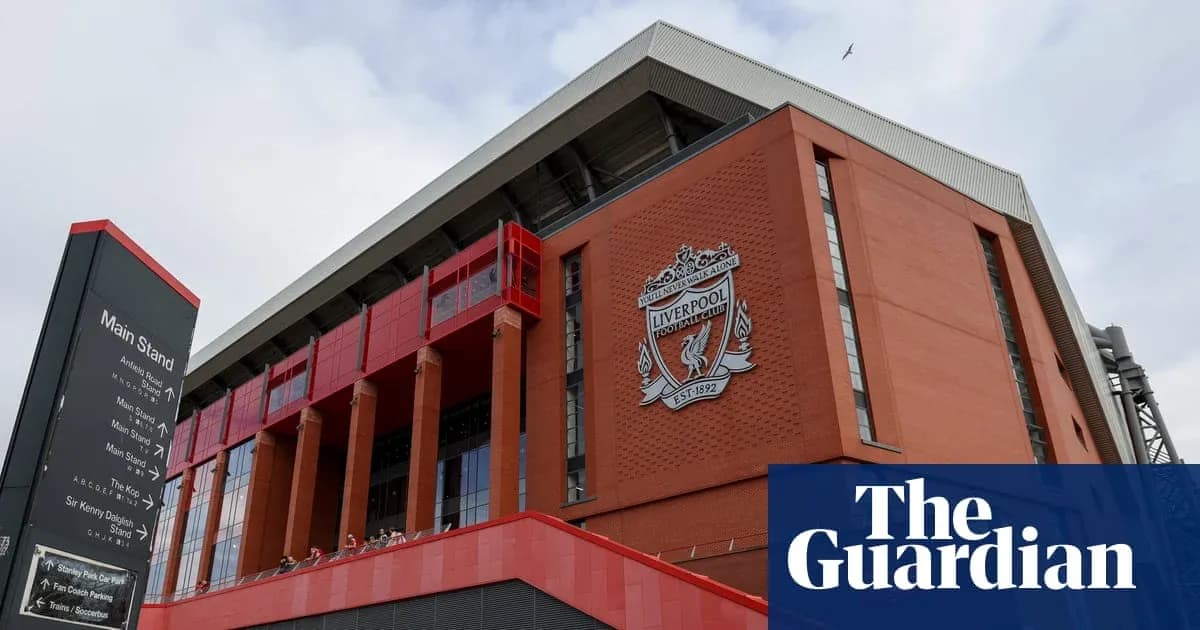
The scene that triggers Walker’s exit is shot with real cinematic flair. In the Anfield dressing room, after Walker’s mistake leads to Luis Díaz winning a penalty converted by Mohamed Salah in a 2-0 defeat, Guardiola calls it out. Walker snaps back, insisting the blame is thrown at him “every meeting”.
The confrontation ends with Guardiola in tears, not raging but pleading. He reminds them that he signed a new contract only 11 days earlier, right in the middle of the disastrous run, because he wanted to fight. The camera frames him delivering a kind of soliloquy on commitment and love, while Walker sits in the same shot, silent, absorbing the weight of it.
“If captains first, then the other ones, for example [feel] that there’s a problem, tell me,” Guardiola says. “It’s not going to change the love I have for all of you. I’m sorry.” It is regret, confession and farewell all rolled into one scene.
Saying goodbye to ‘Super Kev’
Episode two opens with more regret. Kevin De Bruyne, the symbol of City’s rise, is not offered a new contract. Soriano reminds Khaldoon that “Kevin gets the respect he deserves as the greatest player in the modern history of City”, but the decision has already been made. The machine moves on.
Guardiola reveals that “Super Kev” broke down in his office. He also admits there had to be a “coldness” in deciding to let him go. The cameras then find De Bruyne in tears when asked what he will miss most. “My kids don’t want to go,” he says.
The moment strips away the usual armour of elite sport. Behind the numbers and medals are people with roots, families, children who do not care about amortisation or wage structures. The series keeps returning to that point: the game is built on emotion, not just data and diagrams. The bonds that fuel success are the same ones that make departures so brutal.
Calling out the manager
The honesty does not stop with players. Guardiola’s most controversial decision – those 10 changes for the Leverkusen tie in November 2025 – is taken apart on camera by his own bosses.
“Our attitude with Pep Guardiola should not be too negative. But it shouldn’t be too kind or accommodating either. This is his mistake this time,” Soriano says. It is measured, but pointed.
Khaldoon goes further. “To pick an entire new [outfield] team in a game this important is probably one of the lowest points we’ve had. I can’t speak to him – I’m so angry.”
For a club that has often been accused of controlling the narrative, the willingness to show this level of internal criticism is striking. The manager who once felt untouchable is suddenly very human: fallible, questioned, and, for a spell, plainly wrong.
Nothing is eternal
By the time the fourth episode, Nothing Is Eternal, winds towards its conclusion, the storm has eased. City are not the all-conquering juggernaut of old, but they are not broken either. They lift the Carabao Cup and the FA Cup, pushing Guardiola’s haul to 20 trophies in a decade, Community Shields included. They finish second in the league. The rebuild, at least on the surface, is complete.
The farewell is warm, respectful, earned. Guardiola gets the send-off a manager of his impact deserves. Yet the series has already made its point. The cost of sustaining that level of excellence is immense. It drains marriages, warps relationships, and turns legends such as De Bruyne into assets to be “offloaded” when the numbers no longer add up.
“Life should not just be about football. It’s too much to be honest,” Guardiola says as the curtain falls on his City career.
After watching him unravel and rebuild under the harshest lights, it is hard to argue. The real question is how many of those still inside the machine will dare to believe him.