.svg&w=384&q=75 "Naijagoal logo")

Barcelona's Striker Dilemma: Gyokeres, Espi, or Guirassy?
Barcelona went into the summer with a clear attacking fantasy: Julian Alvarez leading the line at Montjuïc, then at a rebuilt Camp Nou. One name, one idea, one plan.
Reality has hit harder.
Atletico Madrid have shut the door on any serious move for Alvarez, refusing to entertain negotiations. The alternative, Eli Junior Kroupi, has slipped away too. Bournemouth have made their stance bluntly clear: not for sale. His metatarsal injury, which will keep him out for three to four months, only underlines the point. That option is gone.
So Barcelona stand at a familiar crossroads. No dream signing, limited budget, huge expectations. They need a striker, but they cannot afford a mistake. Not this summer.
Three names still make sense – for very different reasons.
Viktor Gyokeres: The instant-impact heavyweight
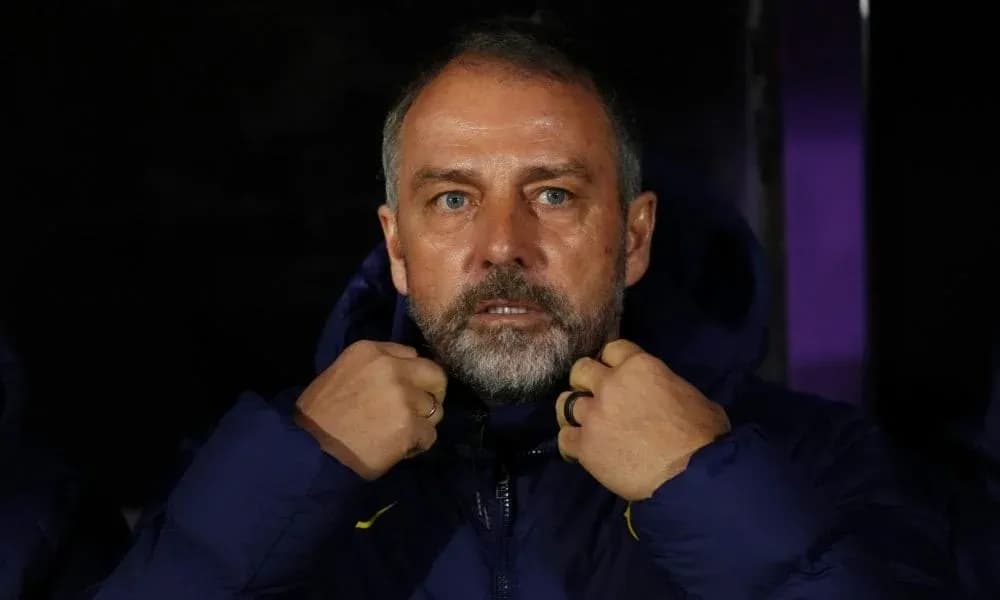
If Hansi Flick wants a striker who can walk straight into the XI and change the temperature of the attack from day one, Viktor Gyokeres is the obvious candidate.
The Swedish international has grown into one of Europe’s most complete centre-forwards. He scores, he runs, he presses, he bullies defenders. He doesn’t just finish moves, he starts them, carrying the ball at pace, attacking space, dragging backlines into places they don’t want to go.
He is not a static No. 9. Gyokeres drifts wide, links play, creates for others. In an aggressive, front-foot system, he becomes the reference point and the chaos agent at the same time. For Flick, who wants intensity and verticality, that profile fits almost perfectly.
The catch is obvious and expensive. At 28, Gyokeres is already in his prime. Barcelona would be buying the finished product, not a long-term project. His fee would be huge, his salary among the highest for any striker on the market. There is no resale play here, just a bet on the present.
But if the club truly believe they can compete for the Champions League right now, there are very few forwards who would raise the ceiling of this team as quickly as Gyokeres.
Carlos Espi: The long game
At the other end of the scale sits Carlos Espi, the type of signing Barcelona used to pride themselves on making before the rest of Europe woke up.
He is 21, Spanish, mobile, technically sharp, and still nowhere near his ceiling. This would not be the signing that “fixes” the No. 9 position in August. It would be the signing that might look like a bargain in three years.
Espi represents a strategic bet. Secure one of Spain’s most promising attacking talents now, before the market explodes around him. Let him grow, adapt, and learn in an environment that still values technical forwards.
But the risks are as clear as the upside. Young strikers almost never arrive at Barcelona and dominate from the start. The demands are unforgiving, the scrutiny constant. He would need patience, a clear development plan, and probably a limited role in his first season.
That would mean starting the campaign with Ferran Torres as the main forward and Espi learning behind him, not the other way around. It’s a structure that only works if the club genuinely commits to his progression, rather than panicking the moment goals dry up.
If Barcelona believe in Espi as a potential long-term No. 9, he should be treated as an investment, not a quick fix.
Serhou Guirassy: The pragmatic solution
Some names don’t light up social media but solve football problems. Serhou Guirassy belongs firmly in that category.
The Guinea international is a proven goalscorer, especially inside the penalty area. He offers smart movement, solid link-up play and the kind of physical presence that forces centre-backs into duels they don’t enjoy.
Barcelona’s current squad lacks exactly that sort of profile. Against deep blocks, when the intricate passing stalls and the spaces shrink, a striker who can occupy defenders, win duels, and finish ruthlessly in the box becomes invaluable.
Guirassy would likely cost significantly less than Gyokeres while still arriving with Champions League experience and a record that shows he knows where the goal is.
The issue is time. At 30, he is not the future of Barcelona’s attack. His resale value would be limited, and within a few years the club would be back in the market for another long-term solution.
But not every signing has to carry a decade of planning on its shoulders. Sometimes a team needs a reliable, short-to-medium-term answer who guarantees goals and buys time for the next big project.
What kind of Barcelona do they want to be?
This decision is less about names and more about identity.
Gyokeres is the statement move, the win-now striker who would instantly reshape the frontline and send a message across Europe.
Espi is the calculated gamble, the developmental bet on a player who could grow into Barcelona’s No. 9 for the next ten years if handled correctly.
Guirassy is the middle path: proven, affordable, short-term, but immediately useful in the areas where Barcelona often struggle.
If Julian Alvarez and Eli Junior Kroupi are truly off the table, the temptation will be to sign “someone” simply because the squad needs a striker. That is how mistakes happen.
The real question for Barcelona is sharper than that: are they building for this season’s Champions League, for the next era of their attack, or for a bridge between the two?