.svg&w=384&q=75 "Naijagoal logo")


Aston Villa vs Fenerbahçe: Champions League Clash at Villa Park
Under the floodlights of Villa Park in Birmingham on 14 October 2026, Aston Villa step into the UEFA Champions League spotlight against a Fenerbahçe side that already carries the swagger of recent European success. For Villa, this League Stage clash is about announcing themselves in a new era of continental football on home soil. For Fenerbahçe, it is a chance to build on strong early momentum and prove that their Europa League exploits were no one-off.
Season Context
Aston Villa arrive in the League Phase as something of an unknown quantity in this Champions League campaign. The standings show them 3rd in the overall League Phase table with 0 games played, 0 goals scored and 0 conceded, and therefore 0 points. There is no early form line to read, only expectation and pressure from a fanbase eager to see Villa Park become a European fortress again.
Fenerbahçe, ranked 11th in the League Phase, are also yet to kick a ball in this Champions League season according to the standings: 0 matches played, 0 goals for, 0 against, 0 points. But unlike Villa, they carry the tag “Play Offs” in the standings description, underlining the belief that they belong in the knockout picture. Their recent European record suggests a team ready to translate confidence into points.
Form & Momentum
For Aston Villa, the numbers in this competition are a blank page. With 0 games, 0 goals scored and 0 conceded in the standings, any talk of form is really about potential rather than evidence. The model’s comparison data reflects this uncertainty, giving Villa no attacking edge but curiously rating their defensive index highly despite the lack of actual matches played.
Fenerbahçe, by contrast, come into this tie with a clearly defined rhythm from their recent Champions League sample outside the standings. Across 6 matches in that dataset, they have remained unbeaten with 4 wins and 2 draws, scoring 8 goals and conceding only 3. That works out to a solid attacking output of roughly 1.3 goals per game and a tight defence allowing just 0.5 per match. Their last-five record in the prediction model is equally impressive, with 7 goals scored and only 3 conceded over that stretch, underlining a side that is both efficient in front of goal and hard to break down.
The comparison model leans heavily towards Fenerbahçe in terms of recent form and attacking strength, where they dominate the indices, while Aston Villa are effectively starting from zero. Yet the defensive comparison surprisingly tilts towards Villa, suggesting that if the hosts can channel their domestic organisation into Europe, this could become a cagey, low-scoring contest.
Head-to-Head Patterns
There is only one competitive reference point between these two clubs, but it is a significant one. On 22 January 2026, in the UEFA Europa League (season 2025), Aston Villa travelled to Istanbul and beat Fenerbahçe 1-0 at Chobani Stadium. The scoreline read 0-1 (UEFA Europa League, season 2025, January 2026), with Villa as the away side and Fenerbahçe at home. That result feeds directly into the prediction model’s head-to-head index, which leans entirely towards Villa, reflecting that solitary but telling victory.
While one match is too small a sample to define a full pattern, it does offer a psychological edge: Villa know they can win in hostile surroundings against this opponent. For Fenerbahçe, that night in Istanbul is a reminder of the fine margins at this level; despite their broader strong form, they were shut out and beaten in front of their own fans.
Tactical Preview
Aston Villa’s tactical identity in this Champions League campaign is still to be written, with no formation data recorded yet. However, the squad list hints at a side built for flexibility. At the back, experienced defenders like Pau Torres, Tyrone Mings, Victor Lindelöf and Matty Cash give Villa the option of a back four that can both defend deep and step into midfield. In the centre of the pitch, the presence of Leon Goretzka, Boubacar Kamara, João Gomes and John McGinn suggests a powerful, hard-running core capable of controlling transitions and pressing aggressively.
In attack, Villa have variety: Tammy Abraham as a classic focal point, supported by wide threats such as Leon Bailey and Alejandro Garnacho, plus the mobility of N. Jackson. That mix lends itself to a direct, vertical style, using pace on the flanks and late runs from midfield. Given the prediction model’s expectation of under 2.5 goals, Villa may look to keep their structure compact, trust their defensive organisation and strike on the counter, especially with home support behind them.
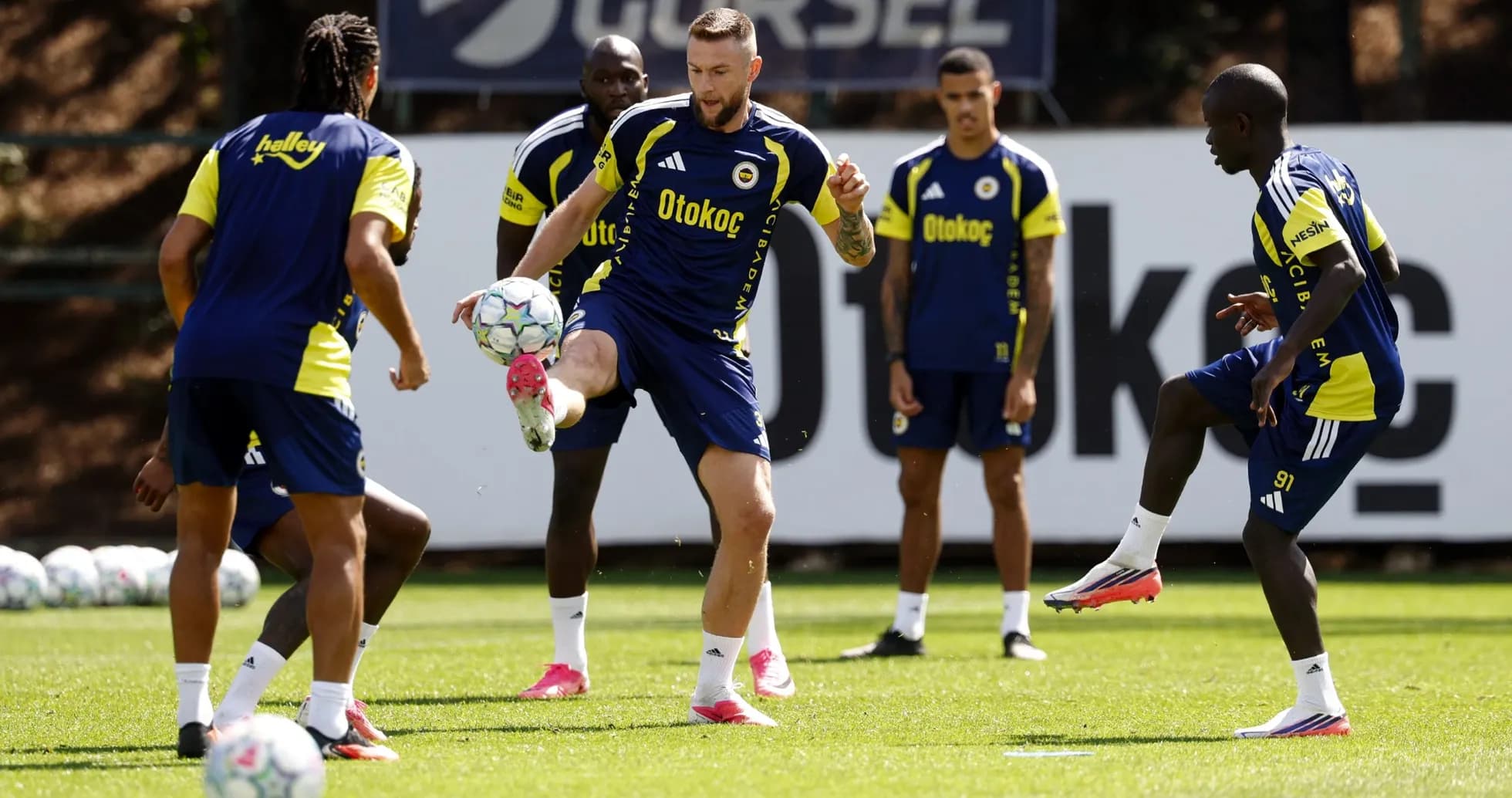
Fenerbahçe, by contrast, arrive with a clearly defined system. Their most-used shape in Champions League play is a 4-2-3-1, deployed in all 6 matches in the team statistics sample. This structure has yielded 8 goals scored and only 3 conceded, with 3 clean sheets and no failures to score, underlining a balanced side that can control matches while remaining dangerous. The double pivot is anchored by elite ball-winners and distributors such as N. Kanté and M. Guendouzi, giving the back four strong protection and a platform to build attacks.
Further forward, the creative and scoring burden is spread among high-impact players. Talisca has been one of the standout performers in this Champions League campaign, scoring 4 goals in 6 appearances and taking 23 shots, 13 of them on target, making him a constant long-range and set-piece threat. M. Greenwood adds 2 goals and 1 assist from 6 appearances, combining efficient finishing (5 shots on target from 8 attempts) with intelligent link play. On the flanks, K. Aktürkoğlu has delivered 2 assists and 12 key passes, offering both penetration and chance creation from wide areas.
Fenerbahçe’s 4-2-3-1 is likely to see them dominate territory and possession phases, using their double pivot to recycle the ball and their three attacking midfielders to overload half-spaces. Villa’s task will be to disrupt that rhythm, deny Talisca time between the lines and prevent Greenwood from receiving in dangerous pockets. Set pieces could be decisive, with both sides boasting aerial power in Abraham, Romelu Lukaku, Vedat Muriqi and Pau Torres.
Statistical Snapshot
- Competition: UEFA Champions League, season 2026 — 14 October 2026.
- Venue: Villa Park, Birmingham.
- Prediction: Win or draw for Aston Villa — Combo Double chance : Aston Villa or draw and -2.5 goals.
- Win Probabilities: Home 50% / Draw 50% / Away 0%.
- Model: Aston Villa 0 — Fenerbahçe 0.
Betting Verdict
The prediction model leans heavily towards Aston Villa avoiding defeat, with a 50% chance assigned to a home win and 50% to a draw, and effectively no probability given to a Fenerbahçe victory. That stance is built on Villa’s recent head-to-head success in Istanbul and the expectation that their defensive structure at Villa Park can stifle Fenerbahçe’s otherwise impressive attack (8 goals scored and only 3 conceded in 6 Champions League matches). The recommended angle — Aston Villa or draw combined with under 2.5 goals — fits the statistical picture of a tight contest, with Fenerbahçe’s low-scoring, controlled games and Villa’s likely cautious approach in their first League Stage home outing. In narrative terms, this feels like a night where Villa’s solidity and the Villa Park atmosphere can neutralise Fenerbahçe’s momentum, producing a narrow home win or a hard-fought draw in a low-scoring encounter.