.svg&w=384&q=75 "Naijagoal logo")

Ashley Young's Journey: From Football Stardom to Hip Replacement
Ashley Young spent 23 years outrunning problems. This summer, one finally caught him.
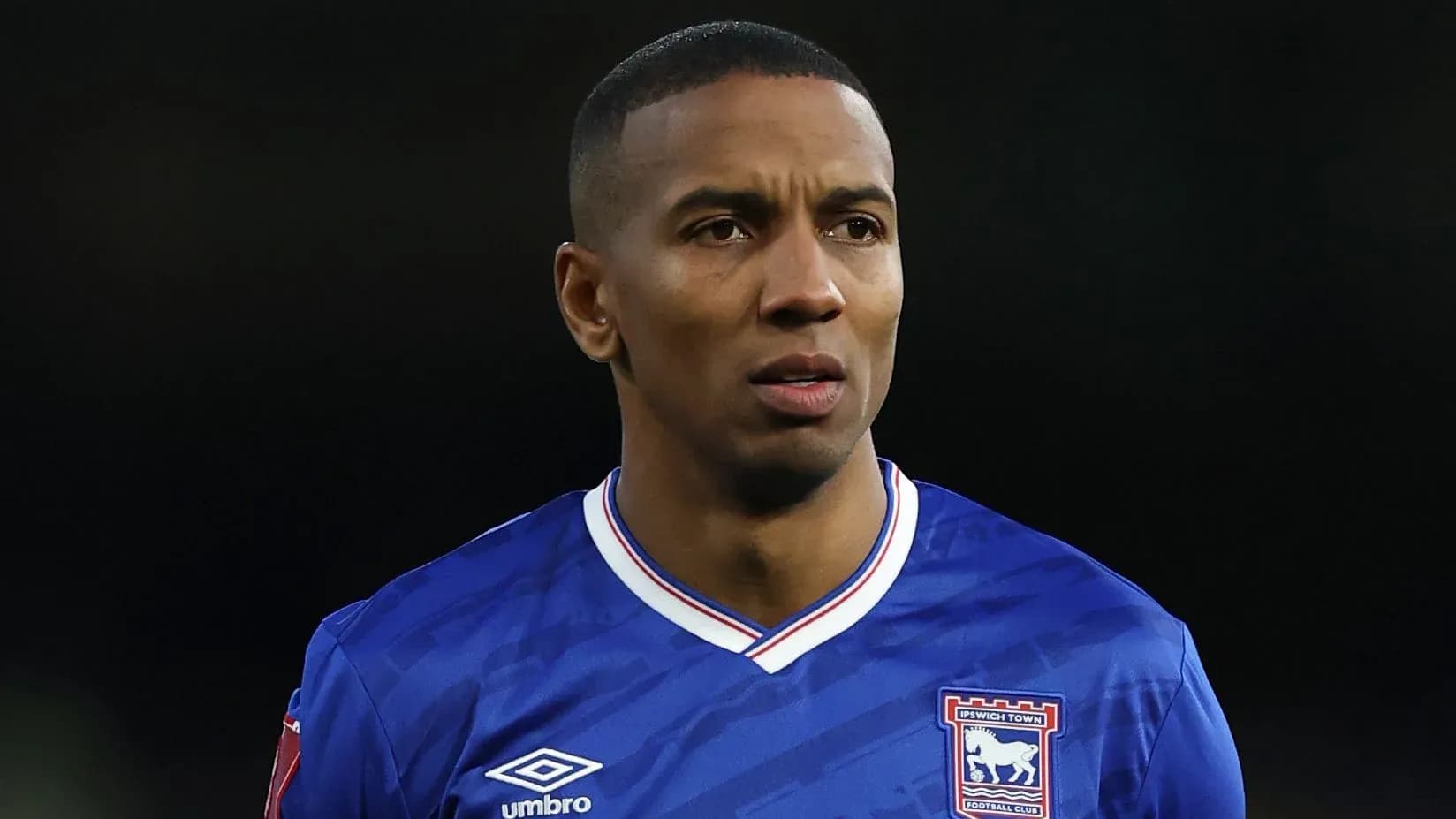
The former Manchester United and England stalwart has revealed he now needs a hip replacement, a brutal reality check arriving just weeks after he officially called time on a career that spanned more than two decades and ended with Ipswich Town’s fairytale return to the Premier League.
At 41, Young walked away on his own terms. Or so it seemed. The truth, as he laid bare on the High Performance Podcast, is that his body had already delivered the verdict.
“Basically, I need a hip replacement”
The turning point came last November.
“I went down on my hip in November and had an injection,” Young explained. For a player who built his reputation on durability and relentless standards, that moment cut deeper than any tackle. “I have always said to myself: ‘If my body is saying you need injections, there is a problem, you need to think about retiring.’”
Doctors told him then that a hip replacement was likely in about 10 years’ time. A distant problem, or so he hoped. He pushed the thought away and focused on the season in front of him.
By January, he was due another injection, one that would, in theory, drag him through to May. His mindset never wavered.
“I know it is painful, but I want to make sure I do everything I can possibly do to help the team,” he told the specialist.
This was Ipswich Town, a club charging back towards the top flight, and Young had signed on not for a farewell tour, but to contribute. Fifteen appearances across all competitions, a presence in a young dressing room, a promotion charge building pace. He was determined to squeeze out every last minute.
Then came the session that changed everything.
The day everything worsened
About a week before that second injection, during what should have been a routine training day, Young went down on the same hip again.
“About a week before I am about to have the injection, I go down on it in training and I am like ‘this is worse, I know it is a lot worse’,” he recalled.
The pain didn’t just spike. It stayed. It spread. It shut him down.
From January onwards, Young’s reality was stark. “From January to the end of the season, I literally had two or three months where I couldn't train it was that painful,” he said.
For a player who had built a career on work ethic, on fitness, on being available, that was torture. The body that had carried him through Watford, Aston Villa, Manchester United, Inter Milan and Everton was now refusing to cooperate.
Yet he refused to let the injury write his final chapter.
“I’m not going out like this”
Young went back to the specialist, not to surrender, but to challenge the diagnosis head-on.
“I saw the specialist again and said ‘I'm not going out like this’,” he revealed. Then came the question no footballer ever wants to ask, but many eventually must: is this it?
“I asked him ‘are you telling me I can't play football again, you can say it if you want, trust me if I get an opportunity to be back on the pitch, I'll be back on the pitch’.”
That stubborn streak, the same one that helped him reinvent himself from winger to full-back at the highest level, kicked in again. Even as the pain dictated his every step, he clung to the hope of one more appearance, one more run out, one more contribution on the pitch.
He never got that final cameo. Not in the way he’d imagined. But he refused to disappear into the background.
Leading from the shadows
While the hip limited his movement, it never silenced his voice.
Young may not have featured in Ipswich’s final match, but he drew pride from what he still gave the club away from the cameras – on the training pitch, in the dressing room, in the daily standards of a squad chasing something special.
“The last two months of the season I was training every day and he was like ‘it is not possible, you shouldn't be training’,” Young said of the specialist’s reaction.
He trained anyway. He pushed through the pain barrier, not out of denial, but out of a refusal to let his career end in a medical room. For a veteran surrounded by a group writing their own story, it mattered that he stayed in the fight.
“It would have been incredible to come onto the pitch for the last game of the season,” he admitted. It didn’t happen. No sentimental late substitution, no choreographed farewell.
What he did have was something different, something he clearly values just as much: the knowledge that he had emptied the tank.
“For me to train like I did that week and for us to be promoted on the last day of the season, it was fitting.”
No lap of honour, no grandstand finish. Just a promotion, a promotion he helped shape, and a brutally honest admission that his body has finally cashed in the debt of 23 relentless years.
Ashley Young will now face a hip replacement. He has already faced up to the end of his playing days. The question that lingers is not what he has left to give as a footballer, but what that same unshakeable mentality will drive him to do next.