.svg&w=384&q=75 "Naijagoal logo")

Arsenal's Tactical Masterclass: 3-0 Victory Over Coventry
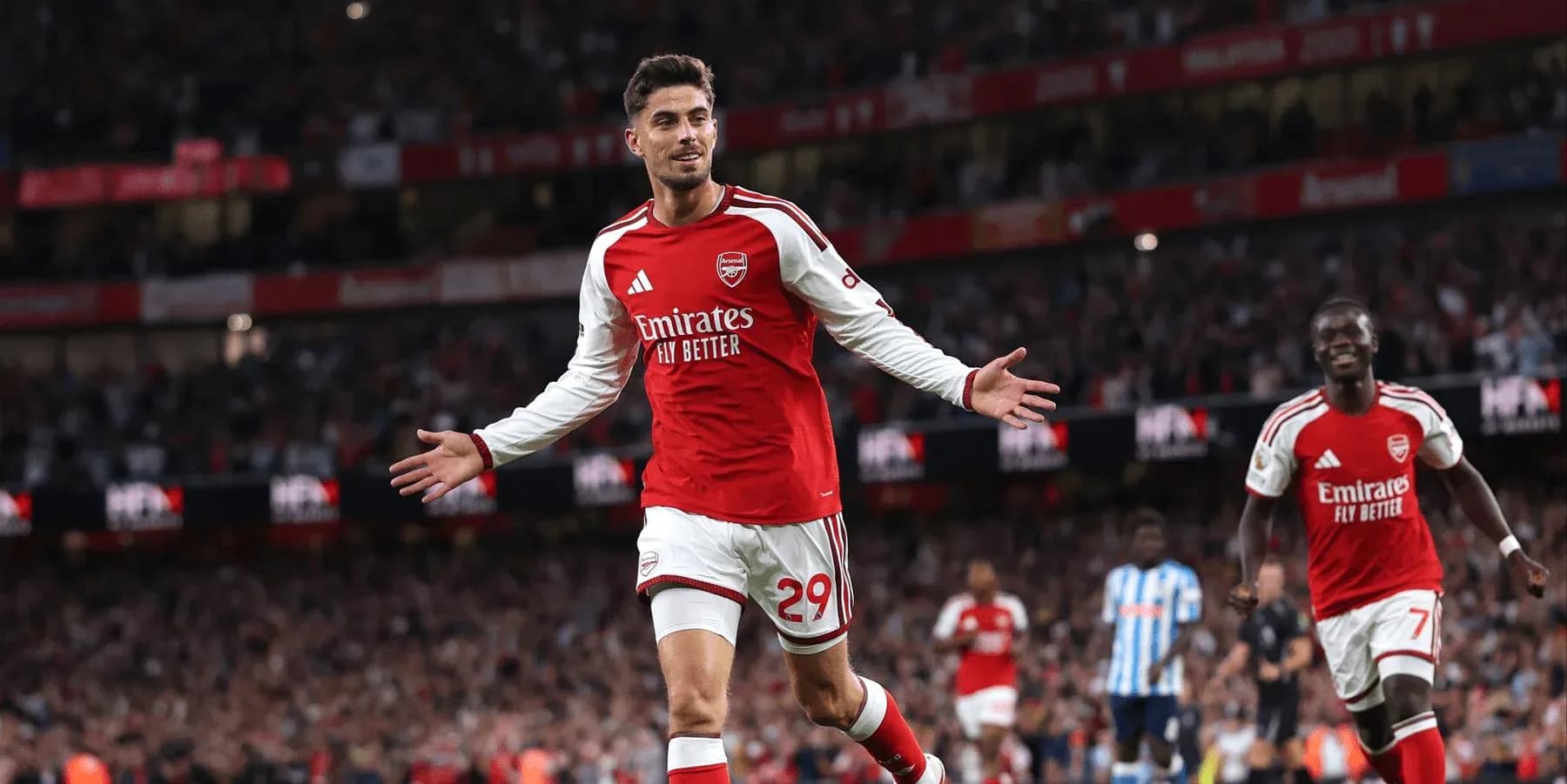
Under the Friday night lights at the Emirates Stadium, Arsenal opened their 2026 Premier League campaign with a 3–0 dismantling of Coventry that felt less like an early‑season tune‑up and more like a tactical manifesto. By full time, the scoreline, the structure, and the statistics all aligned: Arsenal, now 2nd in the table with 3 points and a goal difference of 3 (3 scored, 0 conceded), looked every inch a Champions League contender; Coventry, 19th with 0 points and a goal difference of -3 (0 for, 3 against), were given a stark introduction to the demands of this level.
I. The Big Picture – Structure and Intent
Mikel Arteta set Arsenal up in a 4-2-3-1 that was anything but static. On paper, David Raya sat behind a back four of Ben White, C. Mosquera, Gabriel and Riccardo Calafiori, with Declan Rice and Myles Lewis‑Skelly as the double pivot. Ahead of them, Bukayo Saka, Martin Ødegaard and Christos Tzolis supported Kai Havertz as the lone forward.
In practice, it became a suffocating positional web. White stepped high and narrow, often forming a three with Mosquera and Gabriel in possession, while Calafiori pushed on to create width on the left. Rice anchored the structure, allowing Lewis‑Skelly to step into advanced pockets and connect with Ødegaard between the lines.
Heading into this game, Arsenal’s season numbers were necessarily minimal but emphatic: in total this campaign they had played 1 match, won 1, scored 3 and conceded 0. At home, the picture was identical: 1 played, 1 win, 3 goals for, 0 against, an average of 3.0 goals scored and 0.0 conceded. This match was that data point – and it looked sustainable rather than accidental.
Coventry, under Frank Lampard, lined up in a 4-1-4-1, with C. Rushworth in goal, a back four of Milan van Ewijk, B. Thomas, A. Amenda and Jay Dasilva, and Matt Grimes sitting as the single pivot. Ahead of him, L. Tchaouna, Caleb Marfo Yirenkyi, Frank Onyeka and Brandon Thomas‑Asante flanked Ellis Simms. The idea was clear: a compact middle five to clog Arsenal’s central lanes, with Simms as an outlet.
Yet by the end of their first Premier League outing, Coventry’s total campaign stats told their own story: 1 match played in total, 1 defeat, 0 goals scored, 3 conceded. On their travels, they had played 1, lost 1, with an average of 0.0 goals scored and 3.0 conceded. Their biggest defeat, away, was already 3–0 – this very night in north London.
II. Tactical Voids – Absences and Discipline
Both managers had to navigate key absences. Arsenal were without Bruno Guimaraes (thigh injury), W. Saliba (back injury) and J. Timber (ankle injury) – a trio that, on another day, could form the spine of a title‑chasing side. In their absence, Mosquera’s composure and Calafiori’s dual role as defender and playmaker became even more important. Gabriel, who later entered the disciplinary charts with a yellow card, had to lead a reconfigured back line.
Coventry’s own missing pieces mattered just as much. L. Woolfenden was unavailable through injury, removing a potential organiser at the back, while Haji Wright’s muscle injury deprived Lampard of a powerful forward option who might have relieved pressure and stretched Arsenal’s high line.
Discipline further shaped the narrative. Arsenal’s season card profile shows a single yellow arriving in the 31–45 minute window, and in this match it belonged to Gabriel. It was a reminder that even in control, Arsenal’s aggressive front‑foot defending walks a fine line. Coventry’s yellow card distribution shows their caution arriving earlier, between 16–30 minutes, with Caleb Marfo Yirenkyi cautioned – a symptom of a midfield straining to slow Arsenal’s rotations and tempo.
No red cards were shown, and with both sides yet to take a penalty this season – and none missed – there was no set‑piece drama to tilt the balance. This was decided in open play and structure.
III. Key Matchups – Hunter vs Shield, Engine Room Battles
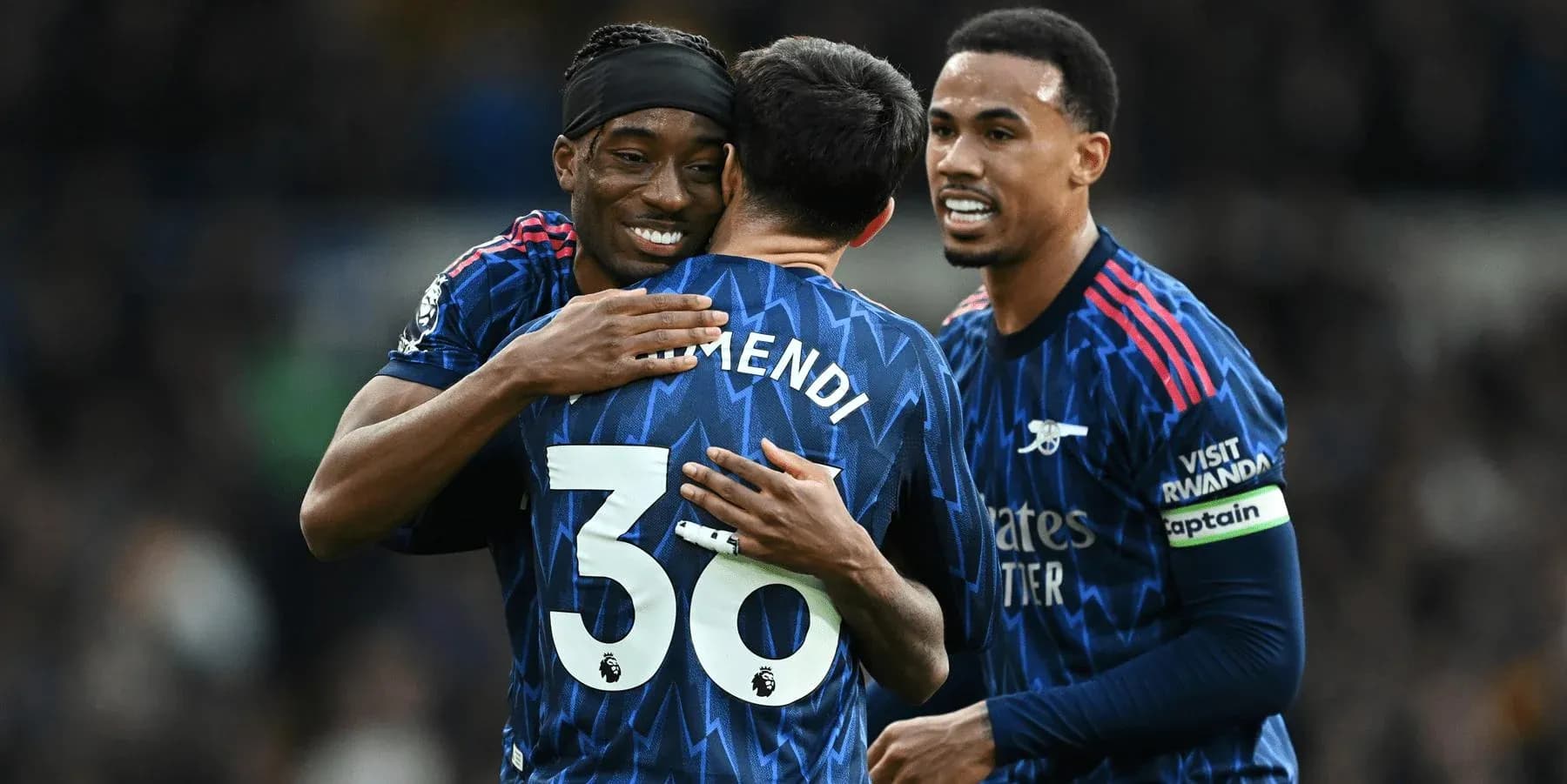
The “Hunter vs Shield” duel played out between Arsenal’s attacking quartet and Coventry’s defensive block. Saka, already among the league’s top scorers with 1 goal from 1 appearance, needed only a single shot on target to make his mark. His 34 passes at 88% accuracy and 2 key passes underlined his dual threat: finisher and creator. Up against Dasilva and the right‑sided centre‑back pairing, his constant inside‑out movement forced Coventry’s line to compress, opening channels for Havertz.
Havertz, also on 1 goal this campaign, was the reference point that Coventry never quite solved. With 25 passes at 80% accuracy, 1 key pass and 10 duels contested (5 won), he acted as a back‑to‑goal pivot and a late‑arriving runner. When Coventry’s back four tried to hold their shape, he dropped into the pockets between Grimes and the centre‑backs; when they stepped out, he spun in behind.
Behind them, Ødegaard orchestrated. One of the league’s early standouts with a rating of 8.5 from his first appearance, he completed 56 passes at 92% accuracy, with 3 key passes and 3 tackles. He was both conductor and counter‑presser, repeatedly smothering Coventry’s attempts to play through Grimes. Every time Coventry tried to build, Ødegaard and Lewis‑Skelly closed the funnel, forcing rushed clearances towards Simms that Mosquera and Gabriel could attack.
On the flanks, White’s presence in the top assist charts – 1 assist from 78 passes at 94% accuracy – illustrated Arsenal’s asymmetry. With Saka high and wide, White underlapped and recycled, pinning Coventry’s left side deep. Calafiori mirrored that influence on the left, also with 1 assist and 24 passes at 83% accuracy, stepping into midfield and helping Arsenal overload Yirenkyi and Onyeka.
For Coventry, the most telling individual story belonged to Yirenkyi. His 62 minutes yielded 13 passes at 76% accuracy, 3 duels (1 won) and 2 fouls committed alongside that early yellow. It was the portrait of a young midfielder overwhelmed by the speed and precision of Arsenal’s rotations, forced into reactive defending rather than proactive pressing.
IV. Statistical Prognosis – What This Match Says About Both Squads
Following this result, the numbers sketch a brutally clear contrast. Arsenal’s total campaign averages sit at 3.0 goals scored and 0.0 conceded, with 1 clean sheet in 1 match and no failures to score. Coventry, in total, have failed to score in their only outing and conceded 3, with no clean sheets and an away record that already looks fragile.
Without explicit xG data, we lean on patterns of control and chance quality. Arsenal’s shot efficiency – Saka, Ødegaard and Havertz all scoring from their only efforts on target – will regress, but the underlying structure is built to keep producing high‑value chances: full‑backs contributing assists, a dominant creative hub in Ødegaard, and a centre‑forward comfortable in traffic.
Defensively, even with Saliba absent, Arsenal’s zero goals against in total and at home reflects more than Coventry’s tepid attack. The pressing from the front, Rice’s screening, and the distribution of passing responsibility across White and Calafiori suggest a side that will spend most of its season defending high and briefly, rather than deep and often.
For Coventry, the prognosis is more cautious. Their 4-1-4-1 can, in theory, offer stability, but Grimes was overloaded, and the wide midfielders spent too long chasing shadows. With 0.0 goals scored on their travels and 3.0 conceded in total so far, Lampard must quickly re‑balance the side: either by adding another body close to Grimes in build‑up or by committing more aggressively to transitions through Tchaouna and Thomas‑Asante.
In narrative terms, this night at the Emirates felt like two seasons being written at different speeds. Arsenal’s squad, even with key absences, looked deep, choreographed and ruthless. Coventry’s looked earnest but under‑tooled for the level of precision they faced. If this match is a reliable early chapter, Arsenal’s campaign will be measured in how long they can sustain this structural dominance; Coventry’s in how quickly they can adapt before the numbers harden into destiny.