.svg&w=384&q=75 "Naijagoal logo")

Arsenal Faces Doubtful Future Against Manchester City in Community Shield
Arsenal have spent the summer being asked the same question in a dozen different ways: what happens after the dream comes true?
They waited 22 years for their 14th league title. They finished runners-up three seasons in a row, living with the strain of chasing a machine in sky blue, before finally lifting the Premier League trophy in May. The cost was obvious. Declan Rice looked drained at the World Cup. Bukayo Saka flickered rather than burned. William Saliba came back with a back injury. The legs were heavy, but so were the hearts.
Now comes the hangover check.
The early weeks after a World Cup usually wobble a little. Players return at different speeds, managers juggle minutes and conditioning, and results swing wildly. This time, the landscape feels even more unstable. Nine of the 20 Premier League clubs have changed manager. For the first time in 40 years, none of the defining figures of the modern era – Sir Alex Ferguson, Arsène Wenger, José Mourinho, Jürgen Klopp or Pep Guardiola – will stand in a Premier League technical area.
The era of the giants is over. What replaces it is anyone’s guess.
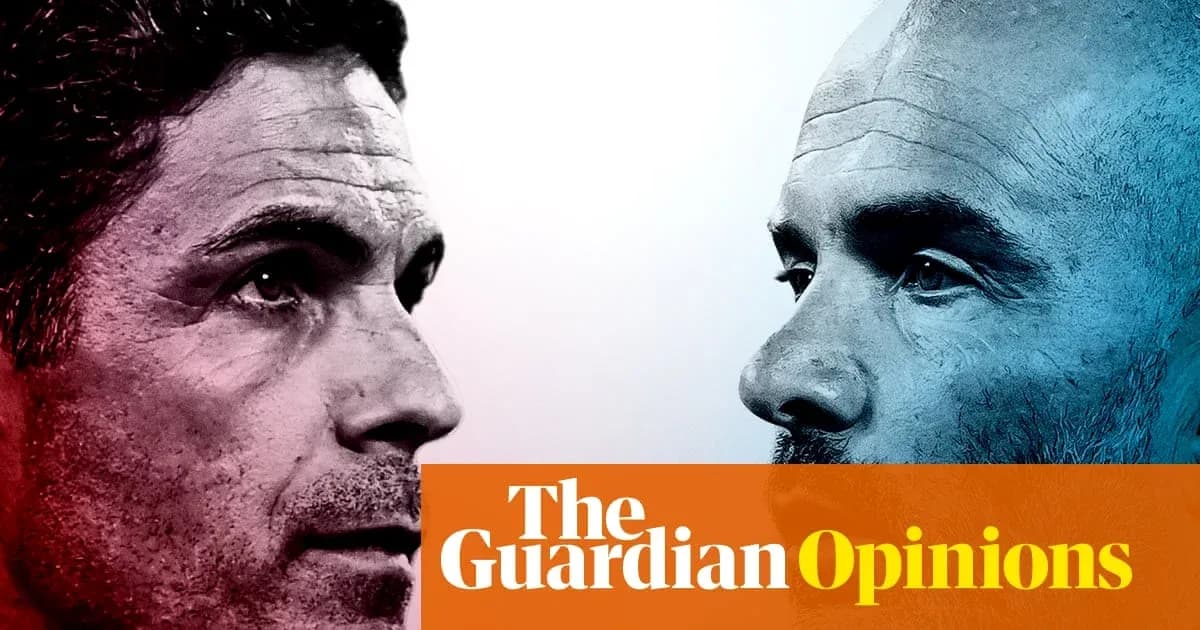
Even at Arsenal, supposedly the picture of continuity, there are unknowns. Mikel Arteta is now the league’s longest-serving manager, which sounds reassuring, but there is no guarantee his side will roar out of the blocks again. Title defences are rarely smooth. Emotional peaks are followed by dips. A slow start would surprise nobody.
On the other side of Sunday’s Community Shield at Wembley stand Manchester City, a club adjusting to something they have barely known in a decade: doubt.
City’s last two seasons, judged by their own warped standards, were underwhelming. No title, no Champions League, no sense of inevitability. Now Guardiola has gone after 10 years, and in his place stands Enzo Maresca, a coach whose CV is decorated but whose reputation remains contested.
He looks a little like Guardiola. His football looks like a version of Guardiola’s too, especially from that spell when he served as his assistant. He led Leicester to promotion. He lifted the Europa Conference League and Club World Cup with Chelsea. Yet Leicester and Chelsea fans were never entirely sold on the style. The football could feel rigid, the risk-reward equation skewed. Chelsea’s squad was a puzzle, and it only fell further apart after he left, but it was never obvious he had solved it while he was there.
So both clubs arrive at Wembley with trophies in the cabinet and questions in the air.
A stage for clues, not answers
The Community Shield has always been a strange fixture. It offers a first glimpse without offering anything like certainty. It can hint at fault lines, expose a tactical idea that isn’t quite right, or reveal a player’s unease. But it lies often enough that nobody should trust it completely.
Not since 2018 has the winner of the Community Shield gone on to win the Premier League. In that sense, it functions as an anti-bellwether. It tells you plenty about what might go wrong, less about who will end up on the town hall balcony in May.
Its true meaning often only comes into focus months later. Think back to 1974, when Kevin Keegan and Billy Bremner’s infamous scrap said something deeper about Liverpool’s adjustment to Bill Shankly’s retirement and, more significantly, about the disintegration at Leeds under Brian Clough after Don Revie’s departure. The fight looked like a flashpoint. In hindsight, it was a warning siren.
Or take 2015. José Mourinho turned up for the Community Shield in tracksuit bottoms, baggy T‑shirt, unshaven, and then lost to Wenger for the first time. Odd, but not apocalyptic. By December, he was out of a job at Chelsea and the season had imploded. The signs had been there. Few joined the dots in time.
Last season’s game, a 2-2 draw followed by Crystal Palace beating Liverpool on penalties, carried its own hints. Arne Slot’s Liverpool looked disjointed. Mohamed Salah seemed out of sync with the rest of the forward line. The defence was ragged; they conceded two equalisers. The issues were all on display. Whether anyone recognised them as lasting problems rather than pre-season rust is another matter entirely.
So Wembley on Sunday will probably whisper more than it shouts. The trick will be working out which moments matter.
Arsenal’s new pieces and old questions
There are some clear storylines around Arsenal’s selection. Bruno Guimarães, who came off the bench in the midweek friendly against Como, could feature again, likely alongside Myles Lewis-Skelly in midfield. Lewis-Skelly, 19, has been one of the revelations of pre-season, filling gaps while Rice, Martín Zubimendi and Martin Ødegaard enjoy extended breaks after the World Cup.
He has also been linked with a move away. That made his goal celebration against Como – heart sign, badge tap – feel like more than just a teenager enjoying his moment. It looked like a message, or at least an attempt to send one.
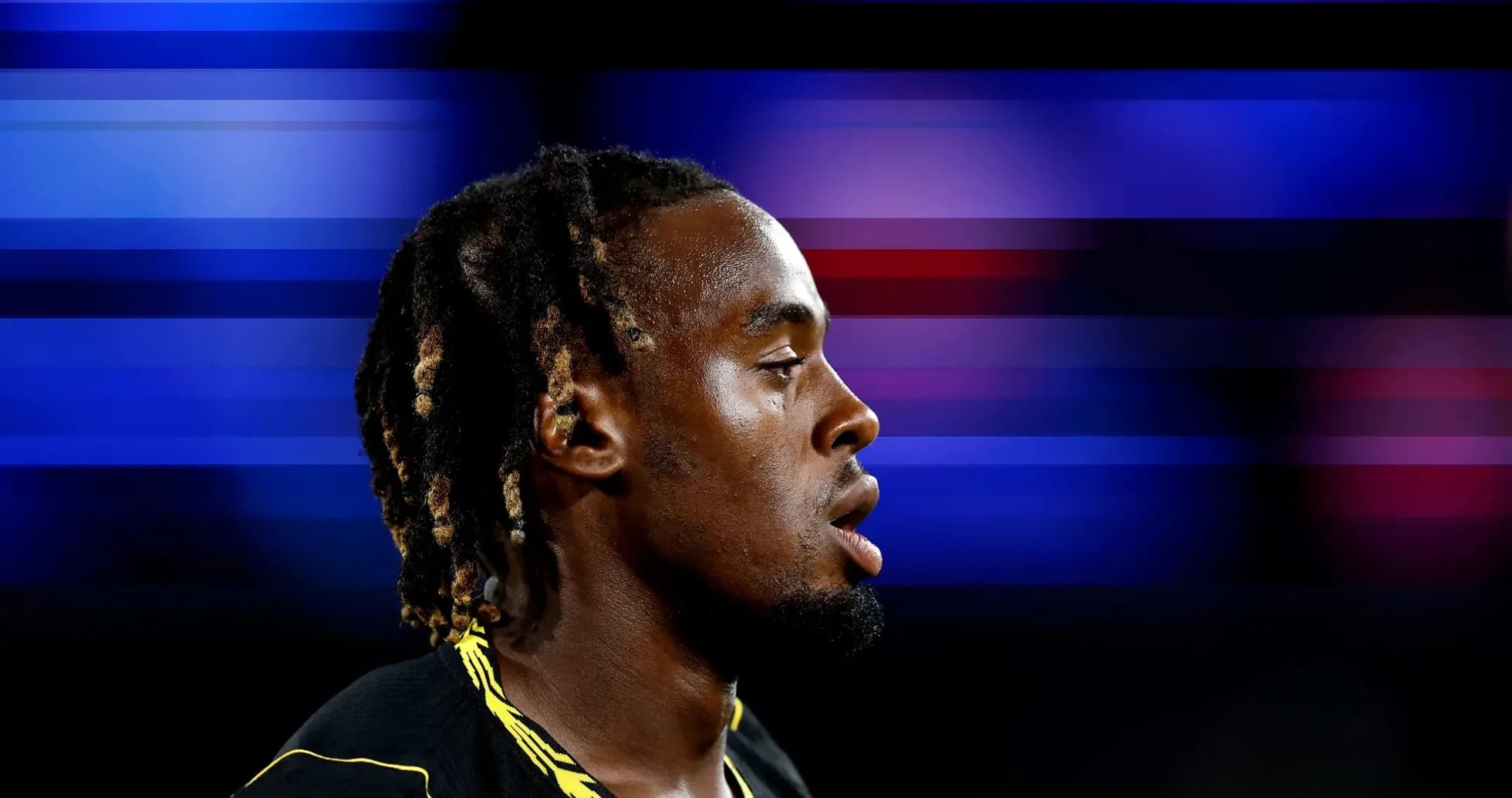
On the left of Arsenal’s attack, there is a clear vacancy. Leandro Trossard has been sold. Morgan Rogers chose Chelsea. Vinícius Júnior stayed where he was at Real Madrid. Into that space steps Christos Tzolis, the 24-year-old Greece international signed from Club Brugge.
Sunday will give a first real sense of how Tzolis fits into Arteta’s system. Does he offer enough one‑v‑one threat? Can he rotate positions with Gabriel Martinelli and Saka, or is he more of a fixed-point winger? If he looks raw or misaligned with the rest of the front line, the conclusion will be obvious: Arsenal still need another option on that flank before the window shuts.
The champions’ margin for error is smaller now. A title defence with a target on their backs, a league in flux, and a City side reshaping under a new coach – this is not the season to be short on firepower out wide.
City without Guardiola: a new midfield, a new soul
City’s most pressing issue sits in the middle of the pitch. Rodri’s proposed move to Barcelona has not yet materialised, leaving the club and player in limbo and delaying the arrival of a definitive replacement.
Enzo Fernández has emerged as the preferred candidate for that role. He brings technical assurance, passing range and press resistance, but not the same physical presence as Rodri. Whether City can protect him in the deepest midfield position, even with the signing of the more robust Elliot Anderson, is an open question.
Around that pivot, City’s midfield is being ripped up and redrawn. Tijjani Reijnders, who started pre-season friendlies against Inter and Atlético, is heading to Al-Qadsiah. Bernardo Silva has gone to Real Madrid. That is not just a tactical shift; it is a cultural one. Bernardo, like John Stones, carried a piece of Guardiola’s City in his habits, his demands, his standards.
Stones’ departure, on the face of it, looks less seismic from a football perspective. He started only 11 games over the past two seasons. Yet his absence strips away a leader in the dressing room, a voice in the huddle, a player who embodied the manager’s ideas. Remove Stones, remove Silva, remove Guardiola, and the squad’s character inevitably changes.
Somewhere inside that change lies Phil Foden’s next chapter. Since being named player of the year in 2024, he has struggled to find rhythm. The form that once felt inevitable has become patchy. He started against Inter and Atlético in pre-season, and with others still easing back after the World Cup, the coming weeks hand him a clear chance to reassert himself at the centre of this new City.
Is he the face of Maresca’s project or a holdover from the Guardiola age? The answer will shape the way City play.
A curtain-raiser with real edge
Strip away the charity ribbons and the talk of “just a friendly” and Sunday’s game carries an edge.
For Arsenal, it is a gut check on their appetite. Do they still press with the same ferocity? Do they still run like a team that has something to prove, not something to protect? Does the title feel like a starting point or a destination?
For City, it is a first look at life without the man who defined them. Maresca’s ideas will not be fully visible yet, but the broad strokes will be there: how high the line sits, how the full-backs move, who takes responsibility when the game drifts.
The temptation will be to read too much into everything – a loose pass from Fernández, a quiet outing from Tzolis, a laboured run from Rice. The truth is that this remains the Community Shield, a ceremonial marker on the road rather than a signpost to the finish.
But in a Premier League stripped of its old managerial titans and reshaped by a summer of upheaval, even a ceremonial marker feels charged. One club trying to prove it is not satisfied, the other trying to prove it is not diminished.
If this is the start of a new era, Wembley on Sunday might not tell us who will rule it. It might, though, show us who is ready to fight for it.