.svg&w=384&q=75 "Naijagoal logo")

Arsenal's Perfect Start Survives Chelsea Test
Arsenal’s perfect start to the season survived its sternest examination yet, a 2-1 win over Chelsea that said as much about their steel as their style.
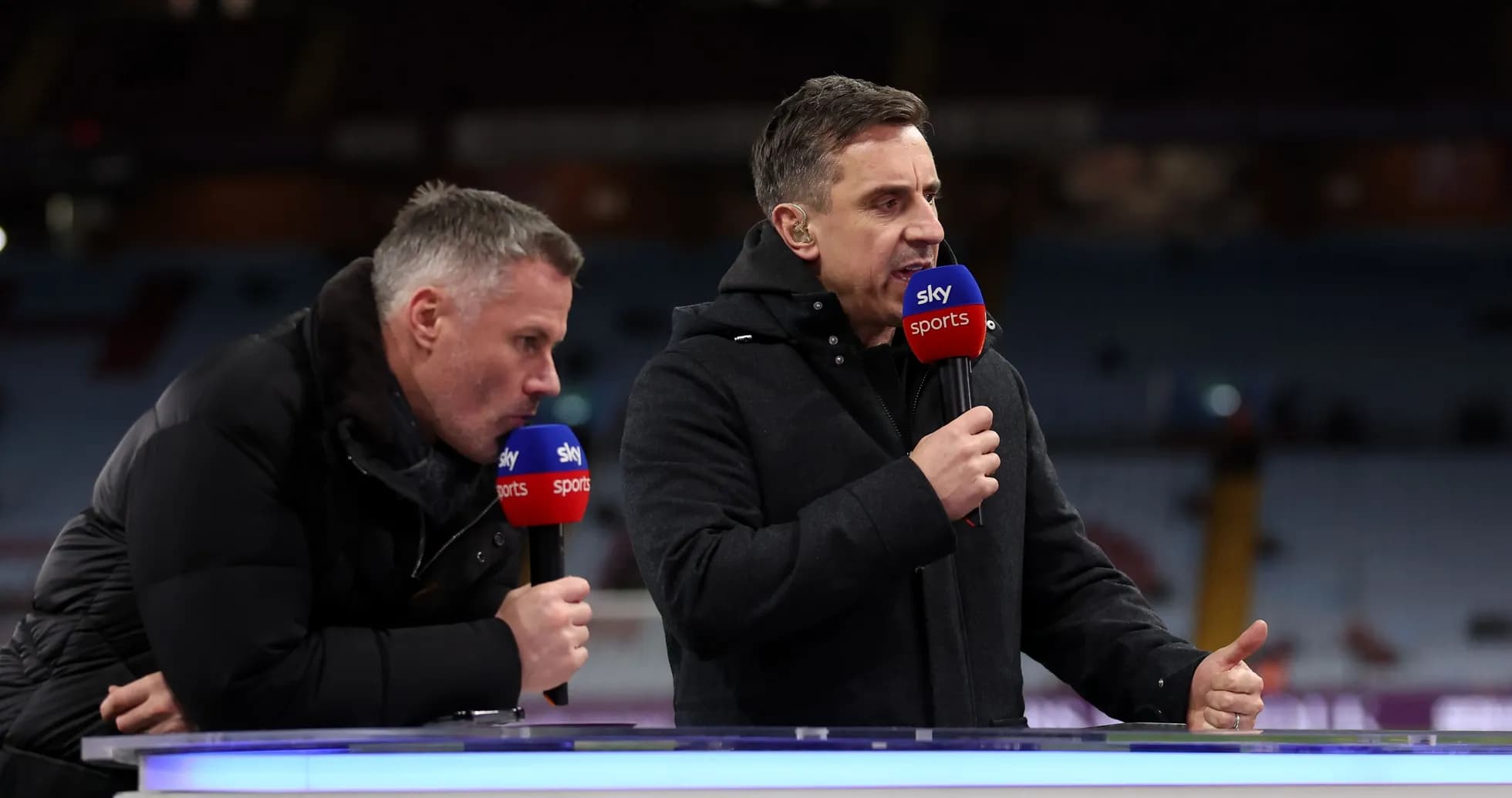
Kai Havertz and Martin Odegaard delivered the goals at a crackling Emirates Stadium, but it was the work without the ball that caught the eye of Jamie Carragher. On Sky Sports, he homed in on a defence that looks watertight despite being without its supposed cornerstone.
Carragher did not hold back on his assessment of William Saliba’s importance – or Arsenal’s ominous form without him.
“I think the worrying thing for everybody else already is that Saliba – who is genuinely world-class, arguably probably the best centre-back in world football – has not played a minute of football so far this season. And it doesn’t look like anyone can score against them,” he said.
That is the chilling part for the rest of the league. Arsenal are winning, Arsenal are controlling games, and they are doing it with their best defender still in reserve.
Chelsea’s back line “all over the place”
While Mikel Arteta’s side look organised and ruthless, Chelsea are wrestling with a very different reality under Xabi Alonso. Seven goals conceded in their opening three league matches is a brutal statistic for a coach whose playing career was built on control and structure.
At the Emirates, the cracks were obvious. On the Gary Neville Podcast, Gary Neville dismantled Chelsea’s defensive shape, reserving some of his sharpest criticism for the back three.
“The back three, when I watch them, it's almost like their legs aren't connected to their hips and the hips aren't connected to their bodies. It's almost like they're a bit all over the place,” Neville said.
It was a vivid image and a damning one. Chelsea’s defenders were dragged around by Arsenal’s movement, often stepping out at the wrong moments, leaving spaces that a sharper side might have punished even more.
Neville did not simply point fingers at individuals. His verdict was broader: the system is not yet functioning, and Alonso may need help in the transfer market to fix it. Recruitment, not just coaching, might be required to bring balance to this back line.
Optimism amid the chaos
And yet, Neville is not writing Chelsea off. Far from it. For all the defensive chaos, he sees a team with serious potential and a manager with a clear idea of where he wants to go.
He highlighted the impact of wing-backs Pedro Neto and Jorrel Hato, and the range of attacking options available to Alonso, as reasons for genuine belief rather than blind hope.
“I think they can finish second – third is the absolute lowest I can see Chelsea finishing,” Neville insisted. “I'm as positive as I have been for three four five years about Chelsea because I think they're going in the right direction.”
That is a bold prediction for a side that currently looks so open at the back. But it underlines the sense that Chelsea’s problems are structural rather than terminal. Fix the foundation, and the rest of the building might rise quickly.
Alonso, for his part, did not try to disguise the issues. He accepted that Chelsea must tighten up defensively, but he clung to the positives: spirit, attitude, and a refusal to fold even as Arsenal pushed them back.
Different paths, same high stakes
The contrast between the two clubs is stark. Arsenal look settled, sure of themselves, and increasingly hard to break down. They now carry their momentum into Europe, travelling to face Napoli in the Champions League on Wednesday, a test of whether this defensive resilience travels as well as it plays at home. After that comes a league trip to Sunderland on Saturday, another chance to stretch this perfect start.
Chelsea’s week looks very different. No glamour tie, no celebration of a flawless opening. Instead, Alonso has something arguably more valuable right now: time on the training ground. Nearly a full week to reset, reorganise and drill a backline that has been brutally exposed.
Hull City visit Stamford Bridge on Saturday. On paper, it is a fixture Chelsea should control. In reality, it already feels like an early measure of whether Alonso can turn sharp criticism into a sharper, more coherent defence – and keep Neville’s lofty prediction alive.