.svg&w=384&q=75 "Naijagoal logo")

Arsenal's Ambitious Move for Bruno Guimaraes
Mikel Arteta did not even wait for the confetti to settle.
Arsenal had just ended 22 years of hurt in the Premier League and gone all the way to a Champions League final, only to be denied by Paris St-Germain. For most clubs, that would be a lifetime’s work. For Arteta, it was a platform. He spoke of taking Arsenal to a “different dimension” and made it clear sentiment would not slow him down.
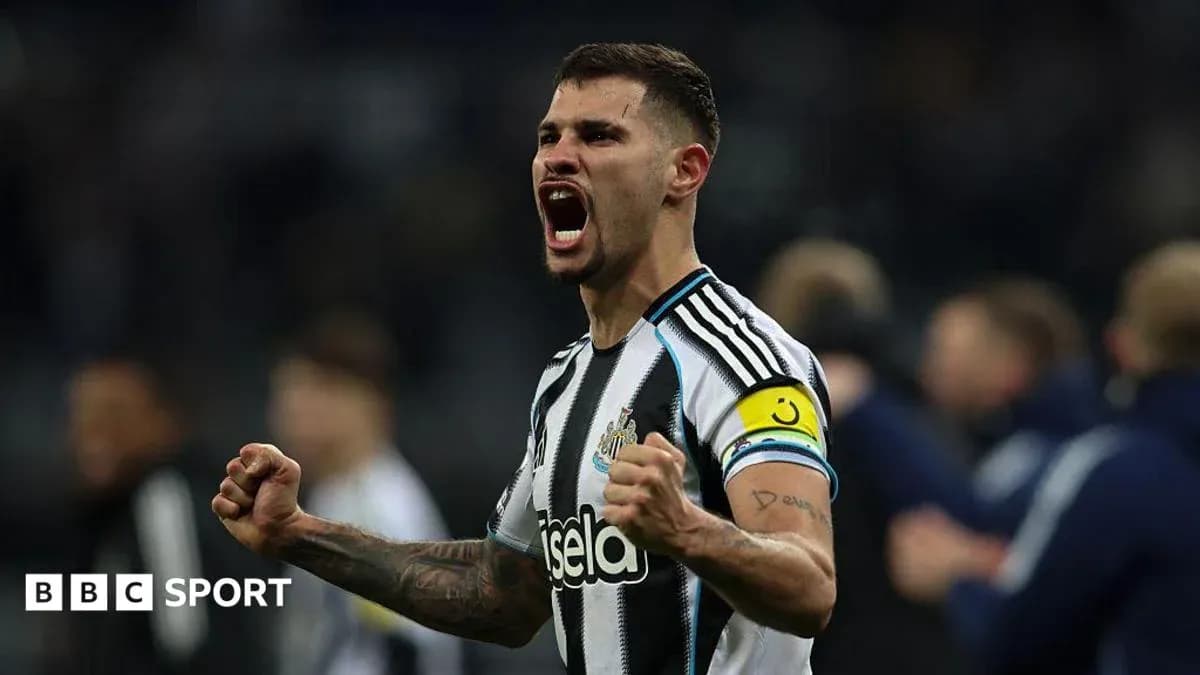
The club’s response has been emphatic: go and get Bruno Guimaraes.
A champion acts like a champion
Title winners often talk about evolution. Arsenal are behaving like a side intent on revolution. Signing the Newcastle captain, a 28-year-old in his prime and already proven in the Premier League, is exactly the sort of aggressive move that signals a new phase rather than a victory lap.
Arteta has long favoured players who know the league’s tempo, its collisions, its relentlessness. Guimaraes ticks every box. He has led a team, carried responsibility, and thrived under pressure. Arsenal believe he can transform a strong midfield into one of the most feared units in world football.
This is not a luxury buy. It is a structural one.
Lessons from a brutal season
Last season’s numbers tell their own story. Arsenal played 63 games in all competitions. The price was paid in muscle strains, fatigue, and a midfield stretched to its limit.
The club spent £250m in the previous summer window, but one principle never shifted: availability matters as much as ability. Robustness is not a bonus at Arsenal; it is a requirement. That is part of why Guimaraes stood out. He brings quality on the ball, but also the durability to absorb a heavy schedule.
Christian Norgaard arrived last summer to offer depth, yet never convinced Arteta. Seven appearances and a single league start underlined the lack of trust. As Norgaard now heads towards Everton, his short Arsenal chapter closes with a clear message: if Arteta does not fully believe in you, you do not play.
The knock-on effect was severe. Martin Zubimendi and Declan Rice shouldered the load. Zubimendi, asked to cover vast spaces and recycle possession under constant pressure, faded as the run-in intensified. Eventually, he dropped out of the side entirely, his legs and form betraying the strain.
Rice, meanwhile, became the outfield metronome. No Arsenal player logged more minutes. He then went straight into a World Cup, where he helped drive England to the semi-finals. By the time he returned, he was managing a hamstring issue, the kind of nagging problem that comes from never being allowed to step off the treadmill.
Rest has been prescribed. Recovery has been prioritised. But Arsenal know that rest alone is not a strategy. Guimaraes is.
Raising the ceiling, not just the floor
The Brazilian’s arrival does two things at once. It protects Arsenal from the drop-off that comes when Rice or Zubimendi are rotated, and it elevates the entire midfield’s potential.
Arteta demands intensity every day, not just on matchdays. Training at London Colney is unforgiving, a constant examination of technical quality and physical resilience. Guimaraes walks into a room already packed with talent: Rice, Zubimendi, captain Martin Odegaard, Eberechi Eze, Mikel Merino, plus the highly rated youngsters Myles Lewis-Skelly and Ethan Nwaneri.
That is not a midfield group, it is a gauntlet. Every session becomes a fight for status. Every rotation option is credible. Arteta can now change his XI without changing his standard.
The aim is clear and unapologetic: build one of the best midfields on the planet and sustain a challenge on every front. Arsenal have their title. They have tasted a Champions League final. With Guimaraes added to the engine room, the question shifts from whether last season was a peak to something far more pointed.
How far can this team go when their “different dimension” becomes the norm?