.svg&w=384&q=75 "Naijagoal logo")

Manchester United's Midfield Rebuild: The Arrival of Carlos Baleba
Manchester United have ripped up their midfield and started again. More than £150million spent, three new faces through the door, and one big question still hanging over Old Trafford: has this finally fixed the soft centre that has held them back for years?
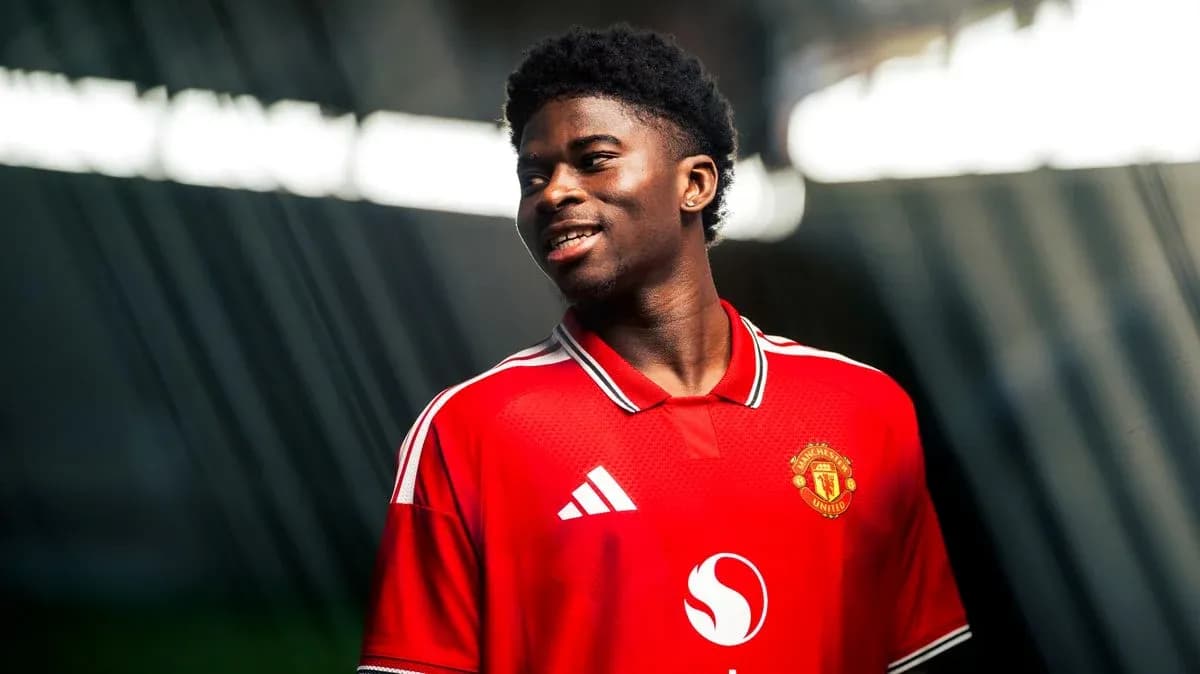
On Tuesday, Carlos Baleba became the latest piece of the rebuild. The Cameroon international arrived from Brighton in a deal worth up to £70m, following Andrey Santos and Youri Tielemans into a revamped engine room.
A year ago, Brighton were talking a very different language. In the summer of 2025, when United were first among the suitors, the Seagulls wanted north of £100m. That stance drew on Baleba’s outstanding form at the Amex and the eye-watering fee they banked when Moises Caicedo joined Chelsea.
The landscape has shifted. An underwhelming 2025/26 campaign has dragged the price down and added an element of risk. United know it. They are taking the gamble anyway.
A midfielder built for balance
From their point of view, the logic is obvious. At his best, Baleba gives them something they have been chasing for years: balance. He can sit, screen, snap into tackles, but still carry the ball and open the pitch. He lets a coach like Michael Carrick flip between systems without ripping out the core.
United’s recent history in that position is messy. They tried to install a destroyer at the base of midfield. Casemiro arrived with a glittering CV but ended up pushed higher, chasing goals and arriving late in the box in his final season. Manuel Ugarte came with his own complications. The solidity never truly stuck.
Baleba’s numbers at his peak tell a different story. In 2024/25, his breakout season at Brighton, he completed 79 tackles in the Premier League – joint 25th in the division, just behind Casemiro and Bruno Fernandes. That headline figure barely scratches the surface.
Per FotMob, he ranked 14th in the league for interceptions per 90 minutes, averaging 1.6. Among United players, only Harry Maguire bettered that rate. Baleba matched the 1.6 per 90 last season as well, even if his total interceptions dropped from 46 to 29.
So the instincts are there. The reading of danger. The ability to shut down passing lanes before they become chances.
Rio Ferdinand has seen enough to be convinced.
“He brings that ability to get around the pitch, that physical prowess,” the former United defender said on YouTube. “I think his duels power is great, his press resistance, and I think more so than most of the others.
“He can beat the press with the ball but his vertical ball progression with the ball especially... is an asset to this team now and he can do it with real pace. I think he complements every other one of those midfielders he's coming into the team with. Whoever he plays with, he complements them.”
That is the vision: Baleba as the hinge, the player who makes everyone else look better.
The dip, the distractions and the reality check
The problem is obvious. That 2025/26 season will not vanish from the conversation. Critics will keep coming back to it until he proves it was the blip, not the benchmark.
There were reasons for the stall. Brighton manager Fabian Hurzeler hinted early in the campaign that the heavy interest from United had seeped into the player’s mind. A young midfielder reading about a “big, big offer” from Old Trafford, with his name splashed across headlines, was never going to be immune.
“For sure, when a young boy reads there is interest from Manchester United with a big, big offer, it might affect him deep, deep (down),” Hurzeler said at the time. “That’s also part of the development to understand that when you play well, there comes a big offer, there comes a big club who wants to have him.
“But then to keep pushing, to be humble, stay here in Brighton, and try to make the next step with the team and that’s something we have to keep on working with him and therefore I can’t give you a clear answer if it’s really affected him or not. But for sure, he’s a young boy and we need to understand he’s not a machine that if you click on then he always runs and off then he stops. We need to understand his feelings, his emotions, where he comes from, and that’s our responsibility.”
On top of that, the Africa Cup of Nations cut into his season. AFCON pulled him away in December and disrupted rhythm and continuity. That will not be a factor this time around.
So United are betting that the 2024/25 version of Baleba is the real one. The relentless ball-winner who covers ground, breaks lines and looks built for the Premier League’s chaos.
Durability, injuries and the minutes puzzle
There is another twist. Baleba arrives injured. He will not be thrown straight into the fire. Supporters will need patience, at least in the opening weeks.
But when he is fit, his recent workload suggests he can handle the demands. In 2024/25 he played 2,673 league minutes for Brighton, a heavy shift for a young midfielder in England’s top flight. Even last term, with AFCON in the middle, he still logged 1,662 league minutes.
That durability matters when you look at the rest of United’s midfield.
Tielemans, Mainoo and Santos all came into this season with relatively modest minutes on the clock. Tielemans managed 1,863 league minutes for Aston Villa, hampered by two separate injury layoffs. Kobbie Mainoo reached 1,654, used sparingly before Carrick’s appointment changed his role. Santos played 1,255 league minutes for Chelsea, though he did edge Mainoo when you include all competitions.
You can spin that either way. Fresh legs, or undercooked players about to be asked to go twice a week in the most scrutinised midfield in England.
This is where Baleba’s profile becomes vital. The role United have in mind for him will demand consistency and resilience. If he can absorb that load, Carrick gains the freedom to rotate, to protect the others, to keep the collective sharp rather than running individuals into the ground.
Carrick’s project, Baleba’s test
Baleba knows exactly what this move represents.
“I cannot wait to work with Michael Carrick; his experience and knowledge of the game make him the perfect coach to help me to reach the highest level,” he said after the deal was confirmed.
The ingredients are there: a coach who lived as a metronome in United’s midfield, a club desperate for control in the middle of the pitch, and a 22-year-old with the tools to provide it.
But the equation is simple and unforgiving. United have spent more than £150m trying to solve a problem that has haunted them since the peak Carrick days. Baleba must now prove that the dip at Brighton was the exception, not the warning sign.
If he does, this new midfield could finally give Old Trafford a platform. If he doesn’t, the search for a true anchor in red starts all over again.