.svg&w=384&q=75 "Naijagoal logo")

Argentina’s Holiday Controversy: Players Given Power After Final Loss
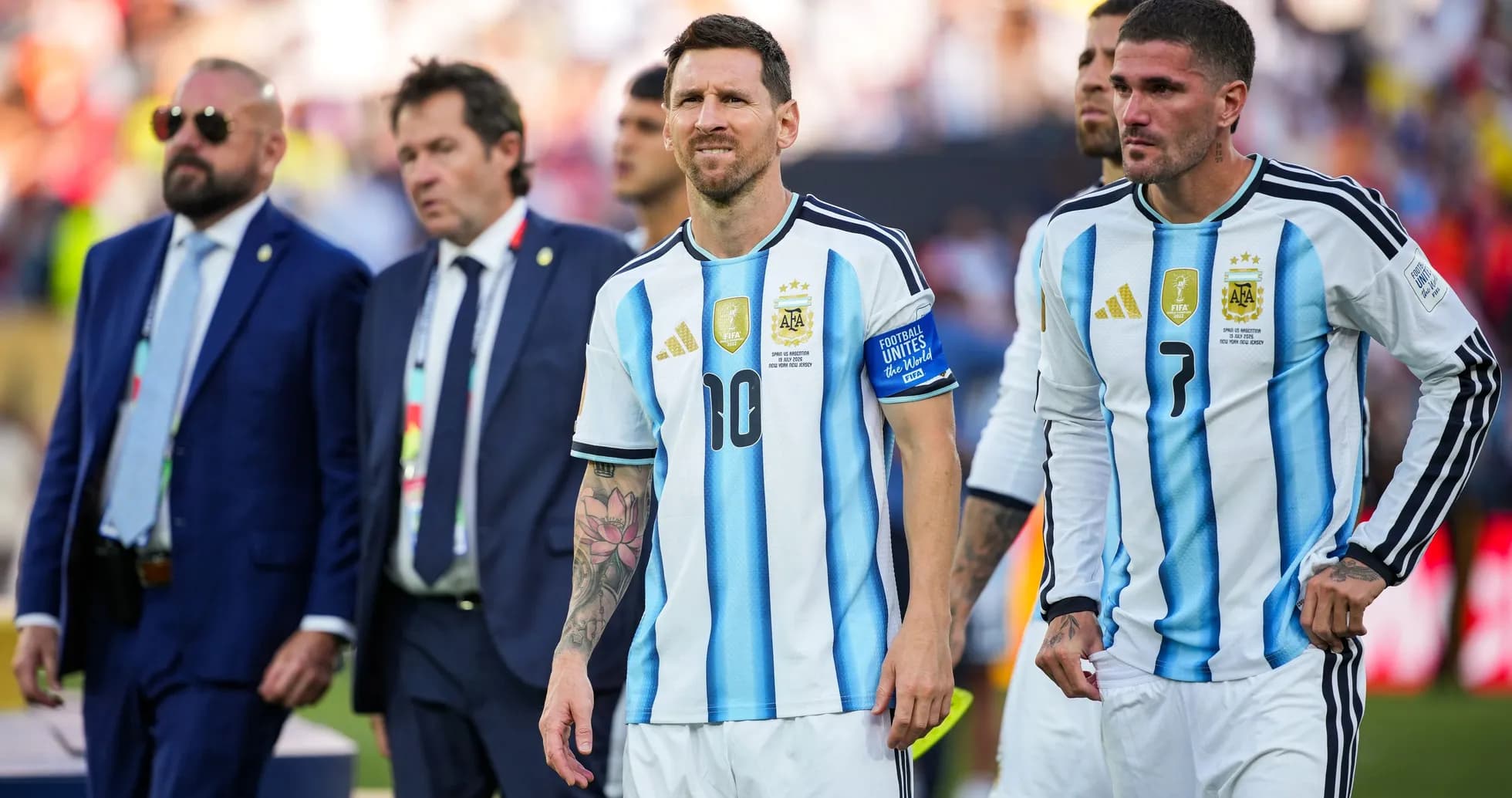
Argentina flew home without the trophy, but with a political storm in their wake.
Days after a flat, 1-0 extra-time defeat to Spain in New York – a final in which the Albiceleste failed to register a single shot on target – the government has taken the extraordinary step of offering the squad the right to choose a national holiday to commemorate their campaign.
Runners-up, but with a day of national celebration on the table. The reaction was instant.
A Final Lost, a Debate Ignited
Ferran Torres’ decisive strike ended Argentina’s bid to retain their world crown and exposed a toothless attacking display from Lionel Scaloni’s side. The performance drew criticism; the effort, less so. Across Argentina, there was respect for the grind, for the miles on those veteran legs. Yet respect is one thing. A holiday is another.
When the official announcement dropped, confusion and anger followed. Many citizens questioned why a country that measures itself in stars above the crest would mark second place with a national shutdown. Others wondered if they had misread the statement, or if some bureaucratic glitch had slipped through.
They had not. This was deliberate.
Milei’s Unusual Offer
President Javier Milei, who pointedly skipped the final in person because of his own superstitions, chose social media as his stage.
“Given the concern about the celebrations for the achievement reached by the Argentine National Team,” he wrote on X, “I inform the population that, depending on what the Players and the Technical Staff decide regarding the day to celebrate, it will be declared a national holiday.”
No conditions. No half-measures. The power sat with the dressing room.
That only sharpened the divide. Some fans saw it as a gesture of gratitude to a generation that has given Argentina a World Cup and so many nights of glory. Others viewed it as a distortion of national pride, arguing that parades and holidays should be reserved for champions, not nearly men.
Fans Split as Players Look Ahead
On the streets and across social media, a clear theme emerged: many supporters believe the players themselves would rather avoid a grand celebration. The squad is scattered across Europe and beyond, club seasons loom, and the emotional toll of losing a final is still raw.
For a group that has lived through the heights of Qatar and Copa América triumphs, a runners-up parade feels, to many, like an awkward coda.
Yet Milei doubled down on his praise, defending Lionel Messi and his team-mates in another post: “Thank you so much, players. [We fought] until the end with our boots on. Argentina always at the top.”
The message was clear. In the president’s eyes, this team still embodies the country’s competitive edge, even in defeat.
Messi Era Nears Its End
Behind the noise of the holiday debate lies a harsher reality for Argentine football: this campaign likely marked the closing chapter of an era.
The coaching staff must now pivot quickly. A veteran core that has carried the national team through multiple tournaments is edging toward the exit, and the task of blooding new talent can no longer be delayed.
At the heart of that transition sits Messi. It is widely expected that this was his sixth and final World Cup. At 39, and now the face of Inter Miami, he has not yet formally confirmed his retirement from Argentina duty, but the direction of travel is obvious.
The question is not just when he steps away, but what Argentina looks like when he does.
For now, the nation waits on two decisions: whether its heroes will accept a holiday for finishing second, and whether its greatest player will decide that this was, at last, his final bow on the world stage.