.svg&w=384&q=75 "Naijagoal logo")
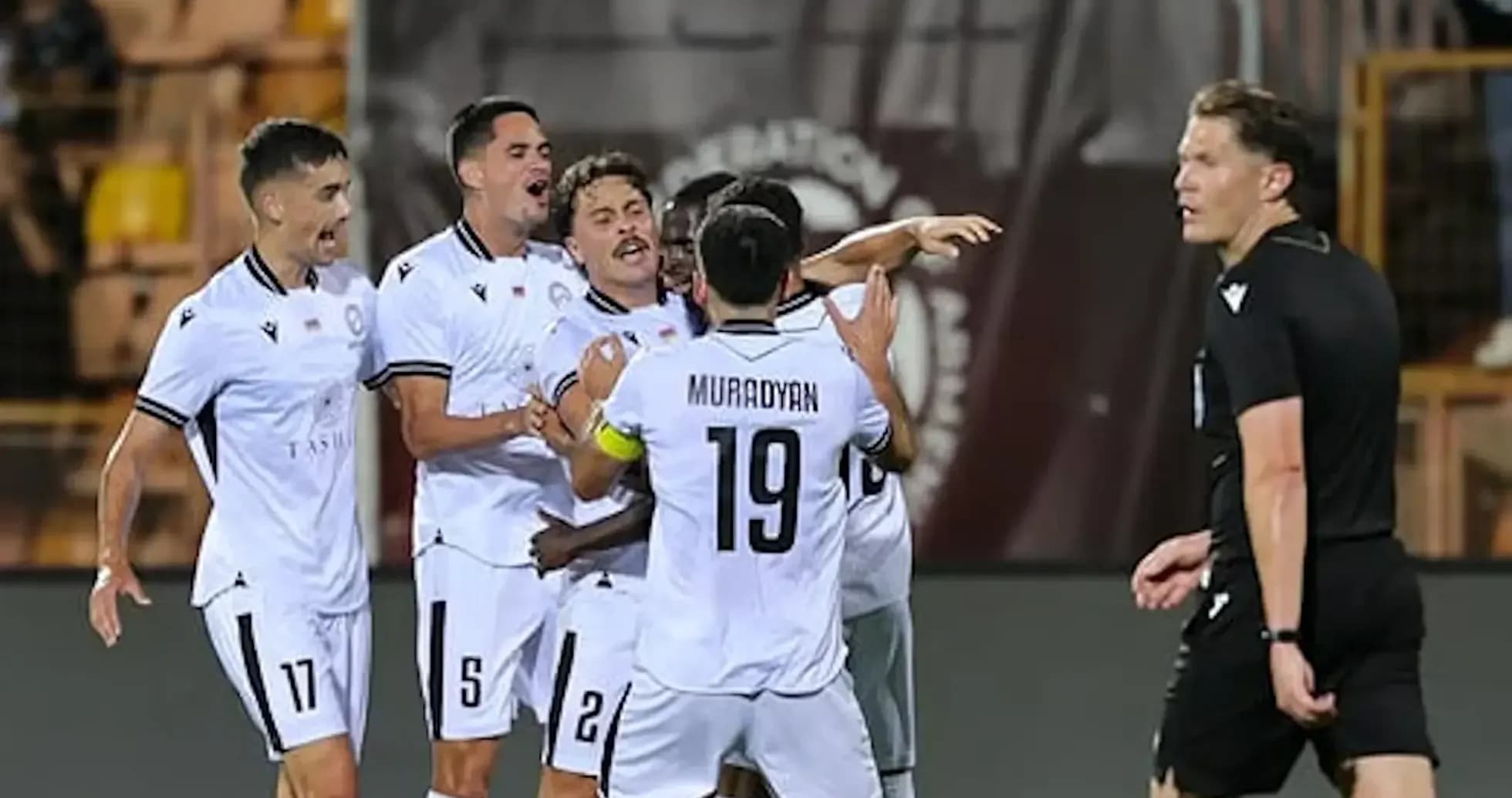

Ararat-Armenia vs Celje: UEFA Champions League 3rd Qualifying Round Preview
At the Football Academy Stadium in Yerevan, Ararat-Armenia host Celje in the UEFA Champions League 3rd Qualifying Round, a pivotal tie that will heavily influence both clubs’ chances of reaching the lucrative play-off stage and, ultimately, the group phase. With no league standings data available, this match is best viewed as a high-stakes checkpoint in their 2026 European campaign rather than a simple early-season fixture.
Head-to-Head Tactical Summary
The only previous recorded meeting between these sides came on 24 September 2020 in the UEFA Europa League 3rd Qualifying Round, also in Yerevan at the Yerevan Football Academy. Ararat-Armenia, again the home team, drew 0-0 with Celje in normal time after a goalless first half, before Ararat-Armenia edged it 1-0 after extra time. That match profile suggests a tight, cautious encounter with both teams initially prioritising defensive structure, only decided once fatigue and space opened up in extra time.
Global Season Picture
- League Phase Performance: There is no current group or league table data available for either Ararat-Armenia or Celje in this Champions League campaign, so their 2026 European trajectory must be inferred from match-level statistics rather than standings, goals for/against, or points.
- Season Metrics: In the league phase of this Champions League campaign, Ararat-Armenia have played 4 matches (2 at home, 2 away), winning both at home and losing both away. They have scored 7 goals and conceded 5 overall, with a strong 4–0 home/away defensive split (4 scored and 0 conceded at home, 3 scored and 5 conceded away). They have yet to fail to score and have kept 2 clean sheets, both at home. Their most common shapes have been 4-3-3 (used in 3 matches) and 3-4-3 (1 match), indicating an intent to play proactively with width and a front three. Discipline-wise, their yellow cards cluster late: the bulk arrive between minutes 61–90, reflecting a tendency to become more aggressive or stretched as matches progress.
- Season Metrics (Celje): In the league phase, Celje have played 2 matches (1 home, 1 away), remaining unbeaten with 1 win and 1 draw. They have scored 6 goals and conceded 5, averaging a high 3 goals scored per match but also 2.5 conceded, pointing to an open, high-variance style. They have not kept a clean sheet and have scored in every game. Their best home result is a 3-2 win, and they have matched that scoring output away (3 goals) while still conceding 3. Celje have alternated between 4-4-2 and 4-3-3, suggesting flexibility between a more balanced shape and a more attacking front three. Their yellow cards are heavily concentrated between minutes 61–75 and into added time, again hinting at late-game intensity and possible game-state pressure.
- Form Trajectory: Ararat-Armenia’s form string in this Champions League campaign is WLWL across all phases of the competition, indicating alternating wins and losses with no sustained streak in either direction. That volatility underscores their reliance on home advantage: solid at home, vulnerable away. Celje’s form is DW, a shorter but more stable sequence showing they have yet to lose, starting with a draw and then a win, and trending positively in terms of results and attacking output.
Tactical Efficiency
Ararat-Armenia’s profile shows a pronounced home–away split in defensive efficiency. At home they have conceded 0 goals in 2 matches, supported by two clean sheets and no failures to score, which aligns with a compact but assertive approach in Yerevan, often in a 4-3-3. The late clustering of yellow cards suggests that as they protect leads or chase results, they are willing to increase physicality, which can both disrupt opponents and create risk of suspensions or set-piece danger.
Celje’s attacking metrics are aggressive: 6 goals in 2 matches at an average of 3 per game, with consistent scoring both home and away. However, conceding 5 in the same span exposes a defensive structure that can be opened up, particularly against a side like Ararat-Armenia that is efficient at home and has not yet failed to score. Their use of both 4-4-2 and 4-3-3 indicates they can either mirror Ararat-Armenia’s width or add an extra central presence, but their inability to keep a clean sheet so far means their attack is carrying much of the load.
In efficiency terms, Ararat-Armenia appear more balanced at home—moderate scoring with strong defensive numbers—while Celje are skewed towards high-output, high-concession football. This creates a tactical contrast: the hosts aiming to leverage their defensive solidity and structured wide play, the visitors relying on their capacity to create and convert chances even if it leaves them exposed.
The Verdict: Seasonal Impact
This 3rd Qualifying Round tie is a significant inflection point in both clubs’ 2026 European seasons. For Ararat-Armenia, maintaining their perfect home record in this campaign is critical; a positive result in Yerevan would keep them on track for the play-off round and preserve the narrative of their stadium as a European stronghold. A home defeat, by contrast, would place heavy pressure on an away leg where their record so far has been poor, and could effectively cap their European ceiling for the year.
For Celje, remaining unbeaten and translating their attacking form into a result away from home would signal a step up in continental maturity. A strong result in Yerevan would not only give them a tangible advantage in the tie but also validate their high-scoring approach as sustainable against defensively solid opposition. Conversely, if their defensive frailties are exposed and they leave Yerevan with a deficit, their attacking firepower will be tested to its limits in the return leg, and their 2026 Champions League journey could stall at this hurdle.
In seasonal terms, the outcome here will largely determine whether either club can realistically project themselves into the Champions League group phase conversation or must reset their ambitions towards secondary European competitions and domestic consolidation.