.svg&w=384&q=75 "Naijagoal logo")
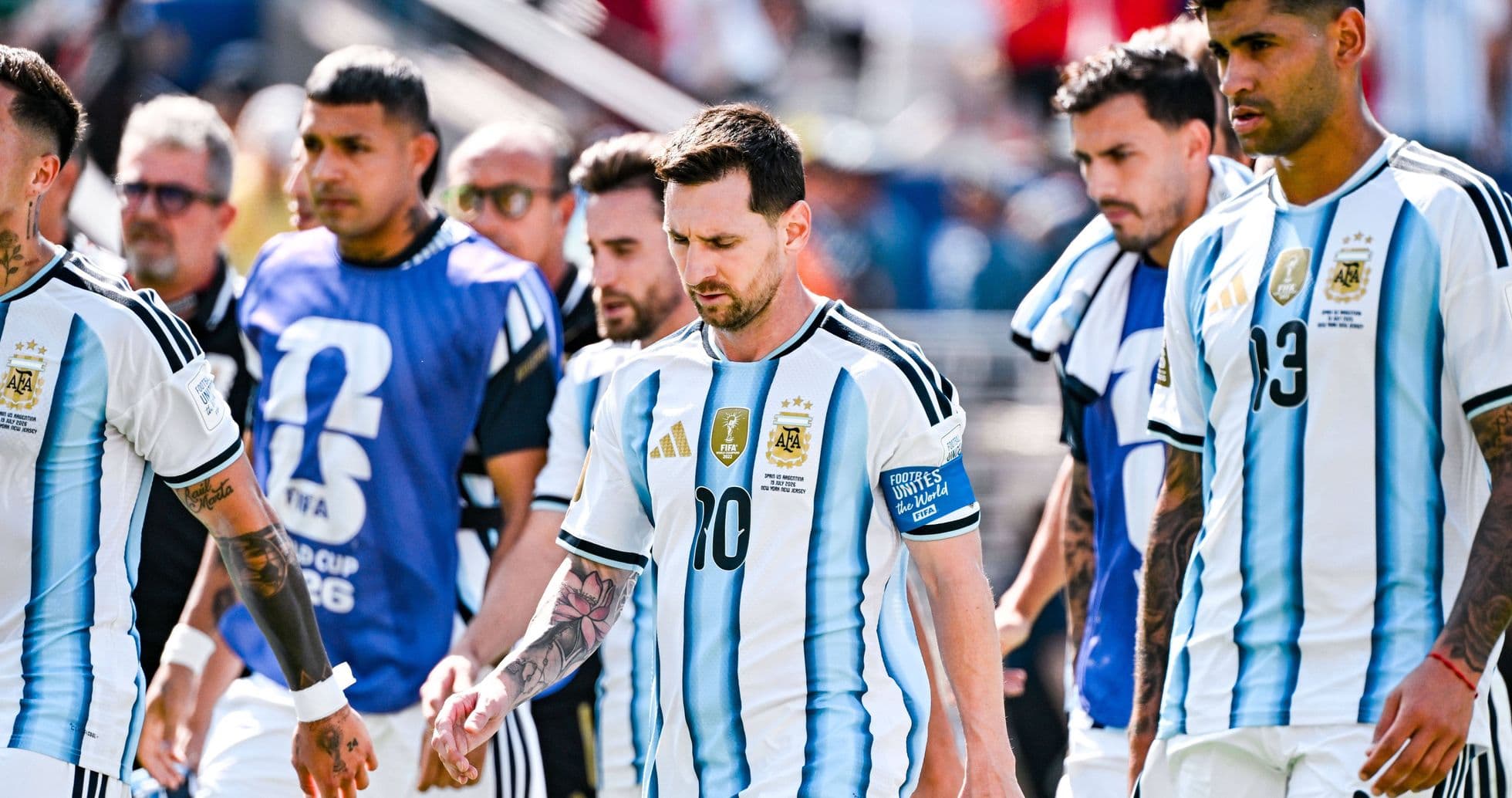

Ángel Di María's Defiant Tribute to Argentina's Legacy
Ángel Di María was no longer on the grass when Argentina’s era finally cracked, but he did what he has always done for his country: he stepped up.
Minutes after the final whistle of a brutal, suffocating defeat, the veteran winger reached for his phone and sent a message that cut straight through the silence. Not tactics. Not excuses. Identity.
“A country is proud of you. A country was united once again thanks to the love and the b*lls you put into this World Cup,” he wrote on his Instagram story, refusing to let a single night stain a decade of work.
He went further, drawing a line in permanent ink under this generation’s place in history.
“You are history, you are legends, and no one can ever take that away from you. The best national team in the history of our country. Five consecutive finals, no one will ever be able to take that away from you. THANK YOU SO MUCH FOR EVERYTHING.”
It was a defiant tribute on a night when the numbers were merciless. The defending champions, usually so ruthless on the biggest stage, froze. They became the first team ever to reach a World Cup final and fail to register a single shot in normal time. Not on target. Not at all.
The game itself never really breathed. It snarled.
From the opening exchanges, tension sat heavy on every touch. Tackles arrived half a second late and a fraction too hard. The contest turned into a grind of collisions and complaints, the ball secondary to the stakes.
The pressure took its toll. Lisandro Martínez, one of the symbols of this side’s edge, was forced off in the first half with a serious injury, a moment that seemed to drain belief as much as it weakened the back line. Just when Argentina needed calm, the storm grew.
Then came the breaking point. With extra time looming and nerves already shredded, Enzo was sent off. One flash of red, and the champions were left to stare down the final minutes a man short, legs gone, ideas exhausted.
On the other side, Spain smelled history and seized it. When it was over, they stood as the first nation to hold both the men’s and women’s world titles at the same time, a landmark that underlined a shifting balance of power at the summit of the game.
Argentina, by contrast, had to process something more complex. Not just defeat, but the sense of a cycle closing. Five consecutive finals, a run that had defined an era and redefined a footballing nation, ended not with one last flourish but with a night of suffocation and regret.
That is why Di María’s words mattered. When the statistics turned brutal and the narrative tilted towards an ending, he dragged the focus back to the body of work: the trophies, the finals, the unity, the identity forged under pressure.
Spain left with the cups and the headlines. Argentina left with the ache of a golden age slipping away.
The question now is not what this team has been. That is settled. It is what comes after a generation that called itself “history” – and proved it.