.svg&w=384&q=75 "Naijagoal logo")
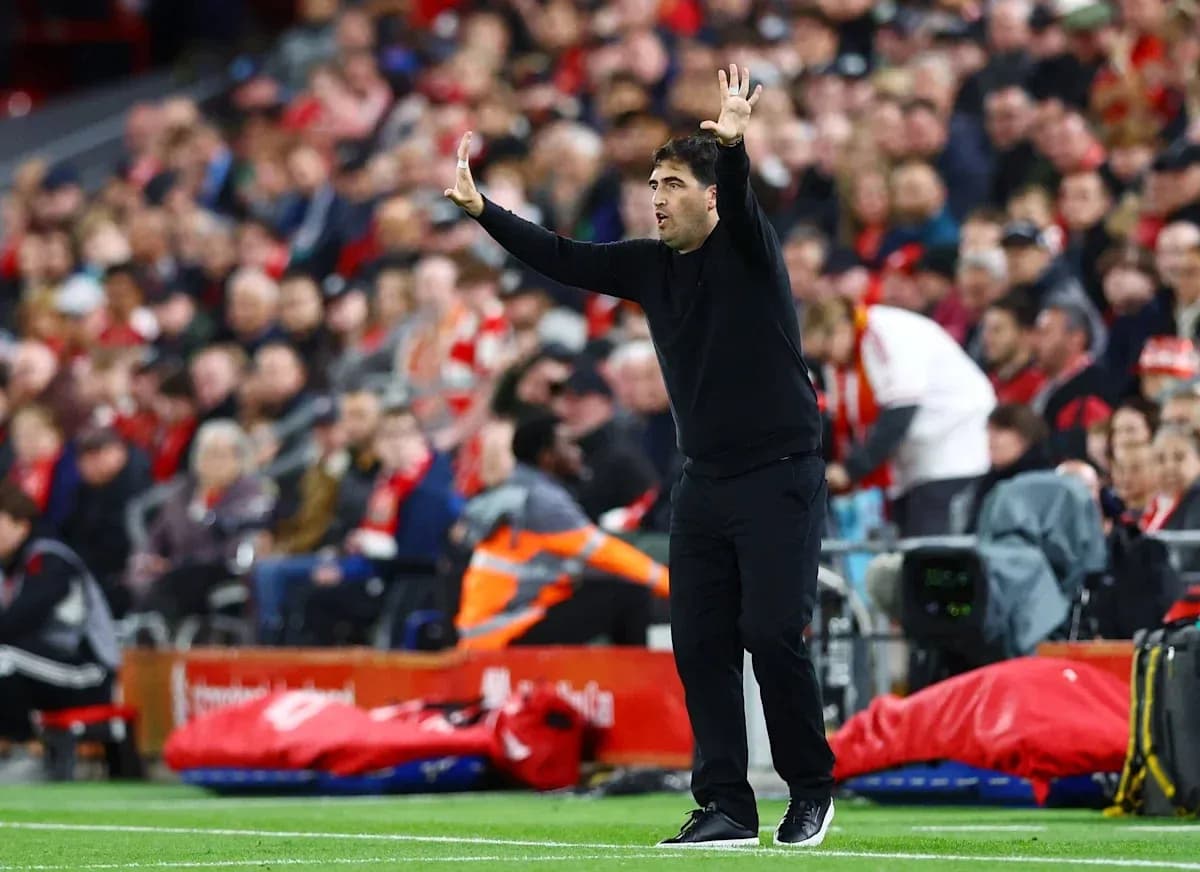

Andoni Iraola's Approach to Liverpool's Transfer Strategy
Andoni Iraola has drawn a thick red line through the January gossip. For Liverpool, right now, the transfer window is a distraction. His message is blunt: the answers must come from the dressing room, not the market.
Speaking about where Liverpool stand, Iraola said: “I think now is not a moment to look backwards to the market. When the January market opens, we will see where we are. We have very good players and a very good squad. We need to find the balance and the right combinations so everyone can look even better than the player he is. If we are not well drilled, the timings are not there, then everyone looks worse. Everyone has to add a little bit.”
No caveats. No soft landing.
Structure before shopping
His stance strips away any ambiguity around Liverpool’s short-term plans. Early calls for reinforcements are being parked. Coaching, organisation and execution sit at the top of the agenda.
Managers often turn to the market when the structure on the pitch breaks down. Iraola is pushing the opposite idea: fix the structure first, then talk about signings. If the team’s spacing is off, if pressing triggers are late, if combinations in possession don’t flow, a new face will not suddenly solve it.
That is why his words cut through. Whatever Liverpool’s issues in September, quick-fire spending rarely fixes underlying tactical problems. The shape has to be right. The distances have to be right. The work on the training pitch has to show before anyone can sensibly judge what the squad truly lacks.
Balance at the heart of the project
The key theme in Iraola’s comments is balance. He is not questioning the talent at his disposal; he is questioning how that talent fits together.
Liverpool, in his view, already possess “very good players and a very good squad.” But quality without cohesion gets exposed quickly at this level. When timings are off and patterns break down, individuals suddenly look ordinary. When the system clicks, the same players appear transformed.
It is a demanding, almost uncompromising, managerial position. He is not pointing to injuries, fixture lists or transfer delays. He is pointing to standards. He wants more from the current group and expects every player to contribute more within the collective framework.
Everyone, as he put it, “has to add a little bit.”
January can wait
None of this means Liverpool will ignore the winter window. They will assess the market when January opens, as every elite club does. But Iraola is refusing to let that conversation dominate the months leading up to it.
First, the drill. Then the deals.
Liverpool’s task is clear: sharpen the automatisms, refine the relationships on the pitch and only then, with a clearer picture of what truly holds them back, decide where recruitment is needed.
Until that point, transfer talk is just background noise. The real work, and the next step in this Liverpool side’s evolution, lies on the training ground.