.svg&w=384&q=75 "Naijagoal logo")


Alverca's Comeback: From Shadows to Top Flight Football
Alverca used to live in the shadows. A satellite for Benfica, a name that flickered briefly in the top flight before disappearing altogether. Now they are back in the spotlight, armed with new money, new ideas and the backing of one of the most famous footballers on the planet. And they insist they are here to change the game.
From collapse to comeback
The story starts with failure. Alverca first reached the Portuguese top division in 1998, a modest club riding the slipstream of their illustrious neighbours. Relegation in 2004 proved ruinous. By 2005, the club had folded under the weight of its own finances.
They had to start again from nothing.
Reformed and dropped into the regional leagues, Alverca spent years climbing through the country’s backroads of football. No shortcuts, no guarantees. Just the slow grind back up the pyramid, step by step, until the breakthrough: back-to-back promotions that carried them all the way to the top flight again in 2025.
Rapid ascent. Heavy price.
At the time, the club sat in the portfolio of the Vicintin family, who already owned Santa Clara. Father Ricardo ran Alverca, son Bruno oversaw Santa Clara. Two clubs, one family, same division looming on the horizon. It was a conflict that could not be wished away.
“How could a father face his son? I’m talking about the heart,” Ricardo said when the dilemma came to a head. “I could never cope with having to face the team that my son loves so much. A father’s role is to let his children grow. And I’m no different.”
Sentiment aside, the rules were clear. The family could not own two clubs in the same league. One of them had to go.
Enter Vinícius Júnior
That was the opening that pulled Alverca into the global spotlight.
In February 2025, as promotion to the top flight was being sealed, a new group of investors stepped in. Among them: Real Madrid star Vinícius Júnior. The Brazilian forward did not arrive as a vanity name on the letterhead. He arrived as part of a plan.
His agent, Thassilo “Tata” Soares, became the majority shareholder. Vinícius himself took a more distant role. “Our relationship with Vinícius is remote,” sporting director Fernando Malta explains. “We say he is the club’s most famous fan.”
It is a useful kind of fandom. His presence alone changes the way people talk about Alverca. It changes the way young players look at them. At academy level especially, the idea of joining the “project” attached to Vinícius carries weight.
The big names do not stop there. Real Madrid teammate Eduardo Camavinga and US artist Travis Scott are also involved, providing what the club describes as “communication and marketing” services. They are not in the dressing room or on the training pitch, but their association adds sheen and reach.
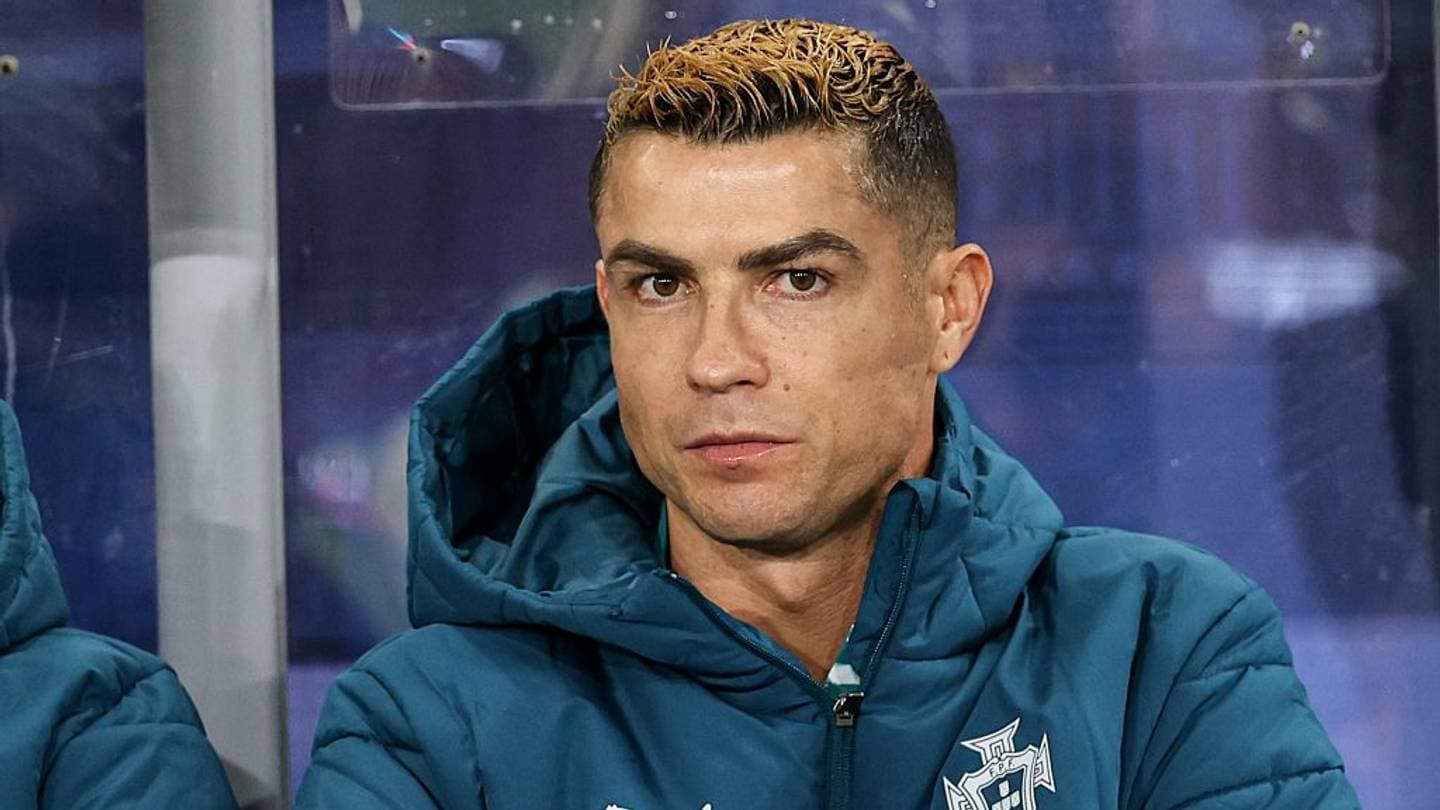
Footballers buying into clubs has become a trend. Thibaut Courtois has put his money into Le Mans, who have climbed into France’s top tier. Kylian Mbappé has discovered the harsher side of ownership with SM Caen, relegated to the third division and met with fan protests. Former Real Madrid icons have followed the same route: Luka Modric at Swansea, Cristiano Ronaldo at Almería, Ronaldo Nazário at Real Valladolid and Cruzeiro.
Alverca’s version of this movement is sharper, more targeted. Less romance, more strategy.
Thirty-five signings and a mad summer
Vinícius turned up in person for the game against Benfica at the start of last season. He watched a team that barely knew each other.
Alverca made 35 signings in one season, the largest squad overhaul in Portuguese football history. “Mad,” is how chief scout Dominique Castro describes that transfer window. It had to be extreme. So many of the promotion heroes had been borrowed from Santa Clara. Once the clubs split, the squad vanished.
By the time the new campaign kicked off, just one player from the previous season remained. He left in January.
From the outside, it looked like a recipe for chaos. Bastien Meupiyou, the young centre-back who arrived from Wolves, remembers the doubts. “Our team was made up of entirely new players,” he says. “No one knew each other, but we managed to adapt, which happened naturally, and we managed to get along well.”
The expectation across the country was brutal and simple. “Everyone in Portugal expected us to be in the relegation zone for the whole season,” Malta admits.
The script was wrong. Alverca finished 11th. Safe, comfortable, and above Santa Clara by two places. The satisfaction inside the club was not subtle.
A shop window with a plan
No one embodied the season more than Meupiyou. Nominated for the Golden Boy award, the 20-year-old became the face of the project on the pitch. “He’s the player that every high-level club wants to know about,” says Malta. If he moves this summer, he is likely to become Alverca’s record sale.
That is not an accident. It is the model.
Alverca want to survive in the top division, but they also want to trade. Identify talent, develop it, sell at a profit. Repeat. “The club’s main objective is staying in the top division but the second is selling players,” Malta says bluntly. “It’s a league that is not sustainable for the owners.”
Portugal is the perfect setting for that approach. The country is already a launchpad for South American talent, especially Brazilians, who find the language and culture familiar. The club’s owners have forged a link with Athletic Club in Minas Gerais, tapping directly into one of Brazil’s most fertile football regions.
They are just as aggressive in France. Castro, previously chief scout at Lens, knows the Île-de-France market better than most. He calls it, alongside São Paulo, one of the two great engines of talent in world football.
“In France, there is a considerable production of talent,” he explains. “There is maybe even too much talent for the academies and clubs to get the maximum out of all of their players. You find players who are not really being used properly. For some, the only solution is to leave. The talent in France is extraordinary and multicultural, which means players adapt to life abroad quickly and well.”
Alverca have moved quickly into that space. Only Gil Vicente have more French players in Portugal’s top division. For a club of Alverca’s size, it is a way to compete without pretending to be something they are not. “We are not a big club in terms of size, so we need to be creative in our scouting and use of data,” Malta says.
Creative, and ruthless.
Knowing their place, changing the rules
In Portugal, ambition is always measured against a hard wall. Benfica, Porto and Sporting have won the title in 90 of the last 92 seasons. Only Boavista in 2001 and Belenenses in 1946 have broken the monopoly. In modern terms, the “big three” do not just dominate. They define the league.
Malta has no illusions about that. He says he will “never focus” on trying to challenge them “because they are not from our league”. It sounds defeatist until you listen closer. It is not surrender. It is clarity.
Alverca are not trying to become the fourth giant. They are trying to become something else entirely.
“There is space for new things. We strongly believe in our method and that we will be gamechangers,” Malta insists. He looks at Braga’s rise as proof that a club can redraw its own ceiling with smart decisions and patience.
For most of their existence, Alverca have lived in the long shadow of others. Benfica’s satellite. A club that once disappeared. A name that barely registered beyond its own district.
Now they are back in the top flight, backed by global stars, mining talent from Brazil and France, rebuilding squads at breakneck speed and selling to survive. They know exactly where they sit in the pecking order.
The real question is how far a club that refuses to dream like the big three, but dares to think differently, can push the limits of what “small” is supposed to mean.