.svg&w=384&q=75 "Naijagoal logo")

Achraf Hakimi to Stand Trial for Rape: Implications for Morocco's World Cup Campaign
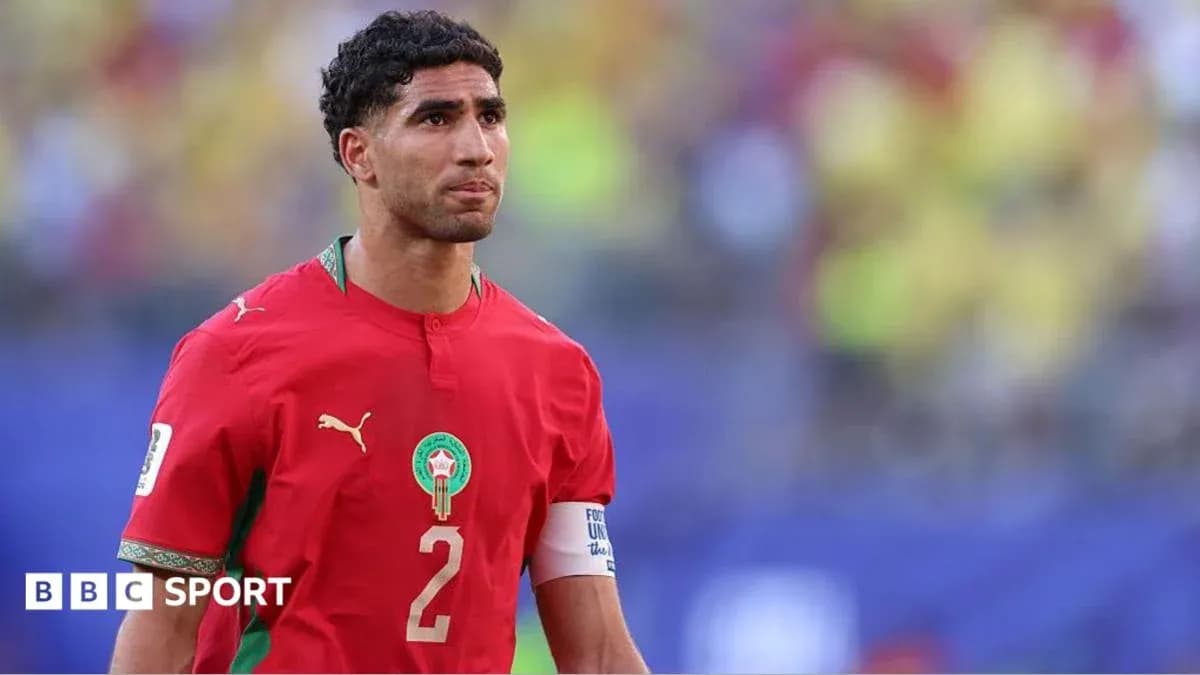
Achraf Hakimi will stand trial for rape in France in a case that now hangs heavily over both his career and Morocco’s World Cup campaign.
French prosecutors in Nanterre confirmed that the Paris St-Germain defender, accused of raping a 24-year-old woman at his home in 2023, has been ordered to face trial following a lengthy preliminary investigation. An investigating judge set the process in motion in February 2026, and French media report that a recent appeal by Hakimi to have the case thrown out has failed.
The Morocco captain, 27, has consistently denied the allegations. On Friday, hours before he is due to lead his country into their second World Cup group game against Scotland (23:00 BST), he broke a long public silence with a pointed, emotional statement on social media.
"The justice system looked me in the eye and said, 'If you weren't famous, there would never have been a case,'" he wrote. He described years of choosing “to remain silent,” insisting he had put his faith in the courts to “allow the right decisions to be made”.
Then came the most striking line.
"Today, a story that isn't mine is being told at the expense of my family, my life, and above all, the truth. I sometimes feel like I've become an easy target.
"I've been waiting for this trial since day one. And now I'm eagerly awaiting it. Finally, I'll be able to speak."
On the other side of the courtroom divide, the woman who accused Hakimi has welcomed the decision. Her lawyer, Rachel-Flore Pardo, issued a statement saying the move to trial brought her client “relief and hope” after more than three years of legal proceedings.
She said her client believes she has been “defamed and dragged through the mud by Achraf Hakimi's defence,” and that being granted a trial is both recognition and an opportunity.
“Relief that she has been heard by the justice system and will have the right to a trial,” Pardo said. “Hope that this trial will help other women and further weaken the wall of denial and impunity surrounding sexual violence, including in the world of men's football."
No date has yet been set for the start of the trial, but its shadow already stretches across the World Cup.
Morocco are based in the United States for the group stage, with all three of their matches scheduled there. That arrangement shields Hakimi, for now, from a thorny logistical problem. Should Morocco progress, the tournament’s unique three-host format could force the defender to confront not just world-class opposition, but border controls and legal thresholds.
If knockout fixtures take Morocco into Canada or Mexico, Hakimi may face serious difficulties entering those countries while under indictment in France. The issue is not hypothetical. Last week, Ghana midfielder Thomas Partey missed his nation’s opener against Panama after being denied entry to World Cup co-hosts Canada.
Partey, 32, has pleaded not guilty to seven charges of rape and one count of sexual assault relating to allegations by four women between 2020 and 2022. He is due to stand trial next year. Canada’s government website states that authorities can deny entry to anyone who has “committed or been convicted of a crime” – wording that leaves scope for hard-line interpretations when serious charges are involved, even before a verdict.
The World Cup, spread across the United States, Canada and Mexico until the quarter-finals, then moves exclusively to American soil for the latter stages. For Morocco, that geography now carries extra weight. Progress from the group could mean not just navigating opponents and pressure, but also immigration law and international perceptions of ongoing criminal cases.
On the pitch, Hakimi remains central to his country’s ambitions. He has already amassed 97 caps for Morocco, having debuted in 2016 at just 17. His marauding runs, set-piece threat and leadership were crucial in 2022, when Morocco became the first African nation to reach a World Cup semi-final, a run that shifted the continent’s footballing ceiling.
At club level, he joined Paris St-Germain from Inter Milan in 2021 and has stacked up 13 trophies, including back-to-back Champions League titles in the last two seasons. That success has placed him among the elite in his position, a modern full-back who defines games at both ends of the pitch.
Now his career sits at a sharp intersection of sporting glory and legal jeopardy.
As he walks out to face Scotland, the roar will be for the footballer. The questions, though, will not stop at the touchline.