.svg&w=384&q=75 "Naijagoal logo")

World Cup Group Stage: Key Matches and Predictions
The World Cup’s group stage is reaching its boiling point.
On Friday, Groups G, H and I close out with places in the Round of 32 – and prized top spots – still hanging in the balance. France and Norway square off for control of Group I, Spain try to slam the door in Group H, and a clutch of hopefuls – Egypt, Iran, Belgium, Cape Verde and Saudi Arabia – fight to keep their World Cup alive.
All of it unfolds against a backdrop of perfect hosts, travelling seas of colour and a tournament wrestling with the very idea of borders.
High noon in Group I: France, Norway, Senegal, Iraq
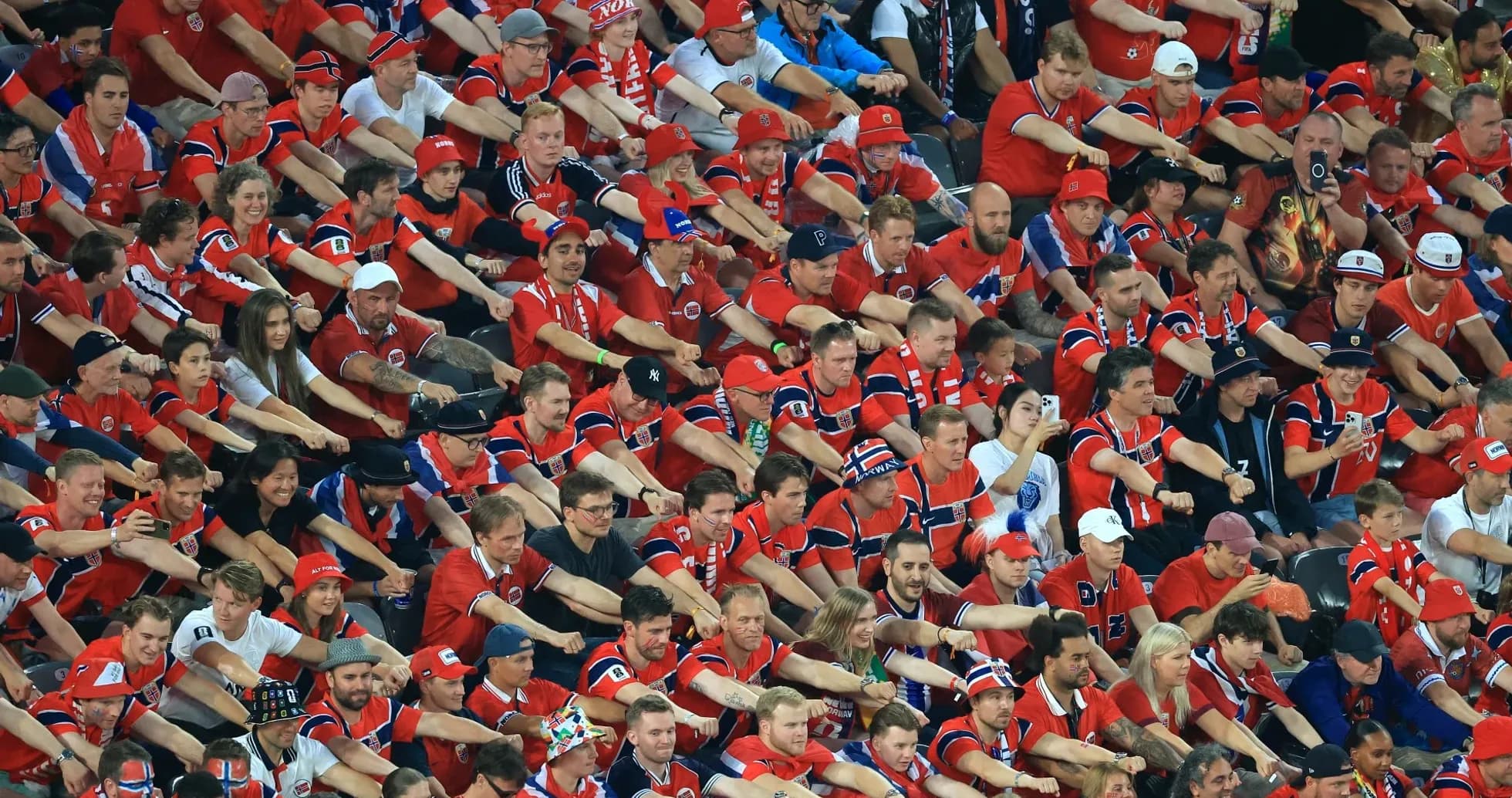
At Boston Stadium, France and Norway meet at 3pm EDT in a fixture that decides who walks out of Group I as winners and who settles for second. The history leans heavily blue.
This is the 16th meeting between the two nations and the first since France’s 4-0 friendly win in 2014. Norway have only two competitive victories over Les Bleus, the last way back in a European Championship qualifier in 1987. Their World Cup record against European opposition tells its own story: five games, no wins, three defeats, two draws.
France arrive with far more swagger. They have won their last five World Cup matches against European sides, and Opta’s supercomputer backs them to make it six. France are given a 59.4 percent chance of victory, with a draw at 20.6 percent – enough to keep them top – and Norway at 20 percent to spring an upset.
At the same time in Toronto, Senegal and Iraq meet in a very different kind of shootout. The West Africans can no longer catch the leaders, but they still have a strong grip on a place in the last 32. Senegal are unbeaten against AFC opposition at the World Cup, having drawn with Japan in 2018 and beaten Qatar in 2022. Iraq, in contrast, have never faced an African team on this stage.
The numbers are brutal for the underdogs. Opta makes Senegal overwhelming favourites with a 77.2 percent chance of victory. Iraq sit at just 8.6 percent, with the draw at 14.2 percent. Senegal still hold a 72.2 percent probability of reaching the knockouts; Iraq’s hopes flicker at 1.1 percent.
The margins are fine. The probabilities are not.
Group H: Spain in control, Uruguay chasing, Cape Verde and Saudi Arabia on the edge
If Group I is about hierarchy, Group H is about survival.
Spain, leading on four points, face Uruguay at Estadio Guadalajara at 6pm CST. The fixture carries the weight of history: former world champions colliding at a World Cup for the first time in more than 30 years. Their two previous meetings on this stage both ended all square – a 2-2 draw in the final round of the 1950 tournament and a goalless stalemate at Italia ’90.
This time, the balance tilts sharply towards the European champions. Opta’s simulations hand Spain victory in 62.4 percent of 25,000 pre-match runs. Uruguay prevail in just 15.7 percent of them, with a draw at 21.9 percent. Spain know a win locks up first place; Uruguay know they are playing not just a giant, but the odds.
Earlier in the evening, at Houston Stadium, Cape Verde and Saudi Arabia meet in a match that will define their World Cup. It’s their first meeting at this level, and it comes with a simple equation: win, and the path to the last 32 opens; fail, and the flight home looms.
Saudi Arabia bring a solid record against African opposition – only one defeat in five World Cup games, with two wins and two draws. Yet the model leans slightly towards the islanders. Opta gives Cape Verde a 40.8 percent chance of victory, with Saudi Arabia at 33.9 percent and the draw at 25.3 percent.
The qualification picture underlines the knife-edge. Cape Verde stand at 66.7 percent to make the last 32. Saudi Arabia are at 33.3 percent. One swing of momentum in Houston and those numbers become irrelevant.
Group G: Egypt, Iran, Belgium and New Zealand in a four-way scramble
If drama has a favourite hunting ground, it might be Group G.
Egypt sit top on four points. Iran and Belgium trail on two, New Zealand on one. Every team still has something to play for. Every match carries consequence.
In Seattle, Egypt and Iran meet at 8pm PDT in a fixture laced with history, politics and pure sporting jeopardy. The teams have only met once before, at the 2000 LG Cup in Tehran, a 1-1 draw that Egypt edged on penalties. Hossam Hassan, now Egypt’s coach, scored that day; Ali Daei replied for Iran.
This time, the stakes are far higher. Iran arrive with an unbeaten World Cup record against African opposition – a run that includes a win over Morocco in 2018 and draws with Angola in 2006 and Nigeria in 2014. Yet the supercomputer tips Egypt. They hold a 42.9 percent chance of victory, with the draw at 32.2 percent and Iran at 24.9 percent.
Across the border in Vancouver, New Zealand and Belgium kick off at the same time at BC Place. It is their first-ever meeting and a clash of very different World Cup profiles.
New Zealand have not lost to European opposition in their last two World Cup games, drawing with Slovakia and famously with Italy in 2010. Belgium, though, carry the weight of expectation and a curious piece of potential history: they could become the first European side since their own 1998 team to draw all three group matches at a World Cup.
Opta does not see much room for romance. Belgium are given an 80.3 percent chance of victory. A draw lands at 11.8 percent. New Zealand win just 7.9 percent of simulations. For the All Whites to extend their stay, they will need to punch far above those numbers.
The table: perfection, powerhouses and 13 places left
By Friday morning, six groups are done. The picture is clearer, but far from complete.
Mexico stand alone as the only team with a perfect record: three wins from three, nine points, Group A wrapped up with a flourish. South Africa, Switzerland, Canada, Bosnia and Herzegovina, Brazil, Morocco, USA, Australia, Germany, Ivory Coast, Ecuador, Netherlands, Japan, Sweden, France and Norway have all secured their places in the Round of 32.
Yet the tournament remains wide open. Groups G, H and I will settle today. Groups J, K and L finish on Saturday. Thirteen spots in the knockout rounds are still there to be claimed.
Some will go to heavyweights. Some may belong to teams whose names were barely whispered before the first ball was kicked.
Turkiye sting the US at the death
Not every story this week has hinged on qualification.
At SoFi Stadium, Turkiye and the United States met in a Group D finale that meant nothing on paper and everything to those on the pitch. The US had already wrapped up top spot. Turkiye were already out. The script suggested a dead rubber.
The players tore it up.
In front of nearly 70,000 fans, the two sides produced an open, high-tempo game that ended with a sting in the tail. Turkiye snatched a 3-2 win thanks to a 98th-minute winner, a late twist in a match that never slowed down. US coach Mauricio Pochettino made nine changes, handing seven players their first World Cup starts, and still the tempo never dipped.
The result will not change the bracket. It will live long in the memory all the same.
Africa’s surge: six through, more chasing history
Africa arrived at this expanded 48-team World Cup with 10 representatives. The continent could yet turn that into a historic knockout presence.
Morocco and South Africa are already through. Ivory Coast have booked their ticket as well. Behind them, Egypt, Algeria, DR Congo, Ghana and Cape Verde go into their final group games with destiny in their own hands.
Eight African teams in the last 32 is still on the table. For a continent long told its potential was theoretical, the 2026 tournament is starting to look like a reckoning.
Mexico perfect, Dutch orange and a Colombian anthem for one
Away from the spreadsheets and simulations, this World Cup keeps producing images that will outlast the scores.
At the Azteca, Mexico completed a perfect group stage with a 3-0 win over Czechia. Already sure of top spot, the cohosts could have eased off. They didn’t. Mateo Chavez broke the deadlock after the break, Julian Quinones doubled the lead with his second of the tournament, and substitute Alvaro Fidalgo added a third. Czechia’s hopes of the last 32 died on the same night Mexico underlined their credentials as serious contenders.
North in Kansas City, more than 35,000 Netherlands supporters turned downtown into a rolling carnival. The Oranje Fanwalk, led by the iconic orange bus, flooded the Power & Light District and the streets beyond with colour, song and flags before the match against Tunisia. Locals joined in, neutrals were swept along, and Kansas City briefly felt like a Dutch city transplanted into the American Midwest.
Then came one of the tournament’s most touching scenes in Group K. Before Colombia faced DR Congo, thousands of Colombian fans fell silent as a lone DR Congo supporter sang his national anthem. No backing track. No choir. Just one voice, carried across the stadium. When he finished, the Colombians roared their approval, applauding and embracing him in a moment that spread rapidly across social media. Colombia later won 1-0 to reach the last 32, but it was the anthem that lingered.
Infantino in two places at once
The World Cup also found time for the surreal.
During the final Group E games, fans watching Ecuador vs Germany and Curacao vs Ivory Coast looked up at the big screens and saw the same face: FIFA President Gianni Infantino, apparently present at both matches, which were being played at the same time in different cities.
Clips flew around social media. Jokes about cloning and doppelgängers followed. In a tournament stretched across the US, Canada and Mexico, the sight of the president seemingly defying geography only added to the sense of a World Cup like no other.
On the pitch that night, Ecuador stunned Germany 2-1, while Ivory Coast beat Curacao 2-0 to book their own place in the Round of 32. The football was dramatic. The optics were stranger still.
A World Cup about borders, and the people who cross them
Beyond the stadiums, the 2026 World Cup has become a stage for a deeper tension: football’s promise of global unity set against increasingly restrictive border policies.
Speaking on The Take, journalist Boima Tucker described travelling across host cities and finding immigrant communities turning the tournament into their own celebration. Moroccan and Senegalese fans in New York. Cape Verdean supporters in Massachusetts. Thousands of Ghanaians packing a watch party in Toronto. Living rooms, bars and public squares becoming temporary extensions of home.
“It’s been wonderful to get an intimate look at how the World Cup has affected people in their homes,” Tucker said. “People are excited to talk about their teams and their countries.”
Yet those celebrations sit alongside real obstacles. Iran’s national team has been based in Tijuana, crossing into the US only for matches. Football officials and relatives of players have struggled to secure visas. The paperwork and uncertainty cut into the one thing athletes crave most at a World Cup: focus.
“When you’re an athlete, you want to be locked in. You want to be concentrating on the field, on the results,” Tucker said. “If you have to jump through hurdles, that’s definitely going to affect the field of play.”
He framed the tournament as a mirror of a wider reality. The world, he argued, runs on a system that restricts movement. High-profile reunions and visa battles may make headlines, but they rarely shift the underlying rules.
Even so, Tucker sees something rare in what this World Cup is creating: spaces where people from different ethnic, national and class backgrounds briefly share the same joy. Immigrant communities celebrating side by side. Strangers learning each other’s songs. Borders, for a few hours, feeling less rigid.
“I hope people remember this World Cup as one in which people across ethnic lines, national identities and class lines were able to briefly mingle and learn something about each other,” he said. “More than anything, those borders that we have in our daily lives were briefly overcome.”
On Friday, as France and Norway chase top spot, as Egypt, Iran, Belgium and Cape Verde fight to stay alive, and as fans march, sing and argue about probabilities, that question hangs over the tournament:
When the final whistle blows on 2026, will the football have done enough to make those brief crossings of the line matter?