.svg&w=384&q=75 "Naijagoal logo")

USMNT vs Germany: A Clash of Styles and High Stakes
The World Cup hasn’t kicked off yet, but Soldier Field is about to feel like a stress test. Two big football nations, two demanding managers, and one friendly that looks anything but gentle.
On one side, Mauricio Pochettino’s USMNT, still trying to harden its identity. On the other, Julian Nagelsmann’s Germany, rich in reputation, short on certainty. Both coaches like risk. Both want front-foot football. Neither is wired to park the bus in a showcase game like this.
USMNT: Pochettino Walks the Line Between Continuity and Caution
The headline concern for the United States is simple and serious: Chris Richards is almost certainly out. The Crystal Palace center back arrived with ankle ligament damage, and his situation has deteriorated to the point where Pochettino may have to make an injury-enforced roster change before the World Cup even starts. What’s clear already: Richards will not feature in Chicago.
That absence shapes everything at the back. It pushes the conversation from “Who starts?” to “Who’s left?” and forces Pochettino to weigh stability against experimentation in the final tune-up.
The larger tactical question revolves around rhythm. Does Pochettino stick with something close to his first-choice XI, as he did against Senegal, and then unleash a wave of changes? Or does he flip the script, hand minutes to the supporting cast from the start, and send in the stars late for a final jolt before the tournament?
His approach against Senegal offers a strong clue. He changed all but one of his outfield players by halftime, a dramatic reset that spoke to his priority: sharpening his core group while keeping the rest of the squad involved. That pattern points toward another strong initial lineup, with targeted upgrades from the bench.
Two names jump out in that regard. Folarin Balogun and Weston McKennie, both used as substitutes six days earlier, are prime candidates to step into starting roles here. Balogun brings penalty-box edge and vertical threat. McKennie adds aggression, late runs and a different kind of bite in midfield.
There’s also a clear expectation in goal. Matt Freese, the only goalkeeper who didn’t see the pitch against Senegal, is in line to start. It’s his chance to stake a claim as a trusted option behind the established names.
Pochettino is expected to keep faith with the 3-4-3 that gives his attacking talent freedom while protecting a defense missing a key piece. The projected XI, left to right:
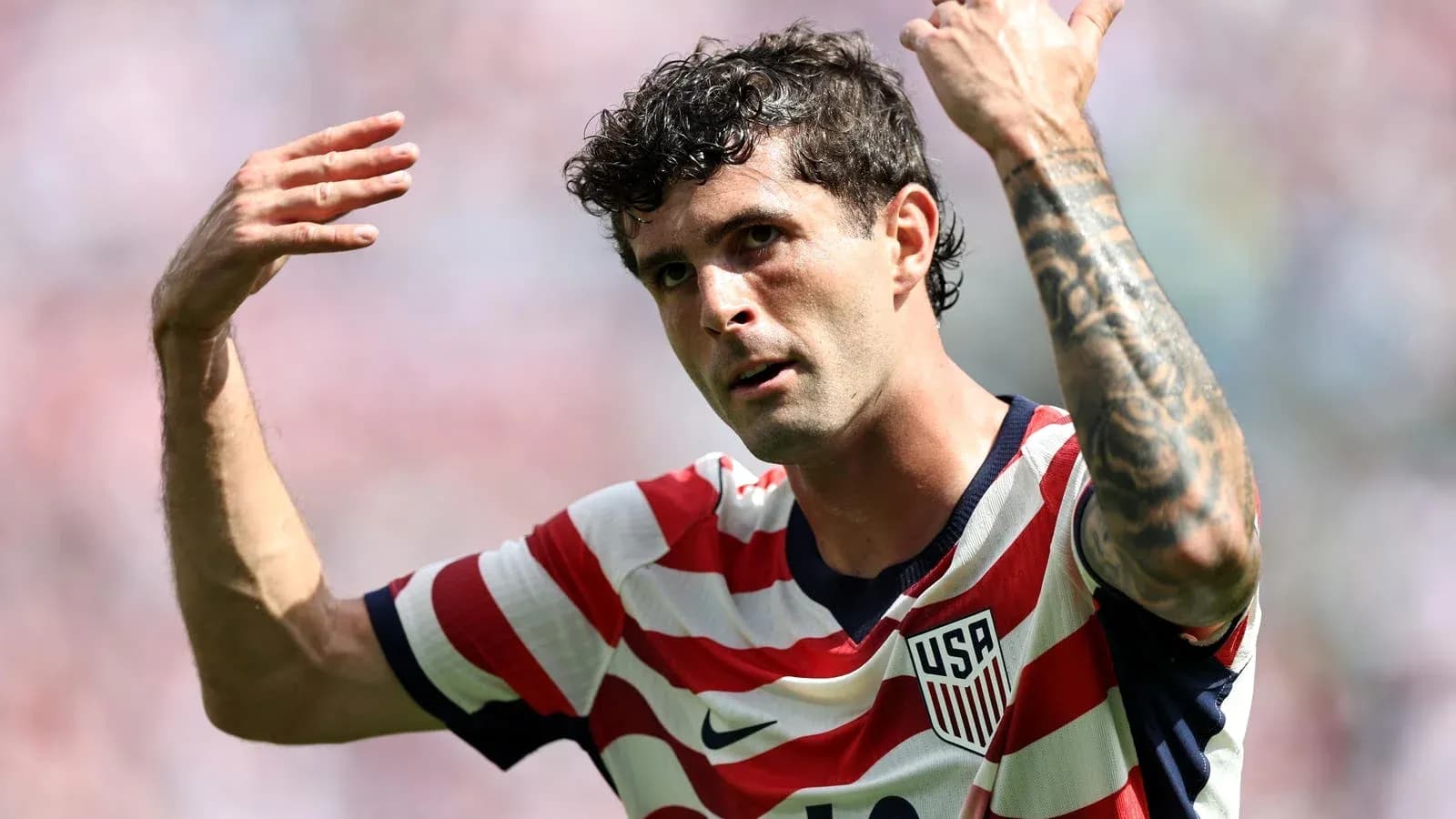
Matt Freese (GK); Tim Ream, Mark McKenzie, Alex Freeman; Antonee Robinson, Tyler Adams, Weston McKennie, Sergiño Dest; Christian Pulisic, Folarin Balogun, Gio Reyna.
That shape puts a lot on the wingbacks and the double pivot. Robinson and Dest must race up and down the flanks without leaving too much space behind. Adams and McKennie will be asked to control the middle against a German unit that can overload central areas with technicians.
It’s bold. It’s vulnerable. It’s exactly the sort of setup that produces drama.
Germany: Star Power, Heavy Legs, and a Likely Shake-Up
Germany arrive with the bigger names and the bigger questions. Their 4–0 dismantling of Finland in Mainz looked comfortable on the scoreboard and ruthless in its timing. All four goals came between the 34th and 63rd minutes, a burst of control and efficiency that briefly made everything feel familiar again.
Deniz Undav grabbed a brace in that match, extending his breakout Stuttgart season into the international arena. His finishing has turned what once looked like a fringe call-up into a genuine option for Nagelsmann.
But that Finland game also complicates the picture. Nagelsmann leaned heavily on his chosen group, running most of that squad through the full 90 minutes. Then came the long flight to the United States just two days later. Tired legs and jet lag are not ideal conditions for another high-intensity outing.
So the response is obvious: rotation. Germany are expected to look very different against the USMNT, with wholesale changes likely across the pitch.
The goalkeeper situation adds another wrinkle. Manuel Neuer, back from international retirement for a fifth World Cup, is an injury doubt for Saturday. His status hangs over the camp, but the expectation is that Oliver Baumann steps in for this match, giving the veteran a controlled audition on American soil.
There’s also the matter of Kai Havertz. The Arsenal midfielder wasn’t involved in the Finland sendoff because of his club commitments in the UEFA Champions League on June 30. That absence almost guarantees he’ll be thrown straight into action here, both to regain sharpness and to reconnect with his international teammates.
Further back, Pascal Groß waits for his chance. The experienced defensive midfielder stayed on the bench last time out, but his game management and positional discipline make him a strong candidate to see the field against the USMNT, especially with Nagelsmann likely to refresh his core.
All signs point to a 4-2-3-1, structured but flexible, with a technical spine and pace out wide. Projected XI, left to right:
Oliver Baumann (GK); David Raum, Nico Schlotterbach, Waldemar Anton, Joshua Kimmich; Leon Goretzka, Pascal Groß; Florian Wirtz, Kai Havertz, Leroy Sané; Nick Woldemade.
That setup offers a fascinating clash of styles. Kimmich tucking inside from right back, Raum bombing on from the left, Wirtz drifting between the lines, Sané attacking space, Havertz linking everything together. It’s a system designed to pin opponents back and ask constant questions of their defensive structure.
Against a US back three missing Richards, those questions could be relentless.
A Match Built for Chaos, Not Caution
Strip away the names and reputations, and one thing stands out: this game is unlikely to be quiet.
Both Pochettino and Nagelsmann lean toward aggressive setups. Both want their sides to build chemistry in attack, not hide behind conservative blocks. The USMNT’s open, chance-heavy meeting with Senegal set the tone for this window. Germany’s ruthless flurry against Finland underlined their own attacking intent.
The setting adds another layer. Soldier Field will host a crowd that might not feel like a traditional home advantage for the United States. Chicago’s deep German-American roots suggest a more balanced atmosphere, perhaps even a slight tilt toward the visitors in terms of noise and color. For a friendly, it could feel oddly neutral.
On pure pedigree, a full-strength Germany should edge this contest. Their squad is stacked with Champions League regulars, players accustomed to the pressure of major tournaments and knockout nights. If Nagelsmann went all-in with his best XI, you’d lean their way.
But he probably won’t. The heavy minutes against Finland, the travel, the need to spread game time before the World Cup — all of it points toward a rotated side. That opens the door for a more even contest, especially if the USMNT stick with a strong core and only adjust in key areas.
Defensive frailties on both sides only push the needle further toward a wild, end-to-end affair. The US back line is patched together. Germany’s rotated defense will be feeling its way into rhythm. In front of them, there is too much creative talent, too much pace, too many players who only think in one direction.
Goals feel less like a prediction and more like an inevitability.
The call? A high-scoring stalemate that reflects the uncertainty and ambition in both camps.
USMNT 2, Germany 2.
For two managers under constant scrutiny, a breathless draw might not answer every question. But it will raise a more compelling one: when the World Cup pressure really bites, which of these volatile, attacking projects will hold its nerve?