.svg&w=384&q=75 "Naijagoal logo")

U.S. Men's National Team Prepares for World Cup Opener Against Paraguay
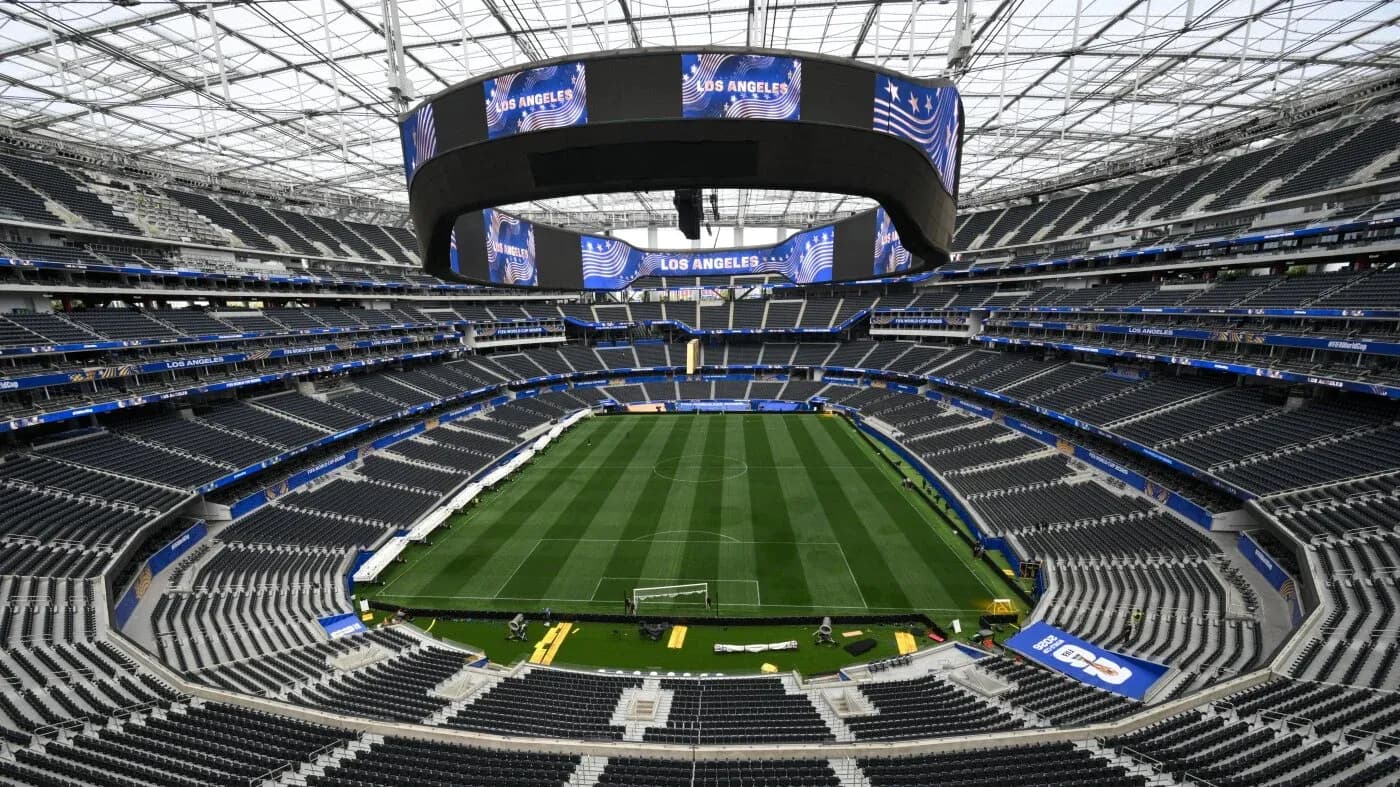
INGLEWOOD, Calif. — The World Cup is back in the United States, and this time the stakes feel very different.
On Friday night in Southern California, the U.S. men’s national team walks into a moment it has been chasing for nearly a decade: a home World Cup opener against Paraguay, the first step in a campaign designed to erase years of inferiority on the global stage.
This is not 1994 revisited. The sport is bigger, the scrutiny sharper, and the expectations far less forgiving. U.S. Soccer has been building toward 2026 as a generational pivot point, the tournament that is supposed to prove the country can do more than host well and bow out politely.
For most of the modern era, the game’s traditional powers in Europe and South America have kept the U.S. firmly in its place. One quarterfinal run in 2002 remains the high-water mark. Since then, just three World Cup wins across multiple tournaments — a thin return for a nation that has poured money, infrastructure, and marketing muscle into the sport.
Now comes the test of whether that investment has finally produced something different.
A golden generation, on home soil
For once, the optimism isn’t built on wishful thinking and highlight reels from MLS. This U.S. squad is anchored by players who live every week in the furnace of Europe’s top leagues.
- Tyler Adams, the heartbeat in midfield, operates in the Premier League.
- Behind him, Chris Richards and Antonee Robinson are regulars in England as well, hardened by the tempo and physicality of that competition.
- Weston McKennie, a relentless presence in the middle of the park, has become a trusted figure at Juventus.
- Christian Pulisic, no longer the teenage prodigy but a 27-year-old leading man, has reestablished himself as a star at AC Milan.
They are not tourists in Europe. They are central pieces.
“This is for me the biggest opportunity to grow the game, to inspire people, to show that American players are at the level of the rest of the world,” Adams said on Thursday, framing the tournament as something larger than a month of matches.
That belief, that insistence that the U.S. belongs in the same breath as the elite, will be tested from the opening whistle.
Paraguay first, and wounded
Paraguay, ranked No. 40 in the world, offers a tricky first hurdle. The two sides met in a feisty friendly last November, a 2-1 U.S. win that descended into a stoppage-time scuffle. The memory lingers, especially for the forwards who absorbed the tackles and the defenders who dished them out.
“We know that they’re gonna be super, super aggressive, so we’re going to have to match that. We saw that the last time we played them,” said U.S. forward Tim Weah.
The South Americans may arrive diminished. Their brightest young talent, 22-year-old midfielder Julio Enciso, was stretchered off during the first half of their final warm-up match last week and is in danger of missing out. If he cannot go, Paraguay loses a key creative spark and a player capable of tilting a game with one moment.
The U.S. cannot count on that. Not in a World Cup opener. Not with the eyes of a country — and much of the football world — fixed on how this much-hyped generation handles the pressure of expectation.
A demanding group awaits
The path out of the group offers no breathers. After Paraguay, the U.S. faces Australia next week, a side that has built its identity on discipline and collective effort. Then comes Turkey on June 25, a team with enough technical quality and volatility to wreck any carefully laid plans.
Home advantage can lift or suffocate. The stadiums will be full, the noise relentless, the margins thin. For this U.S. team, that is exactly the point. They wanted the weight of a home World Cup. They insisted they were ready for it.
Now they have to prove it, one match at a time, starting under the lights in Inglewood.