.svg&w=384&q=75 "Naijagoal logo")

Trabzonspor vs Ferencvarosi TC: Tactical Breakdown of a 0-1 Defeat
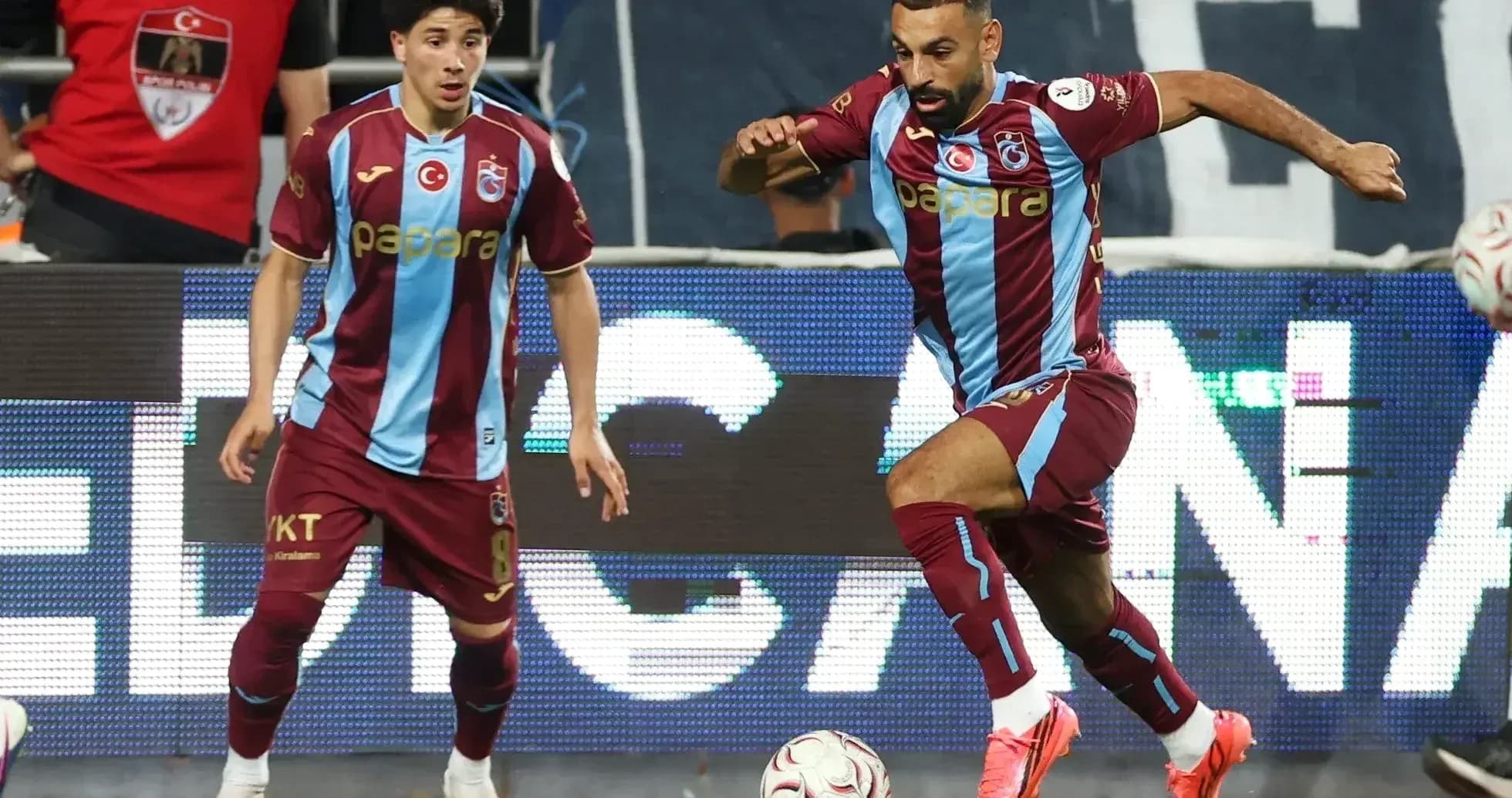
Trabzonspor’s 0-1 home defeat to Ferencvarosi TC at Papara Park in the UEFA Europa League Play-offs was defined by a stark contrast between territorial dominance and penalty-box efficiency. Trabzonspor controlled 66% of the ball, racked up 18 attempts with 3 on goal and 6 blocked, yet never broke through. Ferencvarosi TC, with just 34% possession and 7 shots (4 on goal), struck once through K. Zachariassen and then leaned into a compact, combative game plan. The visitors absorbed pressure, accepted a heavy foul count (24 fouls, 5 yellow cards), and saw the contest tilt further their way when C. Nwaiwu’s late red card left Trabzonspor to finish with ten men.
Tactical Setup
The game’s tactical storyline hinged on how each side interpreted its base shape. Fatih Tekke set Trabzonspor up in a 4-2-3-1, looking to control rhythm through the double pivot of B. Bouchouari and M. Kabasakal and create overloads between the lines via M. Salah, N. Saviolo and U. Nayir behind the focal point P. Onuachu. The structure delivered territory and volume: 7 corners and a clear territorial lock on Ferencvarosi TC’s half. However, the shot profile betrayed a recurring problem: many of Trabzonspor’s 18 efforts were either from suboptimal zones or heavily contested, as reflected in the 6 blocked shots. The lack of recorded expected goals underlines that, while the hosts fired frequently, they struggled to convert possession into consistently high-quality chances.
Ferencvarosi TC’s 4-4-2 under Balazs Borbely was built for compactness and transition. The back four of O. Nagy, M. Gomez, T. Raemaekers and Cadu sat relatively narrow, with the midfield line—C. O’Dowda, M. Corbu, P. Rommens and K. Zachariassen—shuttling aggressively to the ball. Up front, Dele and L. Joseph were tasked with pressing triggers rather than sustained possession. The visitors’ 4 shots on goal from only 7 attempts suggest a more selective, vertical attacking approach: fewer attacks, but better-prepared ones, culminating in the decisive 17th-minute strike.
Key Moment
The key tactical moment arrived at 17'. K. Zachariassen, breaking from midfield, finished a move assisted by O. Nagy to make it 0-1. For Ferencvarosi TC, this early lead allowed the game plan to fully crystallize: drop the block, compress central spaces, and invite Trabzonspor into wide areas where crosses could be defended in numbers. From that point, the visitors were content to trade field position for compactness, knowing that every Trabzonspor attack into traffic increased the likelihood of blocked shots and second-ball scrambles rather than clean finishes.
Second Half Adjustments
Trabzonspor’s in-game adjustments at half-time were aggressive and revealing. At 46', R. Malinovskyi (IN) came on for B. Bouchouari (OUT), and A. Simsir (IN) replaced U. Nayir (OUT). These changes reweighted the 4-2-3-1 towards creativity and vertical threat: Malinovskyi’s presence offered long-range shooting and line-breaking passing from deeper zones, while Simsir added mobility and dribbling to disrupt Ferencvarosi TC’s compact shape. Later, at 64', E. Muci (IN) for N. Saviolo (OUT) and at 83', M. Eskihellac (IN) for W. Pina (OUT) further underlined Tekke’s intent to flood the final third with technical profiles and attacking full-back thrust.
Yet structurally, Trabzonspor’s problem was less about numbers forward and more about spacing. With so much ball possession and a high defensive line, the double pivot was often pulled wider to circulate the ball, leaving central lanes congested but not penetrated. Crosses towards P. Onuachu were a recurring outlet, but Ferencvarosi TC’s centre-backs and central midfielders collapsed around the box effectively, contributing to those 6 Trabzonspor shots being blocked. Without a consistent runner beyond the last line from deep, Ferencvarosi TC could defend facing play, rarely being forced to turn and chase.
Ferencvarosi TC's Tactics
Ferencvarosi TC’s substitution pattern was tactically coherent and aimed at maintaining intensity in their low-to-mid block. At 61', A. Nagy (IN) came on for Dele (OUT), and G. Kanichowsky (IN) replaced P. Rommens (OUT), injecting fresh legs into both the forward line and midfield. At 78', A. Osvath (IN) for K. Zachariassen (OUT) and K. Lisztes (IN) for L. Joseph (OUT) refreshed the wide and central lanes, preserving pressing energy and defensive concentration as Trabzonspor’s pressure peaked. At 89', N. Zohore (IN) replaced Cadu (OUT), a late defensive adjustment to reinforce the back line for the final aerial bombardment.
Discipline and Fouls
Discipline was a structural tool for the visitors. Ferencvarosi TC committed 24 fouls and collected 5 yellow cards—Dele (29', Roughing), K. Zachariassen (43', Roughing), P. Rommens (50', Holding), A. Osvath (89', Roughing), and G. Kanichowsky (90+1', Unsportsmanlike conduct). This pattern reflects a deliberate readiness to break play, disrupt rhythm, and prevent Trabzonspor from building continuous momentum between the lines. The fouls were spread across lines of the team, signalling a coordinated tactical foul strategy rather than isolated indiscipline.
Trabzonspor, by contrast, committed only 3 fouls but suffered the game’s most damaging disciplinary moment. Deep in added time at 90+6', C. Nwaiwu received a red card for Roughing. Tactically, the dismissal arrived too late to change the match pattern significantly, but it capped a night where Trabzonspor’s frustration at their inability to convert dominance into goals finally spilled over. The earlier absence of yellow cards for the hosts also hints at a less aggressive counter-press, which may have allowed Ferencvarosi TC’s rare transitions to be more controlled.
Statistical Verdict
From a statistical verdict perspective, the match is a classic example of possession without penetration versus defensive efficiency. Trabzonspor’s 66% ball possession, 7 corners and high shot volume reflect a side structurally capable of territorial control. However, the combination of 3 shots on goal and 6 blocked attempts shows that Ferencvarosi TC’s compact 4-4-2 successfully protected the most valuable spaces. Ferencvarosi TC’s 34% possession and 4 shots on goal from just 7 total attempts underline a ruthlessly pragmatic approach: fewer attacks, but with clearer end products.
The absence of recorded xG and goalkeeper saves data prevents a deeper quantitative dive into chance quality and shot-stopping, but the raw patterns are clear. Ferencvarosi TC executed a low-possession, high-resistance game plan almost perfectly, using tactical fouling and disciplined shape to neutralize Trabzonspor’s 4-2-3-1. Trabzonspor, despite structural dominance, lacked the vertical variety and penalty-box clarity to turn control into goals, and their late red card only reinforced the sense of a tactical plan that ran out of solutions before the final whistle.