.svg&w=384&q=75 "Naijagoal logo")

Top 100 Football Academies Worldwide: Latest Rankings Revealed
Overview of the World's Leading Football Academies
A fresh study has unveiled and ranked the top 100 football academies globally, highlighting where today's elite players began their journeys. The foundation laid in these academies often shapes a player's future career in professional football.
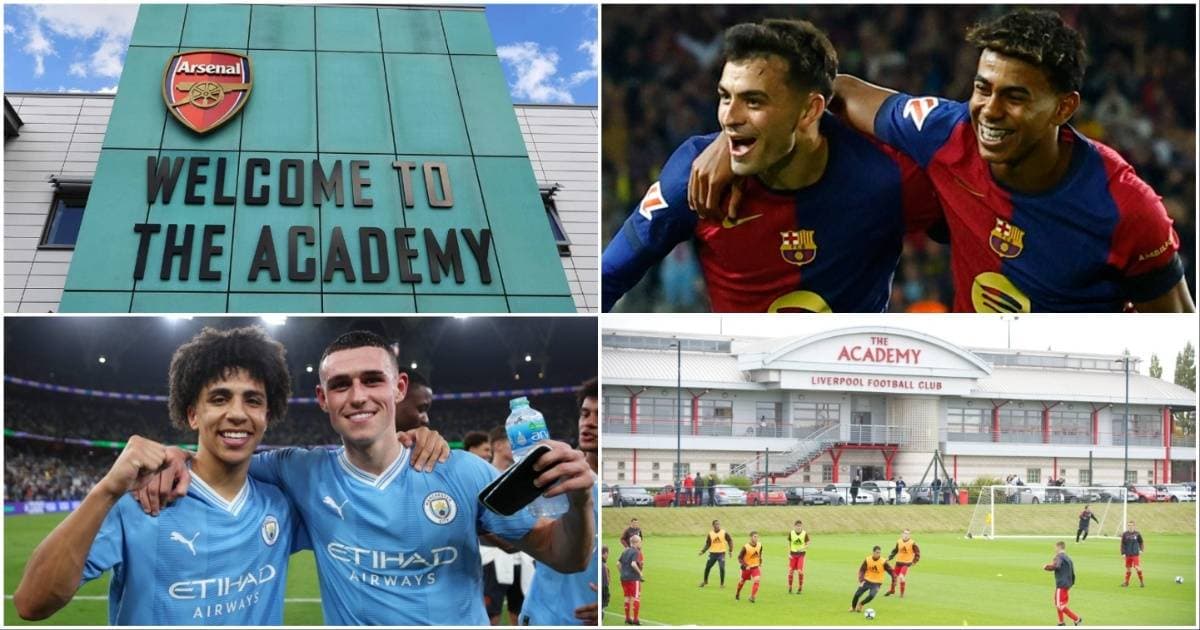
Football demands commitment starting from grassroots levels, and the early years spent in academies play a big role in defining a player's path. While famous names like Manchester United's Carrington Academy, Barcelona's La Masia, and Ajax's Jong Ajax are widely celebrated for producing exceptional talent, numerous other academies quietly nurture stars without much fanfare.
The CIES Football Observatory annually assesses clubs worldwide by analyzing players trained by them currently active in 49 leagues. The rankings use a training index considering the number of players developed, the level of clubs they last played for, and minutes logged in official matches during the past year.
Ranks 100-91: Diverse Talent Hubs
Atalanta, winners of the 2024 Europa League, rank surprisingly low at 93rd. Other notable academies here include Villarreal, Basel, Braga, and Chilean giants Colo-Colo. Atalanta's academy, named Dedicata a Mino Favini after the revered youth coach, counts players like Alessandro Bastoni and Amad Diallo among its graduates.
Le Havre sits at 100th yet has a history of nurturing stars such as Paul Pogba, Dimitri Payet, Lassana Diarra, and Steve Mandanda. Recently, bigger Ligue 1 clubs have overshadowed them, but their legacy remains strong.
- 100: Le Havre AC (France) – 37 players, Index 32.6
- 99: Caracas FC (Venezuela) – 49 players, Index 32.6
- 98: FC Basel (Switzerland) – 31 players, Index 32.8
- 97: FC Copenhagen (Denmark) – 30 players, Index 32.8
- 96: Lokomotiv Moscow (Russia) – 30 players, Index 32.8
- 95: SC Braga (Portugal) – 30 players, Index 33.1
- 94: Colo Colo (Chile) – 47 players, Index 33.2
- 93: Atalanta (Italy) – 25 players, Index 33.5
- 92: Gimnasia La Plata (Argentina) – 26 players, Index 33.5
- 91: Villarreal (Spain) – 30 players, Index 34.1
Ranks 90-81: Italian Clubs and Beyond
Inter Milan and Juventus appear lower in the rankings, suggesting Serie A clubs lean more on transfers than homegrown talent. Yet players like Kenan Yildiz, Dean Huijsen, and Federico Dimarco prove their academies still produce quality professionals.
Pakhtakor (Uzbekistan) and Sporting Cristal (Peru) demonstrate that reputation and facilities aren’t everything; both have dozens of graduates playing professionally despite lacking global superstars. Atletico Mineiro is the first Brazilian club on this list, known for producing Manchester City’s young prospect Savinho.
- 90: Pakhtakor (Uzbekistan) – 57 players, Index 34.1
- 89: Liverpool FC (Uruguay) – 37 players, Index 34.7
- 88: Inter Milan (Italy) – 29 players, Index 35.0
- 87: Juventus (Italy) – 32 players, Index 35.0
- 86: Standard Liege (Belgium) – 34 players, Index 35.5
- 85: LDU Quito (Ecuador) – 40 players, Index 35.8
- 84: Sporting Cristal (Peru) – 56 players, Index 35.9
- 83: CA Union (Argentina) – 36 players, Index 37.0
- 82: Deportivo Saprissa (Costa Rica) – 45 players, Index 37.1
- 81: Atletico Mineiro (Brazil) – 33 players, Index 37.2
Ranks 80-71: Liverpool's Youth Tradition
Liverpool maintains a proud youth tradition with stars like Steven Gerrard, Trent Alexander-Arnold, and Curtis Jones. Despite a strong commitment to youth, highlighted by five players aged 21 or under featuring in the 2024 League Cup final, Liverpool ranks only 75th, making it the lowest Premier League academy in the top 100.
They surpass clubs like AS Monaco, known for Kylian Mbappe, but trail behind smaller European academies such as MSK Zilina and FK Vojvodina, which many consider unfair.
- 80: Chivas Guadalajara (Mexico) – 37 players, Index 37.5
- 79: RCD Espanyol (Spain) – 33 players, Index 37.5
- 78: AS Monaco (France) – 36 players, Index 37.5
- 77: FC Midtjylland (Denmark) – 37 players, Index 37.9
- 76: Maccabi Tel Aviv (Israel) – 38 players, Index 38.9
- 75: Liverpool (England) – 36 players, Index 39.1
- 74: Deportivo Cali (Colombia) – 54 players, Index 39.7
- 73: MSK Zilina (Slovakia) – 41 players, Index 39.7
- 72: FK Vojvodina (Serbia) – 42 players, Index 39.9
- 71: CA Banfield (Argentina) – 49 players, Index 40.1
Ranks 70-61: Spain’s Basque Influence and More
The Basque region continues to produce top managers and players. Real Sociedad’s 'La Cantera' has nurtured exciting talents like Martin Zubimendi and Mikel Oyarzabal. Atletico Madrid also stands out with homegrown players including Rodri, Koke, Giuliano Simeone, and Pablo Barrios contributing regularly in Champions League matches.
- 70: CA Belgrano (Argentina) – 41 players, Index 40.9
- 69: Montevideo Wanderers (Uruguay) – 43 players, Index 41.0
- 68: FC Nordsjaelland (Denmark) – 39 players, Index 41.1
- 67: Independiente Medellin (Colombia) – 43 players, Index 41.9
- 66: Valencia (Spain) – 38 players, Index 42.0
- 65: Atletico Madrid (Spain) – 33 players, Index 42.2
- 64: Slavia Praha (Czechia) – 39 players, Index 42.3
- 63: Athletic Club (Spain) – 28 players, Index 42.5
- 62: Sparta Praha (Czechia) – 41 players, Index 42.8
- 61: Real Sociedad (Spain) – 27 players, Index 43.3
Ranks 60-51: Established Giants and Rising Stars
Manchester United's Carrington Academy once fed Sir Alex Ferguson's success with talents like Marcus Rashford and Scott McTominay. Now ranked 56th, the academy remains relevant. Bayern Munich, two spots ahead at 54th, relies on stars like Jamal Musiala and Karim Adeyemi.
Feyenoord sticks to its motto “Getting Better Every Day,” balancing footballing skill with personal growth. Their graduates total 47 professionals, reflecting a strong development philosophy.
- 60: Club Guarani (Paraguay) – 46 players, Index 43.5
- 59: FC Porto (Portugal) – 38 players, Index 44.0
- 58: Athletico Paranaense (Brazil) – 35 players, Index 44.5
- 57: Olimpia Asuncion (Paraguay) – 55 players, Index 44.5
- 56: Manchester United (England) – 40 players, Index 45.2
- 55: CA Independiente (Argentina) – 43 players, Index 45.2
- 54: Bayern Munich (Germany) – 40 players, Index 45.9
- 53: Club Brugge (Belgium) – 35 players, Index 47.2
- 52: CF Pachuca (Mexico) – 46 players, Index 47.4
- 51: Feyenoord (Netherlands) – 47 players, Index 47.9
Ranks 50-41: Chelsea, Arsenal, and Colombian Talent
Chelsea’s reliance on buying players overshadows their Cobham academy, despite producing stars such as Michael Olise and Declan Rice. Arsenal shows more faith in youth with key players Bukayo Saka and Myles Lewis-Skelly, though they faced challenges with Eberechi Eze’s early departure.
Envigado FC in Colombia boasts 64 graduates, emphasizing South America's growing influence.
- 50: Chelsea (England) – 34 players, Index 48.3
- 49: Envigado FC (Colombia) – 64 players, Index 48.3
- 48: Arsenal (England) – 42 players, Index 48.7
- 47: Racing Club (Argentina) – 49 players, Index 50.1
- 46: Hajduk Split (Croatia) – 40 players, Index 50.5
- 45: Argentinos Juniors (Argentina) – 48 players, Index 50.8
- 44: Stade Rennais (France) – 43 players, Index 50.9
- 43: AZ Alkmaar (Netherlands) – 43 players, Index 52.8
- 42: Shakhtar Donetsk (Ukraine) – 60 players, Index 53.1
- 41: Club Estudiantes (Argentina) – 51 players, Index 53.5
Ranks 40-31: Brazil's Talent Powerhouses
Brazil dominates this section with clubs like Fluminense, SC Internacional, Cruzeiro, and Gremio producing large numbers of professional players. Santos remains iconic for launching Neymar, whose record-breaking transfer to PSG highlights Brazil's unparalleled talent production.
- 40: Penarol (Uruguay) – 60 players, Index 53.5
- 39: RB Salzburg (Austria) – 50 players, Index 54.3
- 38: Fluminense (Brazil) – 51 players, Index 55.2
- 37: SC Internacional (Brazil) – 44 players, Index 55.4
- 36: Club Libertad (Paraguay) – 51 players, Index 55.5
- 35: Cruzeiro (Brazil) – 50 players, Index 56.0
- 34: Lyon (France) – 48 players, Index 56.1
- 33: Gremio (Brazil) – 55 players, Index 56.4
- 32: Independiente del Valle (Ecuador) – 54 players, Index 56.8
- 31: Santos (Brazil) – 53 players, Index 57.6
Ranks 30-21: Manchester City and Dutch Excellence
Manchester City's academy has been a key to their recent success with players like Cole Palmer and Phil Foden. Yet the club sometimes loses young talent prematurely. PSV Eindhoven exemplifies Dutch care in developing players, with graduates including Cody Gakpo and Memphis Depay.
Argentina’s Newell’s Old Boys have 69 graduates globally but fewer minutes played recently, reflecting a decline since their Messi era.
- 30: PSV (Netherlands) – 48 players, Index 57.8
- 29: Danubio FC (Uruguay) – 66 players, Index 58.7
- 28: Cerro Porteno (Paraguay) – 57 players, Index 58.9
- 27: KRC Genk (Belgium) – 45 players, Index 59.7
- 26: Newell's Old Boys (Argentina) – 69 players, Index 60.6
- 25: RSC Anderlecht (Belgium) – 52 players, Index 60.9
- 24: Rosario Central (Argentina) – 60 players, Index 61.7
- 23: CA Lanus (Argentina) – 65 players, Index 61.7
- 22: Atletico Nacional (Colombia) – 62 players, Index 63.2
- 21: Manchester City (England) – 50 players, Index 63.2
Ranks 20-11: PSG’s Shift to Youth and Brazilian Presence
Paris Saint-Germain shifted focus to youth under Luis Enrique, reaping rewards with Warren Zaire-Emery playing a key role in their 2025 and 2026 Champions League triumphs. Brazilian clubs Palmeiras, Flamengo, Corinthians, and Sao Paulo feature prominently, with Sao Paulo topping Brazilian academies boasting graduates like Antony.
- 20: FK Partisan (Serbia) – 70 players, Index 63.9
- 19: Paris Saint-Germain (France) – 62 players, Index 65.0
- 18: Palmeiras (Brazil) – 56 players, Index 65.1
- 17: Club Nacional (Uruguay) – 70 players, Index 65.4
- 16: CA San Lorenzo (Argentina) – 66 players, Index 66.8
- 15: Flamengo (Brazil) – 51 players, Index 67.4
- 14: Sc Corinthians (Brazil) – 57 players, Index 68.8
- 13: Dynamo Kyiv (Ukraine) – 63 players, Index 70.3
- 12: Sao Paulo (Brazil) – 65 players, Index 71.3
- 11: Red Star Belgrade (Serbia) – 79 players, Index 73.3
Ranks 10-1: Benfica Tops, Barcelona Second
Red Star Belgrade ranks 11th with 79 graduates, while Real Madrid is ninth. Despite more players, Red Star falls behind due to overall quality differences. River Plate leads Argentina with 97 graduates, even surpassing Ajax.
Surprisingly, Barcelona's La Masia ranks second, with Benfica claiming the top spot for the second year running. Benfica’s graduates include Joao Neves, Ruben Dias, Goncalo Ramos, Bernardo Silva, and Joao Cancelo.
- 10: Velez Sarsfield (Argentina) – 70 players, Index 73.8
- 9: Real Madrid (Spain) – 58 players, Index 74.8
- 8: Defensor SC (Uruguay) – 88 players, Index 77.0
- 7: Dinamo Zagreb (Croatia) – 77 players, Index 77.9
- 6: Sporting CP (Portugal) – 76 players, Index 83.4
- 5: Boca Juniors (Argentina) – 86 players, Index 95.0
- 4: Ajax (Netherlands) – 80 players, Index 97.6
- 3: River Plate (Argentina) – 97 players, Index 98.3
- 2: Barcelona (Spain) – 76 players, Index 98.7
- 1: Benfica (Portugal) – 93 players, Index 105.1