.svg&w=384&q=75 "Naijagoal logo")

Ranking the Top 10 World Cup Players in History
Top 10 Icons of the World Cup
The World Cup stands as the ultimate stage in football, where heroes are born and legends are etched into history. A single moment—whether a goal, a pass, or a save—can immortalize a player forever. But who truly stands out as the finest to ever grace this global tournament? Here, we rank the top 10 players whose impact transcended one World Cup, shaping multiple tournaments and defining eras.
10. Miroslav Klose (Germany)
Klose might not be hailed as a club legend at the highest level, but his international record is remarkable. Scoring 71 goals in 137 games, 16 came during World Cups. He became the all-time leading scorer in World Cup history during Germany’s stunning 7-1 win over Brazil in 2014, eventually retiring after lifting the trophy that year. Known for his aerial ability—he scored five headed goals in the 2002 World Cup—and his knack for being in the right place at the right time, Klose’s contributions were crucial. Germany never lost when he found the net.
9. Zinedine Zidane (France)
Zidane was a mix of brilliance and volatility. His 1998 World Cup debut nearly ended early due to a red card, yet he led France to a surprising victory over Brazil in the final with two goals. After a quiet 2002, he returned in 2006 to take France back to the final, dazzling fans with his skill. The tournament’s climax saw him sent off for a headbutt on Materazzi, but his Golden Ball win reflected his influence. Zidane’s blend of vision, finesse, and passion left a lasting impression.
8. Gerd Muller (Germany)
Muller was the quintessential striker, quick off the mark and deadly inside the box. Despite his stature, he was strong in the air and possessed an instinct few matched. With 69 goals in 62 international matches, his 14 World Cup goals across just two tournaments included the winning strike in 1974’s final. He once admitted that while some goals were more beautiful, none mattered more than the one securing his country’s championship.
7. Cafu (Brazil)
Nicknamed "Il Pendolino" in Italy for his relentless runs up and down the flank, Cafu redefined the right-back role. He combined attacking flair with defensive discipline, inspiring generations of full-backs. Participating in four World Cups and starting in three finals, Cafu won titles in 1994 and captained Brazil to victory in 2002. His iconic trophy lift in Yokohama symbolizes his career’s peak.
6. Franz Beckenbauer (Germany)
Beckenbauer revolutionized the sweeper role. Playing across three World Cups amid evolving tactics, he remained dominant. West Germany reached the 1966 final with him scoring four times, and despite injuries, he famously finished the epic 1970 semi-final against Italy with a dislocated arm. His leadership culminated in a 1974 World Cup win over the Netherlands. Called "the perfect player," he combined elegance with toughness.
5. Kylian Mbappe (France)
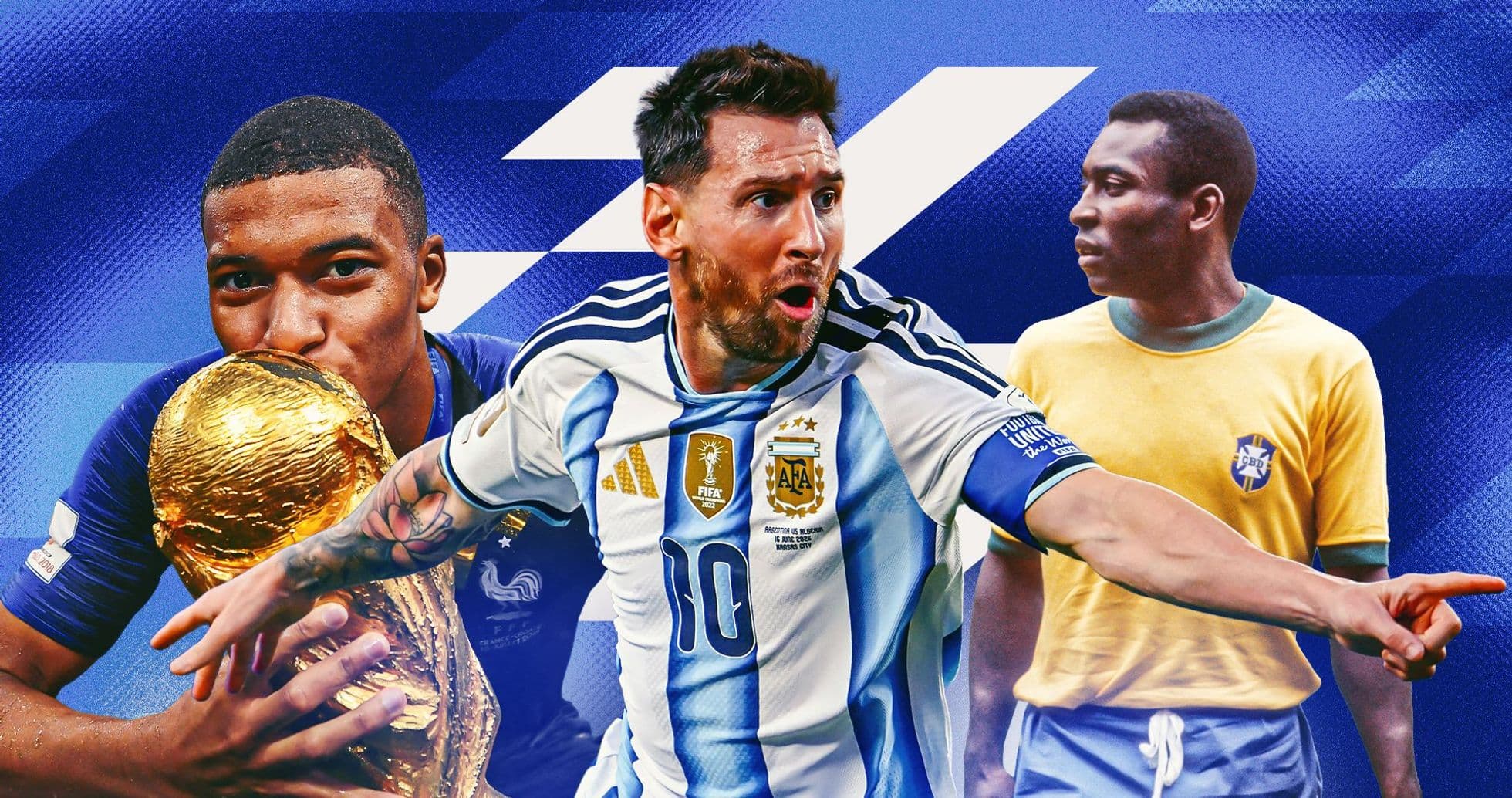
Though only 27, Mbappe’s World Cup exploits have already earned him legendary status. Named Young Player in 2018, he scored in the final to help France claim the title. Four years later, he scored a rare World Cup final hat-trick, becoming the tournament’s all-time top scorer with 22 goals after the 2026 edition. Twice winning the Golden Boot, his rapid rise and consistent impact on football’s biggest stage are undeniable.
4. Ronaldo (Brazil)
Ronaldo's 1998 final was overshadowed by illness, yet he had been the most feared striker worldwide. Blessed with speed and skill, he dazzled fans until injuries disrupted his career. His 2002 comeback saw him score eight goals, including two in the final, securing Brazil’s fifth World Cup. He described this victory as crowning his recovery and effort, marking him as one of football’s greatest forwards.
3. Diego Maradona (Argentina)
Maradona’s 1986 performance remains unmatched. Coming into peak shape after a troubled 1982 campaign, he led Argentina to glory with 14 goals scored by the team, directly influencing 10. His infamous "Hand of God" and a brilliant solo goal against England defined the tournament. Though later controversies shadowed his legacy, his 1986 dominance is unquestionable—a true triumph against all odds.
2. Lionel Messi (Argentina)
For over 15 years, Messi delivered extraordinary performances but lacked World Cup glory. Near misses in 2014 and 2018 left doubts. At 35, he stunned the world in Qatar 2022, becoming the first player to score in every knockout round and winning his second Golden Ball. Returning in 2026, he led Argentina to another final, reinforcing his GOAT status through sheer will and unmatched skill.
1. Pele (Brazil)
Pele stands alone as the King of the World Cup, part of three victorious campaigns. His 1958 debut at 17 showcased brilliance with crucial goals, earning Brazil their first title. In 1970, he shone again, leading arguably the greatest team ever to a commanding win. Opponents marveled at his talent, with one defender recalling underestimating him before the final. Pele’s legacy is woven into the fabric of football history.