.svg&w=384&q=75 "Naijagoal logo")

Spain Defeats France in World Cup Semi-finals with Tactical Mastery
France and Spain approached this World Cup Semi-finals tie at Dallas Stadium with mirrored 4-2-3-1 structures, but the tactical execution and efficiency on both sides of the ball created a clear separation in a 0-2 Spanish win. Spain edged possession 51–49, generated the better chances (xG 1.63 to 0.3) and converted their key attacking patterns, while France’s structure never fully translated into penalty-box threat despite spells of territorial pressure and more corners (7–1).
France’s 4-2-3-1 under Didier Deschamps was built on a back four of Jules Koundé, Dayot Upamecano, William Saliba and Lucas Digne, screened by Aurélien Tchouaméni and Adrien Rabiot. Ahead of them, Ousmane Dembélé and Bradley Barcola worked the flanks with Michael Olise between the lines and Kylian Mbappé as the lone forward. On paper, this offered verticality and width; in practice, France’s possession was often too flat. Their 473 total passes with 396 accurate (84%) underline a technically secure but relatively conservative circulation, much of it outside Spain’s block. Only 4 of their 10 shots came inside the box, consistent with an attack that struggled to access central finishing zones.
Spain, also in a 4-2-3-1, were more coherent between structure and output. Pedro Porro, Pau Cubarsí, Aymeric Laporte and Marc Cucurella formed the back line, with Rodri and Fabián Ruiz as the double pivot. Lamine Yamal and Alex Baena occupied the half-spaces and wide channels, Dani Olmo operated as the central creator, and Mikel Oyarzabal led the line. Spain completed 500 passes with 428 accurate (86%), using Rodri and Fabián Ruiz to repeatedly progress through the middle third. Crucially, they translated this circulation into quality: 5 of their 10 shots were inside the box, and their xG of 1.63 reflected sustained access to dangerous areas rather than speculative efforts.
First Half
The first half showed the contrasting control mechanisms. France attempted to press high from their 4-2-3-1, with Olise stepping up alongside Mbappé to form a front two out of possession. However, Spain’s double pivot, particularly Rodri, consistently found the free man by dropping between or beside the centre-backs. This allowed Spain to bypass France’s first line and move into midfield with relative comfort. The early yellow card for Adrien Rabiot on 9' for “Foul” subtly constrained France’s ability to disrupt Spain’s rhythm through aggressive challenges in central areas.
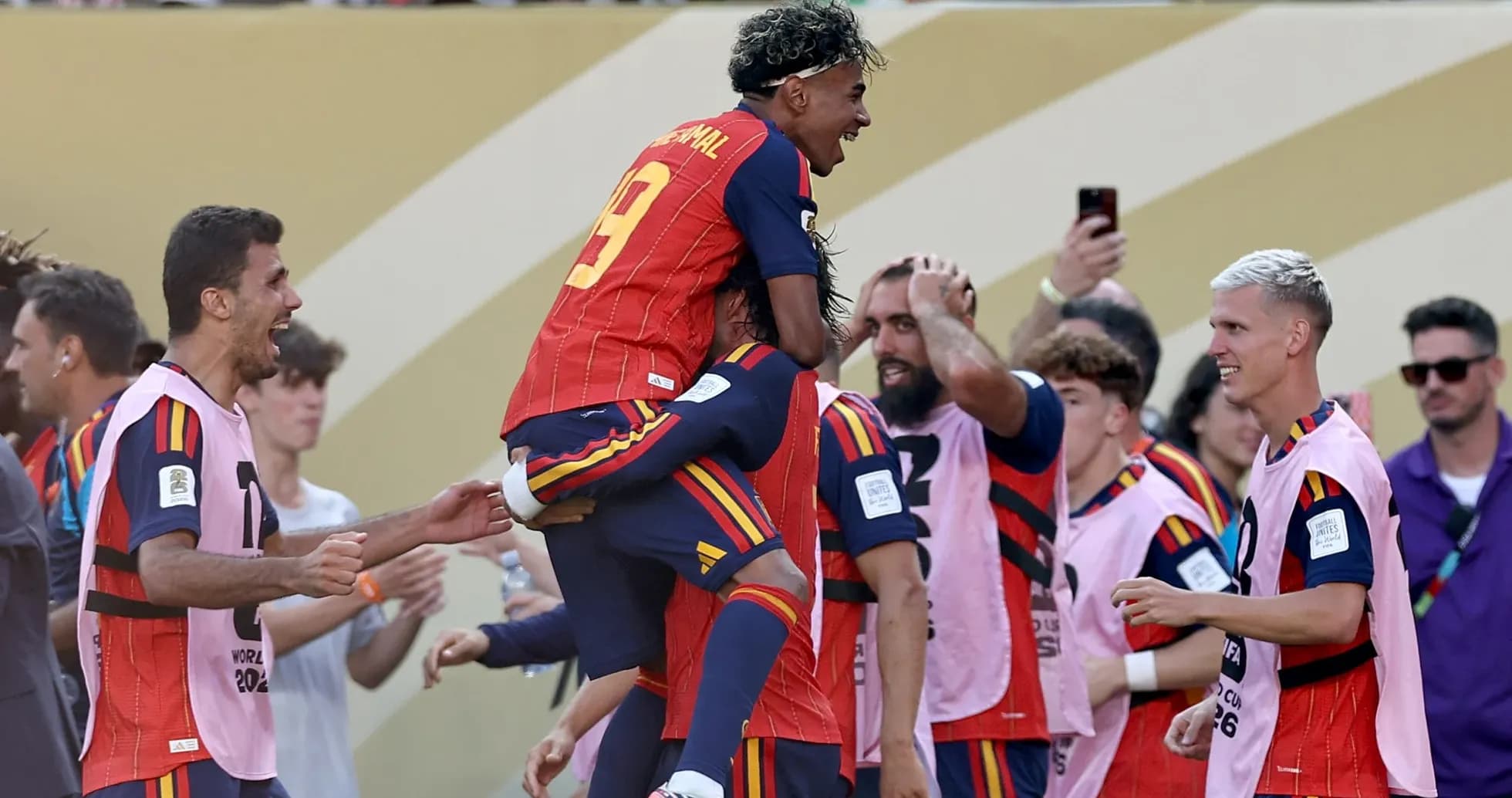
Spain’s opener, a 22' penalty converted by Mikel Oyarzabal, rewarded their superior control and box presence. Even though Spain only registered 2 shots on goal overall, their ability to get Oyarzabal into threatening positions forced France into high-stress defensive moments. The penalty also shifted the game state in Spain’s favour: they could now manage tempo, draw France onto them, and look for transitional attacks rather than forcing play.
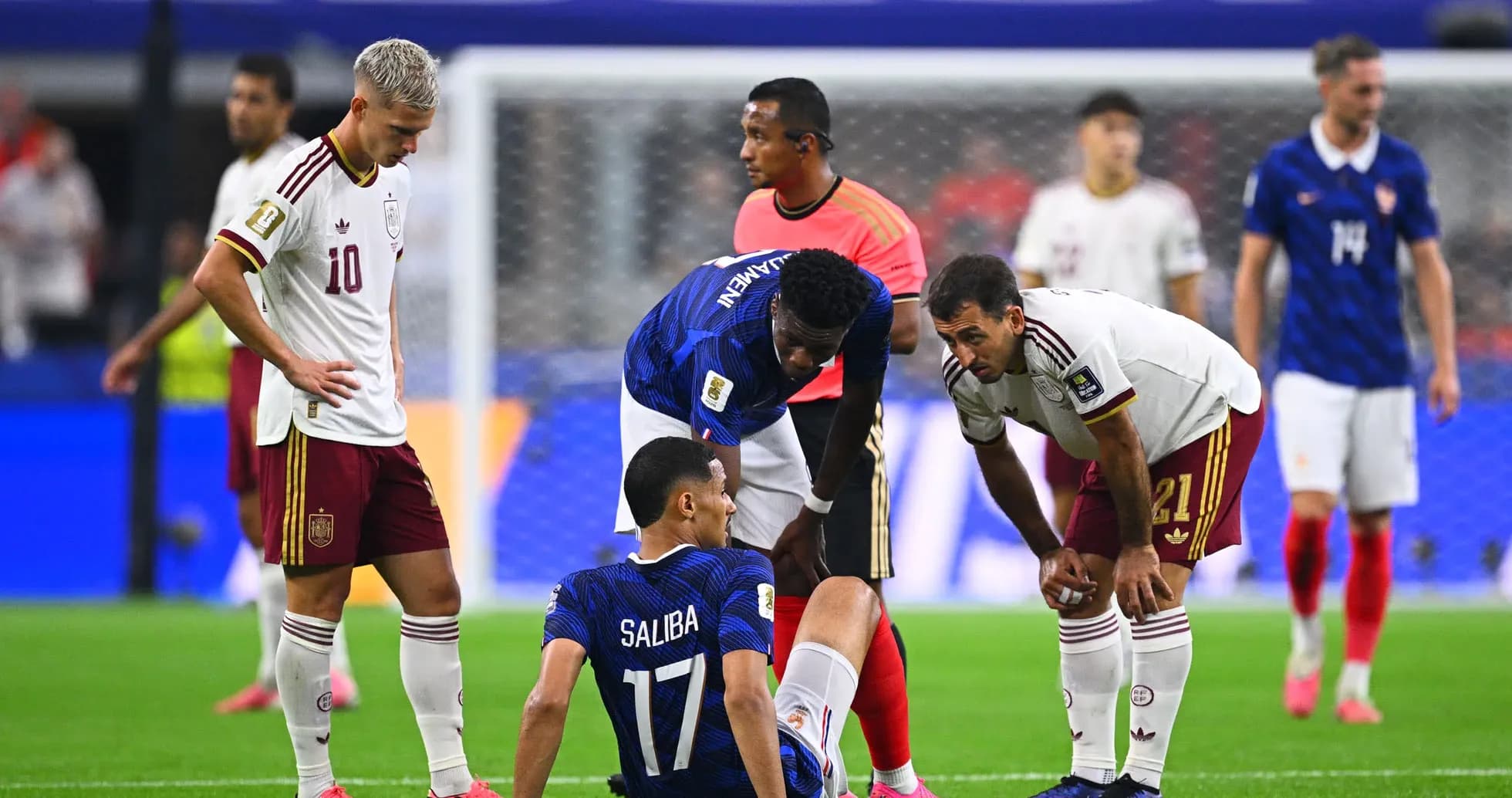
Didier Deschamps moved early to adjust his back line, with Maxence Lacroix (IN) coming on for William Saliba (OUT) at 30'. The substitution did not change the nominal shape but hinted at either a physical issue or a desire for a different profile in the defensive line. At half-time, Manu Koné (IN) replaced the already-booked Rabiot (OUT) at 46', giving France fresher legs and more ball-carrying from deep. Later, Désiré Doué (IN) came on for Bradley Barcola (OUT) at 57', Theo Hernández (IN) for Lucas Digne (OUT) and Rayan Cherki (IN) for Michael Olise (OUT) both at 72', all moves aimed at injecting dribbling and crossing threat.
Despite these changes, France’s attacking patterns remained too predictable. They finished with 10 total shots, 3 on goal and 2 blocked, but the shot map implied by the numbers—more attempts from outside the box (6) than inside (4)—shows how Spain’s compact block under Luis de la Fuente kept Mbappé and the attacking midfielders facing play rather than running in behind. Spain’s back four held a relatively high line but were well-protected by Rodri’s screening, forcing France to circulate wide and settle for crosses and long-range efforts.
Second Half
Defensively, France were undone again on 58' when Pedro Porro scored a normal goal assisted by Dani Olmo. The pattern reflected Spain’s best attacking traits: an overlapping or underlapping full-back joining after secure midfield possession, with Olmo finding the right timing and angle to release Porro. That Spain could get a right-back into such an advanced, decisive position underlined how their positional play disorganised France’s wide defensive coverage. With France chasing, their rest defence became stretched, and Spain exploited the gaps.
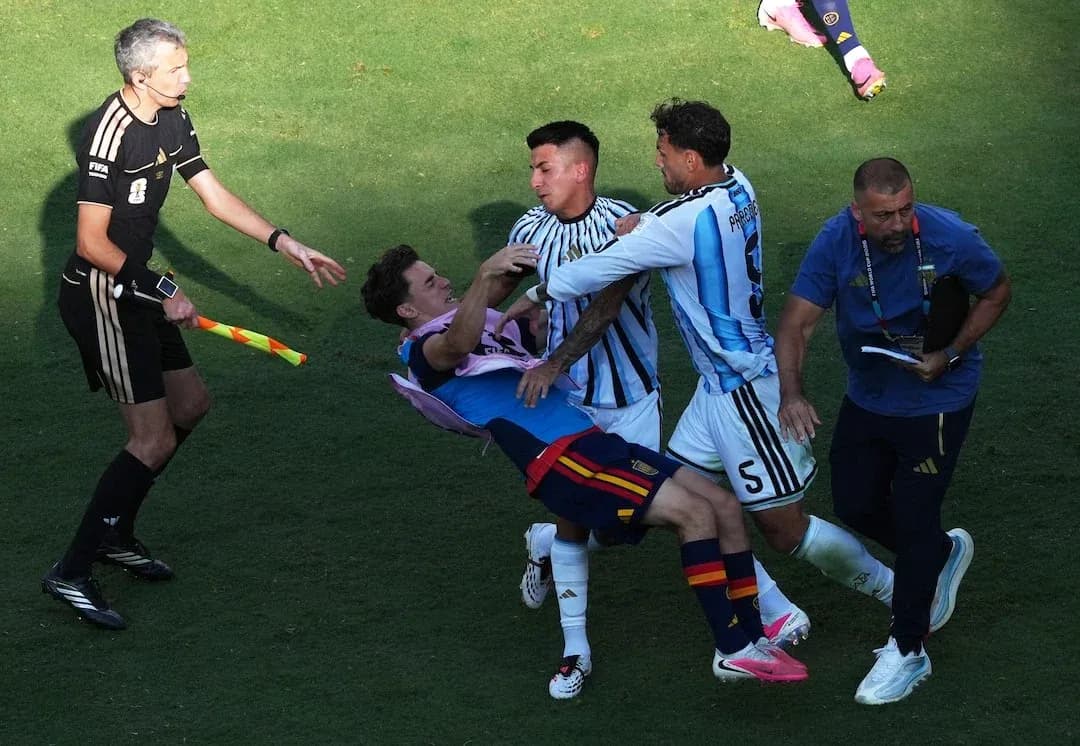
Discipline also shaped the tactical tone. France committed 11 fouls to Spain’s 12, but their 2 yellow cards—Rabiot for “Foul” and Mbappé on 86' for “Violent conduct”—came at key moments. The early booking limited France’s central aggression; the late one reflected mounting frustration as Spain saw out the game. Spain, by contrast, picked up only one yellow, to Marc Cucurella on 31' for “Foul”, and otherwise managed their defensive duels efficiently, particularly in wide areas where they had to deal with Dembélé, Barcola and later Doué and Cherki.
In goal, Mike Maignan (France) did not register a save, a stark indicator that Spain’s 2 shots on goal both resulted in goals and that France’s defensive structure allowed high-quality, decisive efforts rather than speculative ones. Unai Simón (Spain) made 3 saves, aligning with France’s 3 shots on target and underlining his contribution to preserving the clean sheet. Spain’s goalkeeper also benefited from a defensive unit that limited clear-cut chances: France’s xG of 0.3 shows that, while Simón had work to do, Spain largely kept attempts low in probability.
Statistical Verdict
Statistically, the verdict is of a controlled Spanish performance. They marginally edged possession, matched France in total shots (10–10), but produced more shots inside the box (5–4) and a far superior xG (1.63–0.3). France’s higher corner count (7–1) hints at territorial phases, especially in the second half, yet those set-piece opportunities did not translate into high-quality chances. Spain’s passing superiority—500 total passes to 473, with a slightly better accuracy (86% to 84%)—mirrored their composure under pressure and their ability to manage the game once ahead.
Ultimately, this Semi-finals tie was decided by Spain’s superior structural cohesion and efficiency in both penalty areas. France’s 4-2-3-1 never fully solved Spain’s central overloads or found consistent routes into the box, while Spain turned their controlled possession into two decisive moments and then closed the match down with mature game management.