.svg&w=384&q=75 "Naijagoal logo")

Sheriff Tiraspol Defeats Aluminij in Tight UEFA Europa League Match
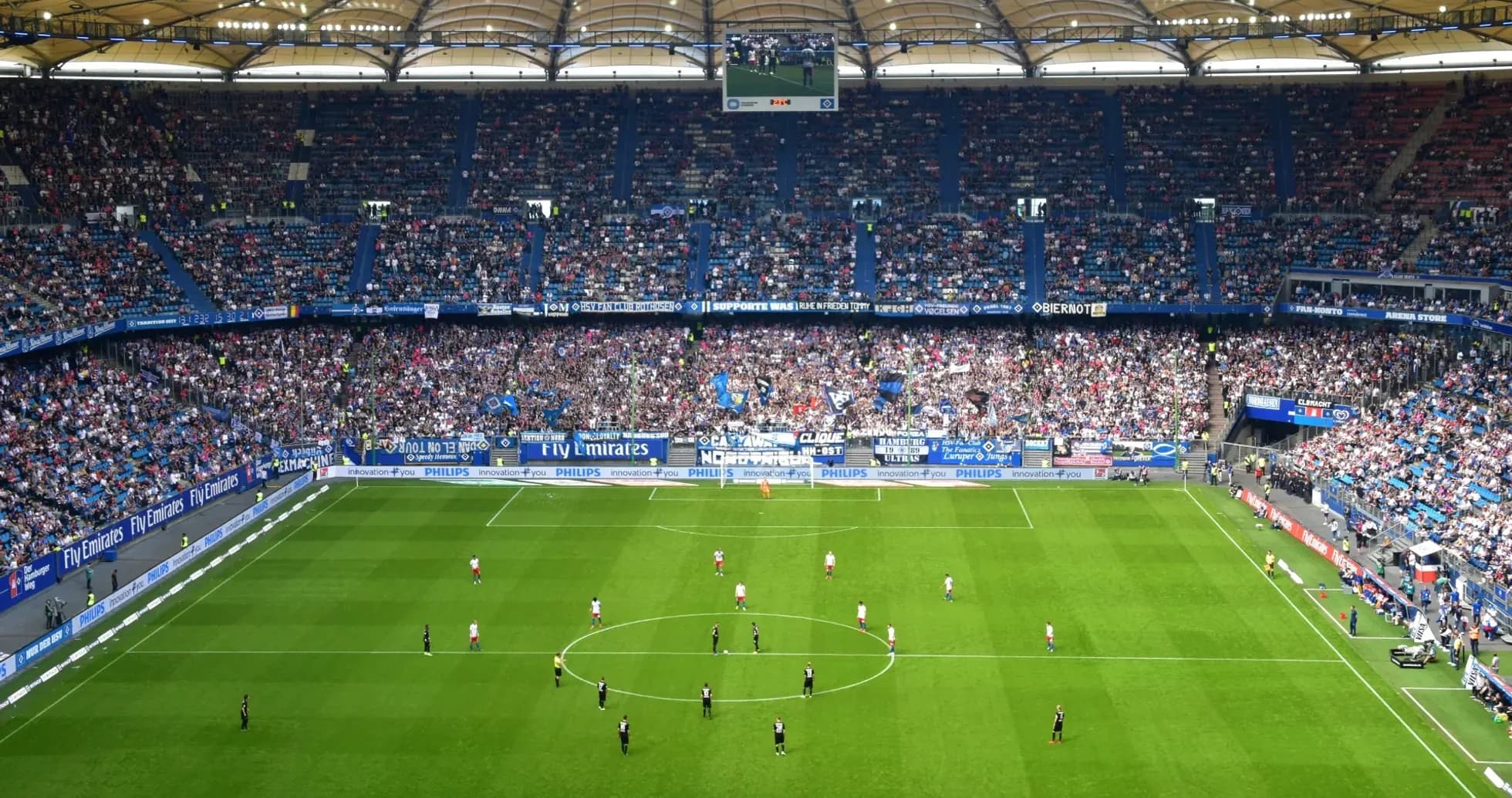
Aluminij’s 0-1 home defeat to Sheriff Tiraspol at Ljudski vrt in the UEFA Europa League 1st Qualifying Round unfolded as a structurally tight, low-margin contest defined more by tactical shape and discipline than by volume of chances. With virtually no statistical data beyond card counts, the match has to be read primarily through lineups, formations, and the sequence of events: an early Sheriff goal, Aluminij’s attempts to recalibrate from a 3-5-2 base, and Sheriff’s game management from a compact 3-4-3.
Sheriff struck immediately through their left-sided structure. L. Jaures-Ulrich, nominally a wide midfielder/forward on the left in the 3-4-3, converted at 5', assisted by right-sided midfielder D. Forov. That combination hints at Sheriff’s ability to switch play quickly across the width of their midfield four, dragging Aluminij’s three centre-backs and wing-backs into difficult cross-cover situations. With Aluminij in a 3-5-2, the early phase likely saw the home side still settling their pressing triggers, and Sheriff exploited the brief disorganisation: a wide overload or a late run from Forov into a half-space, followed by a decisive final action from Jaures-Ulrich.
From that moment, the game state favoured Sheriff’s structure. Their 3-4-3, with B. Ciss, B. Fomba and Rai as the back three, is naturally suited to protecting a lead: three centre-backs against Aluminij’s front two, wing-backs and central midfielders able to compress the middle and force play wide. Aluminij’s 3-5-2 under Jure Arsic, with F. Raduha in goal and a back three of D. Simunic, M. Boben and R. Schaubach, is designed to build through the middle and use wing-backs V. Koderman and V. Tezak to stretch the pitch. But chasing the game from 5' altered their priorities: they needed to commit those wide players higher, which in turn exposed the channels behind them to Sheriff’s counters.
The disciplinary pattern reinforces the impression of a home side increasingly stretched and reactive. All three Aluminij yellow cards came before 62' and all in open play phases: Matic Vrbanec at 23', Vito Težak at 34', and Tomislav Jagić at 61'. Sheriff, by contrast, picked up just one booking, to Jayder Asprilla at 61'. Even without explicit reasons, the asymmetry (3-1 in yellows) aligns with a scenario in which Aluminij were repeatedly forced into late challenges or tactical fouls to stop transitions, while Sheriff defended with more control and fewer desperate interventions.
Personnel choices underline that dynamic. Aluminij’s midfield three of E. Taylor, Jagić and Vrbanec was tasked with both ball progression and counter-pressing against Sheriff’s central box of D. Klas, S. Kone, Forov and A. Pergjoni. Sheriff’s quartet gave them numerical and positional flexibility: Kone and Klas could screen in front of the back three, while Forov and Pergjoni stepped out to press Aluminij’s pivots or support the front line of V. Fratea, J. Asprilla Moreno and L. Jaures-Ulrich. That made it difficult for Aluminij to find clean central lanes into forwards B. Susso and M. Bajraj, especially once Sheriff had the lead and could sit in a medium block.
The substitution pattern from 56' onwards shows how both coaches managed the evolving tactical picture. Victor Mihailov’s first change at 56'—V. Fratea (OUT) with Sapata (IN)—suggests a desire to refresh energy and perhaps add more defensive reliability or ball retention on one flank, reinforcing Sheriff’s ability to absorb pressure. Later, at 75', he replaced goalscorer L. Jaures-Ulrich (OUT) with Ze Flores (IN), a classic move to preserve legs and maintain vertical threat without overexposing a player already heavily involved in transitions. Finally, at 90+5', Rai (OUT) made way for Mota (IN), a late defensive adjustment to see out the result and secure the clean sheet.
Arsic’s response was more radical and clustered, reflecting the urgency of chasing an equaliser. At 65', he made a triple change that effectively reconfigured both the wing-back and central lanes: M. Bajraj (OUT) with B. Osuji (IN), M. Vrbanec (OUT) with P. Petrisko (IN), and V. Tezak (OUT) with H. Sorensen (IN). Removing Vrbanec, already on a yellow, helped manage risk of a red card while introducing Petrisko as a fresh central presence, likely to drive the ball forward or add late runs into the box. Swapping Tezak for Sorensen on the flank indicated a search for either more defensive balance to secure counters or a different crossing profile from wing-back.
The later substitutions further underline Aluminij’s attacking tilt. At 80', centre-back M. Boben (OUT) was replaced by forward A. Bloudek (IN), a clear shift towards a more aggressive back line or even a back four, freeing extra numbers to attack Sheriff’s box. At 87', E. Taylor (OUT) was replaced by S. Rogina (IN), another move to inject energy and potentially more direct running from midfield. Collectively, these changes point to Aluminij progressively sacrificing structural security for attacking presence, while Sheriff remained committed to maintaining their 3-4-3 skeleton and refreshing it with like-for-like substitutions.
Without shot, possession or passing data, the statistical verdict hinges on what is known: Sheriff’s early goal, their ability to avoid disciplinary trouble (only one yellow), and their successful protection of a 1-0 advantage away from home. The card split—Aluminij 3, Sheriff Tiraspol 1, total 4—mirrors a contest where the visitors controlled the tempo and game state, forcing the hosts into more risky defensive actions. The absence of any red cards ensured the tactical battle remained 11 v 11 throughout, magnifying the importance of structural coherence rather than numerical swings.
In pure tactical terms, Sheriff’s 3-4-3 proved better suited to managing an early lead than Aluminij’s 3-5-2 was to breaking down a well-drilled block. Sheriff’s wide players, especially Jaures-Ulrich and Forov in the decisive early action, exploited the spaces around Aluminij’s wing-backs, and once ahead, Mihailov’s substitutions were conservative and control-oriented. Aluminij’s late reshaping showed intent and ambition, but the lack of an equaliser confirms that Sheriff’s compactness, discipline and game management at Ljudski vrt carried more weight than any territorial or possession phases the hosts might have enjoyed.