.svg&w=384&q=75 "Naijagoal logo")
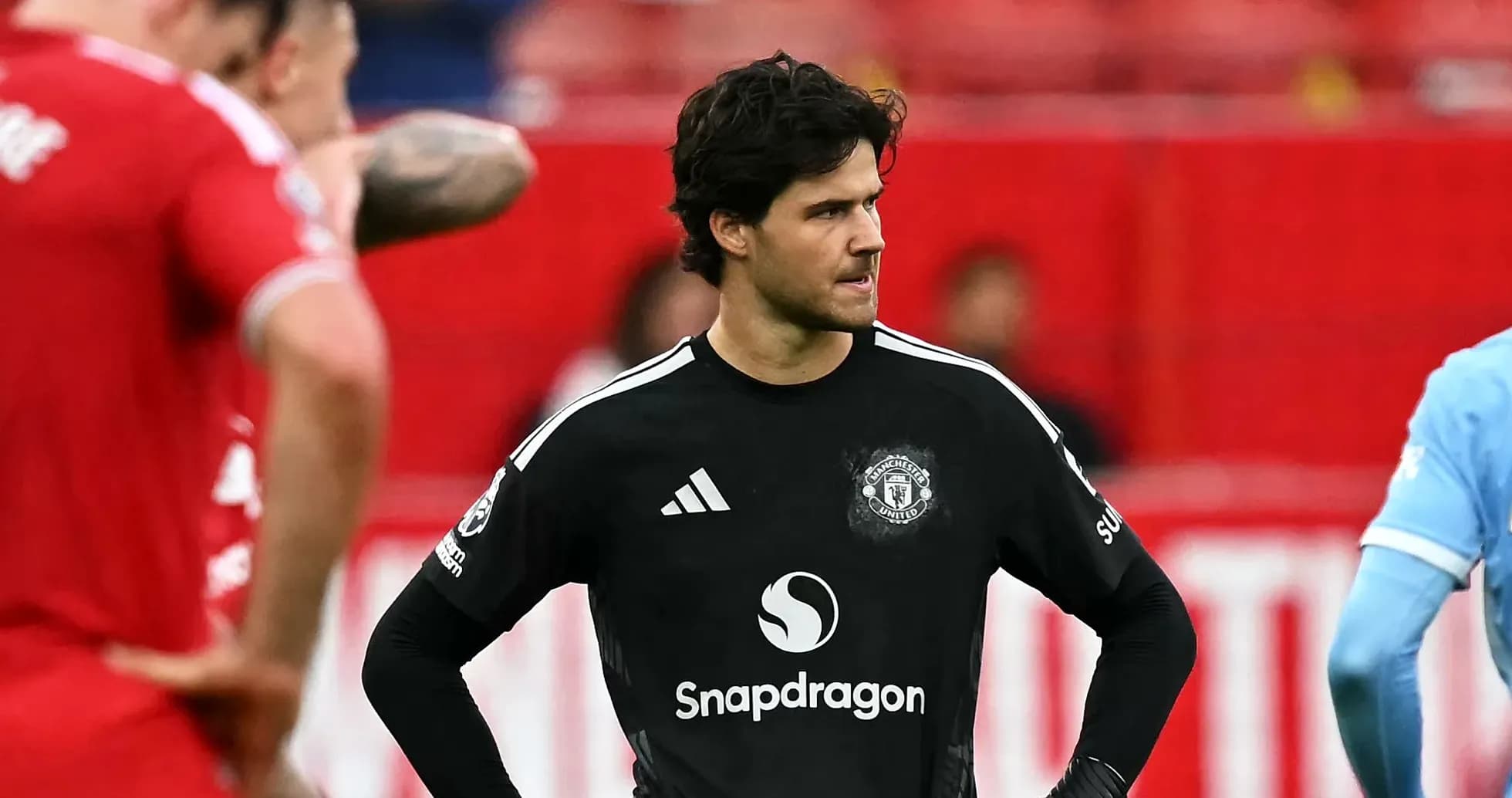

Scholes' Challenge to Manchester United's Lammens
Paul Scholes has never been one for gentle truths, and he’s offered none to Manchester United’s new No.1.
Lammens, the 24-year-old Belgian brought in from Royal Antwerp for £21.7 million last summer, has already pushed Altay Bayindir aside to claim the shirt. He has the gloves, the trust of Michael Carrick and the stage. What he doesn’t yet have, in Scholes’ eyes, is the status United need.
On The Good, The Bad and The Football podcast, the former United midfielder cut straight to the heart of it.
“What team have you seen win the Premier League without a top class goalkeeper?” he asked. “Lammens might be that, I don't know, I think the jury's probably still out on that and then you build from the back four.”
That’s the bar. Not just good. Not promising. Top class.
Scholes’ warning for Carrick’s rebuild
Carrick is trying to drag United into a new era, one built on structure rather than nostalgia. Scholes, who knows exactly what a title-winning side looks like, made it clear where he believes that process has to begin.
He pointed to the blueprint elsewhere. Arsenal’s resurgence. Liverpool’s peak years under Jürgen Klopp. United’s own dominance under Sir Alex Ferguson. In every case, the spine started with an elite goalkeeper.
“It's the way Arsenal started three or four years ago, defensively they have been absolutely brilliant. You need a top class goalkeeper,” Scholes said. “You think of Liverpool's team with Alisson, Raya at Arsenal, Man United with Peter Schmeichel and Edwin van der Sar. They've all got brilliant, brilliant goalkeepers. You start from the back, of course you do. Whether Michael's just got to be patient and wait for that, I don't know.”
The implication hung in the air. If Lammens doesn’t grow into that level, Carrick may have to look elsewhere.
A keeper chasing giants
Lammens knew exactly what he was signing up for when he walked into Old Trafford. The price tag, the shirt, the history – and the microscope.
He has spoken openly about the volatility of English football culture and the extremes that come with playing for United.
“That's England for you. If things go badly, they can bury you deep, but if things go well, they praise you to the skies,” he said last year.
He understands the weight of the names being thrown around him.
“I take that with a grain of salt, because to be mentioned in the same sentence as Schmeichel, I'm going to have to prove myself many more times. But I did find it a very nice compliment. I hope to play here for 10 years and be important, so that, like Schmeichel and Van der Sar, I can leave a legacy.”
That’s the scale of his ambition: a decade at Old Trafford and a place in the same breath as Schmeichel and Van der Sar. Scholes’ comments underline just how far he still has to travel to reach that level.
Derby defeat sharpens the debate
The timing of the critique is no accident. It comes in the shadow of a bruising Manchester derby, where Lammens could not keep out Erling Haaland and United fell short again on the biggest domestic stage.
It was not his defeat alone. United were second best across the pitch. Yet Scholes chose to zoom in on the goalkeeper’s role, hinting that in matches like that, the very best keepers tilt the balance.
That’s the standard: the save that changes the story of a derby, the performance that steals points when the team is creaking.
From now on, every moment Lammens spends between the posts will be judged against that “jury is still out” line. Every clean sheet, every flap, every one-on-one.
He has the talent, the platform and the time. What he doesn’t have yet is certainty – not from Scholes, not from the wider game.
The next few seasons will decide whether Lammens becomes another name on a long list of United goalkeepers, or the one who finally earns the right to stand alongside Schmeichel and Van der Sar.