.svg&w=384&q=75 "Naijagoal logo")

Rodri's Bold Move to Barcelona: A New Era Begins
Rodri didn’t just change clubs this summer. He walked away from the empire he helped build.
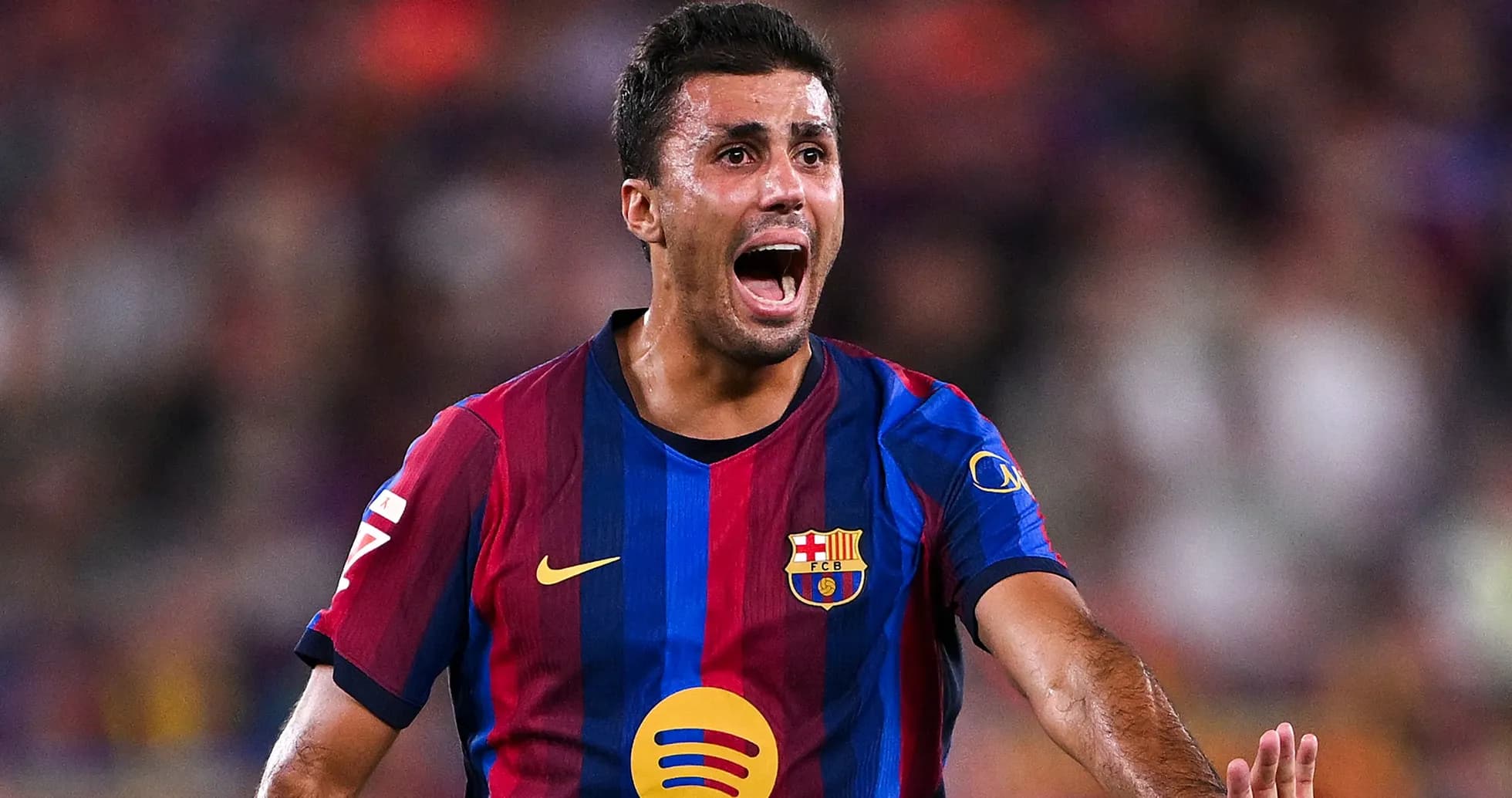
The 2024 Ballon d'Or winner left Manchester City at the peak of his powers, trading the Premier League for La Liga and choosing Barcelona over Real Madrid in a decision that cut right to the heart of Spanish football’s fiercest rivalry.
This was not, he insists, a money move. No final, bloated contract. No last big payday. For Rodri, it was about the project.
A process, rather than a decision
Speaking to Mundo Deportivo, the 30-year-old described his City exit as something that unfolded over time rather than a dramatic break.
“It’s been a process, rather than a decision,” he said. “First, you have to realise that your time there has come to an end and that you might want a new challenge. From there, the moment the opportunity at Barcelona arose, I realised it was the best thing for me for many reasons.”
City lose the metronome of their midfield. Barcelona gain a ready-made leader for the heart of Hansi Flick’s new era.
Rodri made it clear that the vision laid out by Flick and sporting director Deco shaped everything. The conversations weren’t about contracts or bonuses. They were about roles, ideas, and how he would fit into a side being rebuilt to dominate again.
Barca over Madrid – and the weight of that choice
Real Madrid wanted him. Badly. For the European champions, landing the Spain international would have been a statement, a coup in the middle of their rivals’ rebuild.
Instead, he chose the Camp Nou. For Madrid, it stings.
Rodri knows exactly what it means to say no to the Bernabeu.
“I had to weigh up a lot of things and make such an important decision between two of the best clubs in the world,” he admitted. “In the end, I made my decision based on sporting considerations – on what sparked a bit more enthusiasm in me and on understanding where I could win and develop the most as a player. It wasn’t an easy decision at all; saying no to Madrid wasn’t easy, especially as they treated me exceptionally well.”
The pull of Madrid was strong. The pull of Barca’s project, stronger.
“I’ve always based my decisions on sporting considerations – where I believe I’ll be able to win, be happy and, above all, develop as a player,” he added. “And that’s why I’ve chosen Barca – also because of the generation of players they have and what Hansi is building there. Ultimately, Deco and Hansi, at the top of the organisation, convinced me.”
That line matters. It underlines what Barcelona are selling right now: not a finished product, but a vision. A generation. A team he believes he can grow with, not just carry.
A family club, not a hard sell
Rodri’s description of Barcelona’s approach cuts a clear contrast with the high-pressure world usually associated with mega transfers.
He spoke of a club that didn’t corner him or demand instant answers, but one that opened the door and let him walk through at his own pace.
“At no point did they put any pressure on me whatsoever; everyone expressed their desire to have me on board, to work together, and to see what I could bring to the team,” he said. The environment, he added, felt “very homely, like a family club”.
That tone resonated with him. The pitch was built around football, not marketing.
“It was more about the football itself – what they understood I could bring both on and off the pitch, and I really liked that.”
For a player who has built his reputation on intelligence, positioning and control rather than noise or branding, the message landed perfectly.
Blocking out the noise
His move came on the back of a stormy backdrop: Real Madrid’s highly publicised boycott of the Ballon d'Or ceremony, where Rodri beat Vinicius to the award. The narrative almost wrote itself – the snubbed Madrid star heading to their greatest rival.
Rodri rejected that storyline outright.
“Anyone who knows me knows that I try to distance myself from that sort of thing, like the media hype,” he said. “I focus on football. In that sense, I’m very English, aren’t I? The Premier League is football and little else.”
It’s a revealing line. Years under Pep Guardiola in England have shaped him into a player – and a personality – who wants the noise turned down and the football turned up.
Now he walks into a club where the noise never really stops. Political battles, financial scrutiny, eternal comparison with the past – Barcelona are rarely quiet.
Rodri has chosen that chaos, but on his terms: for the pitch, for the project, for the chance to anchor a new Barcelona midfield. The question now is simple: can the club live up to the clarity of the vision that convinced him to turn his back on Madrid and leave Manchester City behind?