.svg&w=384&q=75 "Naijagoal logo")
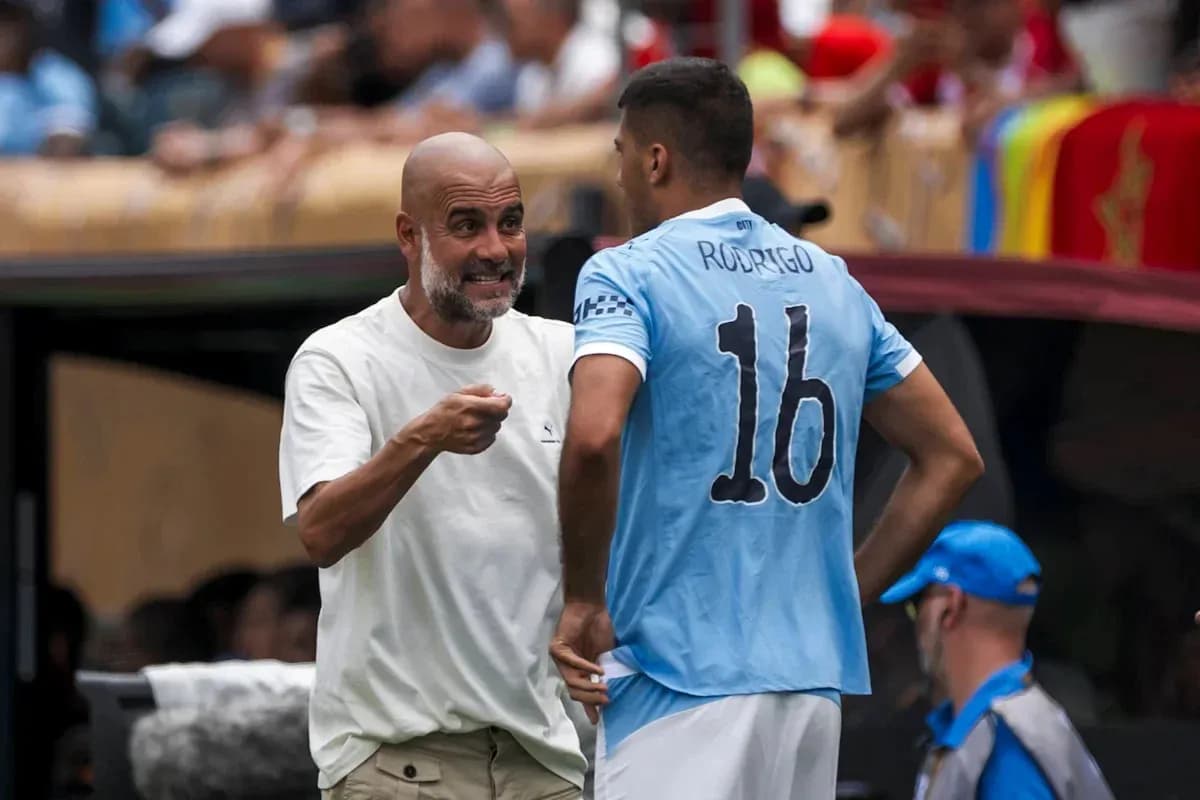

Rodri Chooses Barcelona: A Midfield Power Shift
Rodri’s decision to join Barcelona over Real Madrid already feels like one of those transfers that lingers over a season. Not just a headline, but a hinge point. Prestige, politics, rivalry – and at the centre of it all, a midfielder who weighed everything up and chose the Camp Nou.
This was not a romantic homecoming or a last‑minute whim. As he told MUNDO DEPORTIVO, Rodri spent a turbulent break being pulled from Manchester City by two of the game’s great superpowers. He stepped back, studied the landscape and went with what he believed was the clearest footballing route: the project that stirred him a fraction more, the place where he felt he could win and grow.
In a market often drowned by talk of wages, branding and social media noise, that detail cuts through. Rodri framed his decision in football terms. Barcelona’s sporting structure, with Deco in the corridors and Hansi Flick on the training pitch, convinced him they had the sharper plan. The conversations, the clarity over his role, the conviction about how he would be used – that is where big transfers are usually decided, in the thin margins that separate two giants who can both pay and both promise.
Respect for Madrid, but a different road
What stood out just as much was the way he spoke about Real Madrid. He didn’t trivialise the choice. He admitted turning them down was difficult and underlined how professionally they had treated him throughout. That is the language of a player who understands the scale of what he is refusing. Saying “no” to Madrid still carries weight, and he didn’t pretend otherwise.
His comments about José Mourinho, who tried to lure him to the Bernabéu, added another layer.
“Bueno, no creo que sea lo suyo desvelar una conversación privada, pero evidentemente expresó sus ganas de que fuera y de lo que podía aportar al equipo. El trato fue muy bueno. Cuando tomé la decisión también le llamé para agradecer el interés y el trato. Me parece un grandísimo entrenador, ya lo ha demostrado allá donde ha ido en sus grandes etapas y el Real Madrid va a ser un duro rival para esta Liga.”
It was a carefully judged answer: diplomatic, warm, precise. In a world where elite football often chews up courtesy, Rodri chose to highlight gratitude. He recognised the effort Madrid and Mourinho made, chose another path, and still closed the loop with a phone call.
Barça didn’t just benefit. They won the argument.
For Barcelona supporters, there is a thread in all this they will cling to quickly. Rodri did not present his move as an escape from Manchester City, or as a reaction to some grievance elsewhere. He framed it as attraction to Barça. That nuance matters. It gives the deal more authority. Barcelona did not simply pounce on a situation; they convinced a player who had another superclub on the table.
He also sidestepped the off‑field theories swirling around Madrid’s interest. No indulgence of the soap opera. He said he focused on football, on Spain, on his own path. That is the voice of a player who has lived for years at the top and learned to keep distance from the circus around it.
His observation that in England “football is largely kept to football” was telling as well. It hinted at a player moulded by the Premier League’s relentless rhythm, but perhaps now ready for a different kind of pressure, a different type of scrutiny and spotlight in La Liga.
A rivalry reignited in the middle of the pitch
If Rodri hits his usual level, this is not just another big-name signing. It is a potential fault line in the title race. Barcelona have imported control, intelligence and steel into the heart of their team, and they have done it by edging out Real Madrid for one of the most coveted midfielders in the world.
That sends a message that stretches beyond the player himself. It speaks to pull, to planning, to the enduring power of the Barcelona name even after turbulent years. For Madrid, there will be irritation, but little cause for embarrassment. They went hard, presented a serious case and were treated with respect. They simply lost out.
For Barcelona, that is exactly the point. They did not just sign a world‑class midfielder. They signed one who knew the alternative in forensic detail and still chose the Camp Nou.
Manchester City left with a vacuum
Viewed from Manchester, the story feels different. For City supporters, reports of Rodri’s departure land with a mix of pride and unease.
There is pride because this is confirmation of what they have watched for years: Rodri discussed as the midfielder both Barcelona and Real Madrid wanted above all. That status tells you everything about his standing in the modern game. He has been the calm in chaos, the organiser in possession, the player who makes great teams feel balanced.
There is also that familiar irritation when Europe’s old aristocracy circle a City player as if he naturally belongs in their ecosystem. This version of Rodri was built in Manchester. He sharpened his game in the Premier League, shouldered immense responsibility and evolved into one of the sport’s most influential midfielders under the brightest, harshest light.
If he has gone, City fans will probably wish him well while quietly staring at the tactical hole he leaves behind. Who controls the tempo now? Who slows a wild game down to walking pace when needed? Who gives the team that sense of certainty when everything around them frays?
That is the real legacy Rodri leaves at City: not just trophies, but structure. He exits and leaves a void in the middle of the pitch. Barcelona and Real Madrid can argue over who won this particular battle of giants. In Manchester, the question is more brutal, and far more urgent: who on earth replaces him?