.svg&w=384&q=75 "Naijagoal logo")
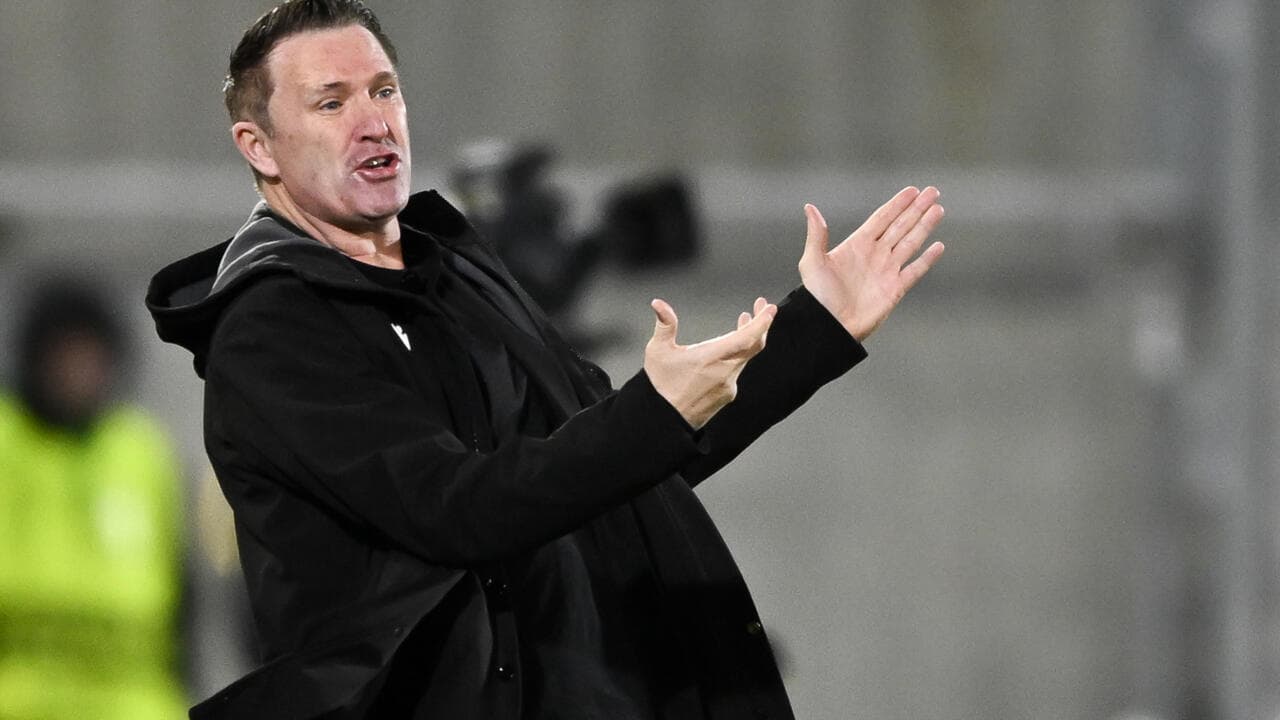

Robbie Keane Faces Backlash from Celtic Fans Over Manager Talks
The prospect of Robbie Keane returning to Celtic as manager has ignited a fierce backlash among sections of the club’s support, turning what might have been a straightforward appointment into a politically charged flashpoint in Glasgow’s east end.
Keane, Ireland’s record goalscorer and a former Celtic loanee, is understood to be the leading contender for the job after entering talks with the club’s principal shareholder, Dermot Desmond. On football terms, the move makes sense: a high-profile name, a popular figure from his brief but prolific spell at the club in 2010, and a coach coming off a trophy-laden stint abroad.
The reaction on the streets around Celtic Park tells a very different story.
Graffiti, banners and a growing revolt
Graffiti and banners opposing Keane’s potential appointment have appeared outside the stadium, a visible expression of anger that has been brewing since his decision to remain in Israel during the war in Gaza.
Celtic fans have long aligned themselves with the Palestinian cause. Palestinian flags have become a regular sight at matches throughout the conflict, a continuation of a political identity that runs deep within sections of the support. Now that identity is colliding directly with the club’s managerial search.
A group calling itself “Celtic Fans for the Liberation of Palestine” released a strongly worded statement warning that hiring Keane “would be deeply divisive among the support.” The message has gathered significant backing. The “North Curve Celtic” account on X published a list of 67 groups it says have endorsed the statement, underlining how organised and widespread the resistance has become.
“Celtic supporters have a long and proud history of solidarity with the Palestinian people,” the statement read. The group pointed directly at Keane’s spell in Israel as the core of their objection.
“For us, Robbie Keane’s decision to manage Maccabi Tel Aviv during the genocide in Gaza is impossible to ignore,” it continued. “To choose to manage a club in Israel while, less than 40 miles away, the same country was using indiscriminate weapons of mass murder against defenceless people is unconscionable.”
The statement then reached back into the club’s origins.
“Celtic was founded by a community shaped by the legacy of genocide, displacement and famine. Our club’s roots lie in solidarity with those who suffered injustice and oppression. We urge the Celtic board to listen to supporters’ concerns and reconsider this appointment.”
Keane’s record – and his defence
Keane took charge of Maccabi Tel Aviv in June 2023, months before the Hamas-led attacks of October 7 and the subsequent Israeli bombardment of Gaza. When the conflict erupted, he chose to stay and complete the season.
On the pitch, the decision delivered success. The 45-year-old guided Maccabi to a league and cup double before resigning in 2024. He then moved on to Hungarian side Ferencvaros in 2025, continuing to build his managerial CV.
Off the pitch, his stance in Israel has followed him. Keane has previously explained that a sense of responsibility to his staff weighed heavily on his decision not to walk away mid-season.
“I have a duty of care,” he said. “My analyst, for example, was at Middlesbrough for 12 years. For him to come with me to Israel and then for me to just walk away, leaving him and his family.”
For some Celtic supporters, that explanation does not soften the central issue: that he chose to remain in Israel while the war raged nearby. For others, his record and loyalty to his staff may be viewed as professional strengths rather than disqualifying flaws.
The board now finds itself caught between those two realities.
A club at a crossroads
All of this plays out against the backdrop of a successful but uncertain moment for Celtic. Interim manager Martin O’Neill, 74, stepped in and delivered the Scottish Premiership title on the final day of the season, then capped it with the Scottish Cup. He stabilised the club and finished with silverware, but he is not expected to remain in the role long term.
That leaves Celtic needing a permanent manager at a time when the identity of the club is being debated as fiercely as its tactics.
Keane brings name recognition, attacking pedigree and recent trophies. He also brings a political storm that has already spilled onto the walls and fences around Celtic Park. The banners are up. The statements have been signed. The pressure is real.
The decision now rests with Desmond and the Celtic board: pursue the man they see as the frontrunner and risk a fracture with a vocal and organised section of the support, or change course in the face of fan resistance.
For a club founded on social conscience and sustained by relentless demand for success, the next move will say as much about what Celtic wants to be as it will about who stands in the technical area next season.