.svg&w=384&q=75 "Naijagoal logo")

Premier League 2023-24 Preview: Arsenal Defend Title Amid Managerial Chaos
A decade of Pep, gone. Arsenal back as champions. Managers spinning through the league like a carousel. The Premier League returns on Friday with more questions than answers – and one very simple truth: nobody really knows how this season ends.
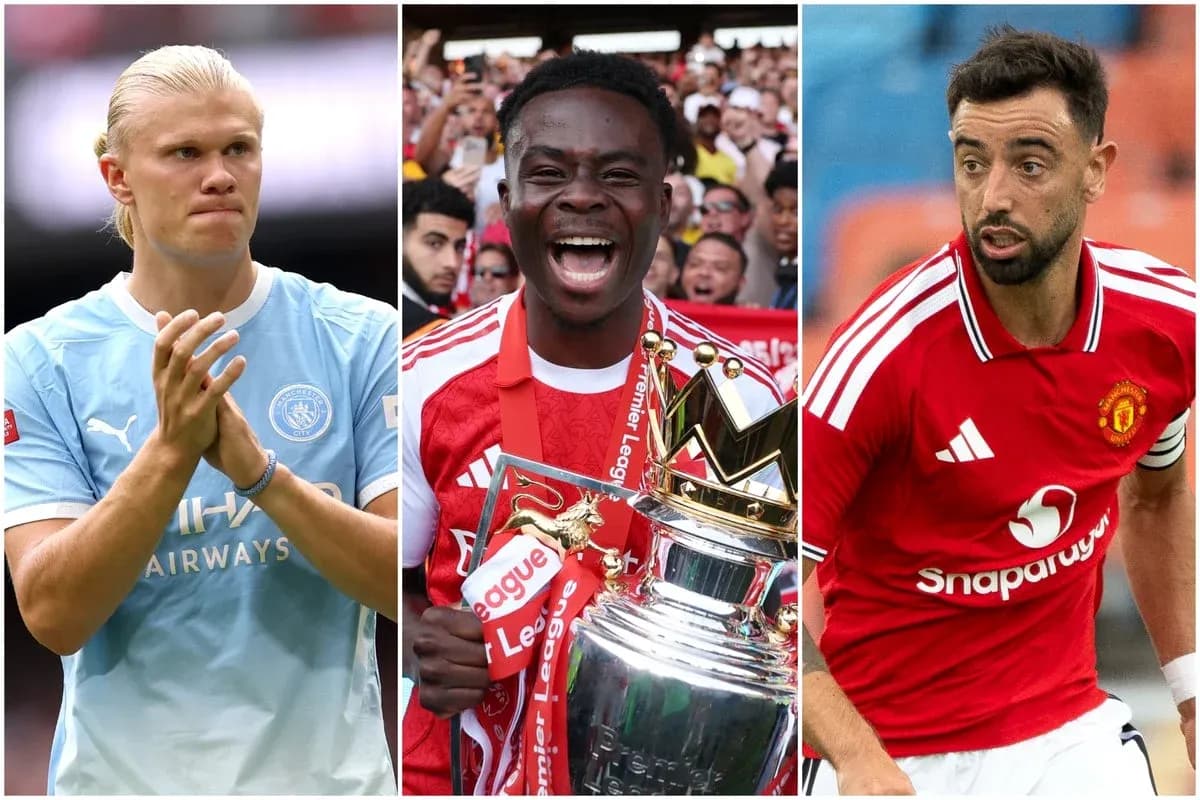
Pep Guardiola’s exit from Manchester City after 10 years rips the anchor away from an era of control. At the same time, Arsenal step out as defending champions for the first time in 22 years, with Mikel Arteta now the longest-serving manager in the division. In a league that has rarely felt so restless, Arsenal’s continuity suddenly looks like a superpower.
Nine clubs have changed managers. Michael Carrick and Roberto De Zerbi start their first full seasons at Manchester United and Tottenham. Andoni Iraola takes over at Liverpool, Xabi Alonso lands at Chelsea. Coventry City, Ipswich Town and Hull City arrive from the Championship, replacing West Ham, Burnley and Wolves, and will look at Sunderland’s fairytale European qualification last year and dare to dream.
Here’s how this chaos might stack up.
20. Hull City
Last season: Promoted via play-offs
Hull are back. Just don’t expect a soft landing.
Sergej Jakirovic’s side pulled off one of the strangest promotion campaigns the Championship has seen. Opta’s expected points model had them 23rd in the division. They didn’t just avoid a slide towards League One – they surged into the play-offs and then beat Middlesbrough at Wembley, helped by Southampton’s expulsion.
They’ve been busy in the market, players coming and going at pace, but the numbers are unforgiving. Those underlying metrics scream trouble. Hull start the season as relegation favourites and, unless Jakirovic can bend reality for a second year in a row, this could be a long, grinding return to the top flight.
19. Ipswich Town
Last season: Championship runners-up
Ipswich are back quicker than anyone expected after their forgettable relegation in 2024-25. This time, the club have changed tack.
Instead of simply raiding the Championship, they’ve cast the net wider. Emersonn arrives from Toulouse as a record signing, Daizen Maeda comes in from Celtic. It’s ambitious, it’s bold. It might not be enough.
Gary O’Neil, who steadied Bournemouth and then Wolves, inherits a huge rebuild after Kieran McKenna stepped away, citing the toll of three promotions and a relegation in four seasons – and perhaps recognising the scale of the task. Ipswich have more talent now, but the Premier League is less forgiving than ever. Survival would be an outstanding achievement.
18. Fulham
Last season: 11th
Craven Cottage has lost its calm.
Marco Silva’s five-year spell brought identity and stability. His departure leaves a hole, and Alvaro Arbeloa’s arrival has not yet soothed the nerves. The former Real Madrid defender, fiery in his caretaker stint at the Bernabeu, has brought two young Madrid prospects with him – striker Gonzalo Garcia and midfielder Cesar Palacios.
They’ll need to grow up fast. Fulham have also lost their player of the season Harry Wilson and veteran striker Raul Jimenez at the end of their contracts. The fixture list shows no mercy: Chelsea, Liverpool and Manchester United all come in the opening five games. Arbeloa has to find a structure, and quickly, or that early “sinking feeling” will be hard to shake.
17. Newcastle United
Last season: 12th
The exodus from Tyneside has been brutal.
In 18 months, Newcastle have gone from Carabao Cup winners and Champions League qualifiers to losing Alexander Isak, Anthony Gordon, Bruno Guimaraes, Sandro Tonali and, most shockingly, Eddie Howe. The grand 2030 title plan under Saudi ownership suddenly feels a long way off.
Into the chaos steps Matthias Jaissle, the former Red Bull Salzburg and Al-Ahli coach. He is highly regarded but largely unknown to the Premier League. Newcastle’s summer business leans heavily towards youth and potential. That might pay off later; this season, it’s a gamble. Without the spine that carried them into Europe, the club that dreamed of titles may instead be glancing nervously at the bottom three.
16. Brighton & Hove Albion
Last season: 8th
Europe lifted Brighton, then drained them. It could happen again.
Their first continental adventure in 2023-24 ended with a slide back into mid-table. Now Fabian Hürzeler must juggle another Conference League campaign with the demands of the Premier League.
They’ve smashed their transfer record to bring in defender Luka Vuskovic, tasked with stiffening a back line that wobbled too often. But Danny Welbeck has gone to Chelsea, leaving a question over goals. The pressure ramps up on Kaoru Mitoma and Yankuba Minteh – and both are unavailable to start the season.
Brighton are fancied to follow Crystal Palace’s path and win the Conference League. That opportunity is real. The cost to their league form might be just as real.
15. Everton
Last season: 13th
David Moyes came back and calmed everything down. That was the job. The question now is whether Everton can be anything more than stable.
Relegation should not be on the agenda. Moyes’s side flirted with the European spots last season before fading. It felt like a missed step rather than a collapse. The foundations remain strong: organised, hard to beat, defensively sound.
But goals are still a problem. Beto has struggled, Thierno Barry has yet to convince. Keeping Iliman Ndiaye would be a major boost, his flair and final-third quality vital to unlocking tight games. Everton look solid, but without a sharper edge in attack, the top half may remain just out of reach.
14. Crystal Palace
Last season: 15th
Palace are Conference League winners. Read that again.
Oliver Glasner’s farewell season delivered European glory and a trophy that will live forever at Selhurst Park. Now Pierre Sage steps in, fresh from turning Lens into Ligue 1 runners-up and French Cup winners.
The fit looks good. Sage favours proactive, front-foot football that should build on Glasner’s foundations. But Palace know all about painful departures. Marc Guehi and Maxence Lacroix have already gone from the defence, and Daniel Muñoz could be next. The back line is being rebuilt on the fly.
If Sage gets the balance right, Palace can sit comfortably in mid-table while making another run at cups. If not, the glow of that European night might fade quickly.
13. Sunderland
Last season: 7th
Sunderland were last season’s shock story. From recent memories of League One to European qualification on the final day – it was a surge that lit up the league.
Now comes the hard part: doing it again with Thursday-Sunday football in the mix. Regis Le Bris has barely touched the squad. Only veteran right-back Thomas Meunier on a free and left-back Dayann Methalie for £25.6m have arrived.
That’s a thin summer for a team about to juggle domestic and European demands. But the mood is lifted by Granit Xhaka’s decision to reject Chelsea and stay as captain. His presence, experience and ferocity in midfield give Sunderland a core identity. They may not hit the same heights, yet they should have enough to hold their own.
12. Nottingham Forest
Last season: 16th
Four managers last season. One big swing this summer.
Nottingham Forest have handed the keys to Oliver Glasner, fresh from two major trophies in two and a half years at Crystal Palace. At one point he was being linked with Manchester United; Forest landing him felt like a coup.
He inherits a squad still shaped around the creativity and drive of Morgan Gibbs-White, who dragged them away from danger late last season. Elliot Anderson has gone, but the talent base remains strong. Without European distractions, Glasner can drill his 3-4-3 and impose structure on a club that rarely sits still.
There is always the potential for drama under owner Evangelos Marinakis. If the noise stays off the pitch, Forest could quietly climb the table.
11. Brentford
Last season: 9th
Brentford finally broke free of the “plucky survivors” tag under Keith Andrews. They did more than survive – they threatened Europe.
Andrews’s debut season in the dugout was sharp and clear. Brentford knew exactly who they were, and it showed. Igor Thiago’s 22 goals led the line, while set-pieces remained a weapon.
Jordan Henderson has gone to Chelsea, but club-record signing Mamadou Sangare arrives from Lens to reshape the midfield. He offers energy, control and a different rhythm. With the club’s analytics-driven approach and relentless focus on details, Brentford look well-placed to stay in the top half conversation, even if the European spots might just slip away again.
10. Leeds United
Last season: 14th
Leeds turned their season on its head from December onwards. From 1 December 2025, their form would have put them seventh. The table doesn’t care, but the trend matters.
Daniel Farke has used the summer to fix obvious weak points. James Trafford comes in as a clear first-choice goalkeeper. Harry Wilson arrives on a free from Fulham to add creativity in midfield. Towering centre-back Tarik Muharemovic strengthens an already solid spine.
The big variable is Dominic Calvert-Lewin. His 14-goal comeback campaign changed the tone of last season. If he stays fit and firing, Leeds have every right to target the top half and perhaps even sniff at the fringes of Europe.
9. Tottenham Hotspur
Last season: 17th
Tottenham stared over the cliff edge on the final day. That had to change something – and it has.
Roberto De Zerbi has been backed heavily. Only Chelsea have spent more this summer. Spurs have ripped up their midfield, spending around £180m to bring in Sandro Tonali and Mateus Fernandes. At the back, Marcos Senesi, Jan Paul van Hecke and Andy Robertson look like smart, targeted moves.
De Zerbi now has full control, and no European football to complicate the schedule. That gives him time on the training ground and a chance to imprint his high-risk, high-reward style. But the problems aren’t all solved. Injuries remain a recurring curse and the attack still needs reinforcing.
Spurs should be far away from a relegation battle. A leap straight back into the top four? That might be a season too soon.
8. Bournemouth
Last season: 6th
Bournemouth’s priority this summer was simple: keep the band together.
They qualified for Europe for the first time in their history under Andoni Iraola, only to lose the coach. Yet in terms of players, the damage has been minimal. Marcos Senesi has left for Tottenham at the end of his contract, but key figures like Alex Scott, Rayan and Junior Kroupi remain – even if Kroupi will miss the start of the season after a freak training-ground foot injury.
Marco Rose steps in, a Jurgen Klopp disciple whose high-press, high-intensity football should feel like evolution rather than revolution. The experienced German coach must guide Bournemouth through their debut Europa League campaign while keeping them competitive at home. They look equipped to do both.
7. Aston Villa
Last season: 4th
Aston Villa’s summer has been unsettling. Emi Martinez could yet follow Morgan Rogers, Youri Tielemans and Lucas Digne out of the door. That’s a significant slice of last season’s Europa League-winning core.
But Villa’s real constant is Unai Emery.
He has already started to remodel the side, breaking the club’s transfer record to sign Switzerland World Cup star Johan Manzambi for £59.5m and bringing in Japan international goalkeeper Zion Suzuki. Alejandro Garnacho arrives on loan to add pace and unpredictability in attack.
Villa return to the Champions League for the second time in three seasons. They’ll need their new arrivals to hit the ground running. With Emery’s tactical edge, they should remain a serious force, even if the squad churn nudges them slightly away from last year’s heights.
6. Liverpool
Last season: 5th
Anfield is stepping into the unknown again.
Andoni Iraola brings his intense, front-foot football to a club that craves energy. On paper, a forward line featuring Alexander Isak and Florian Wirtz should terrify defences, especially if both can shake off their difficult debut seasons.
Yet the old problems still lurk. Squad depth looks thin in attack and at full-back. The midfield remains a work in progress. Jeremy Jacquet, a £55m January signing, impressed on his debut against Como, and Ronald Araujo has arrived on loan, but Liverpool are still heavily dependent on 35-year-old Virgil van Dijk staying fit.
The pursuit of Bradley Barcola drags on, while Hugo Ekitike remains sidelined for months. Iraola walks into a club full of potential and doubt in equal measure. Early goals from Isak and Wirtz would buy him time – and belief.
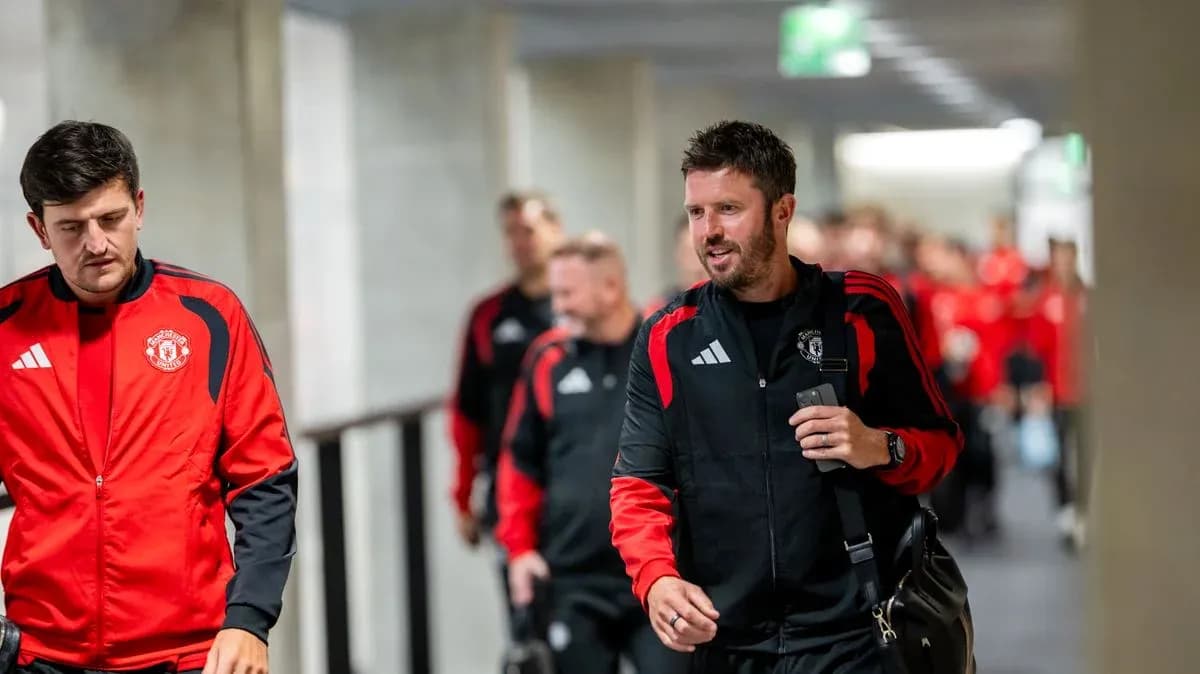
5. Manchester United
Last season: 3rd
Michael Carrick’s audition could hardly have gone better. Twelve wins from 18 league games after replacing Ruben Amorim, more points than anyone else in that spell, and a third-place finish.
Now comes the real test: a full season, a Champions League campaign, and no element of surprise.
United played only 40 matches last season. This year, that number could approach 60. Opponents have had time to study Carrick’s patterns; he will have less time on the training ground to refine them. Bruno Fernandes remains the heartbeat and inspiration, but the supporting cast still feels light.
Casemiro has gone, and United have reacted by adding Andrey Santos from Chelsea and Youri Tielemans from Aston Villa. It’s a start, not a complete solution. The squad looks good enough to stay in the Champions League places, but a genuine title push may still be one step beyond.
4. Chelsea
Last season: 10th
Stamford Bridge has been a circus. Last season it hit a low: Liam Rosenior sacked after three months, the worst league run since 1912. Yet the pieces have fallen into place for something far more coherent.
Chelsea moved decisively for Xabi Alonso, still one of Europe’s most admired coaches after winning the Bundesliga with Bayer Leverkusen. His Real Madrid stint didn’t work out, but his reputation as a tactician and organiser remains intact.
On the pitch, Morgan Rogers is an expensive but high-quality addition, and pairing him with a fit-again Cole Palmer – desperate to make up for missing the World Cup – could be devastating. The club have also pivoted, at last, towards experience: Jordan Henderson, 36, and Danny Welbeck, 35, add know-how to a previously raw dressing room.
With no European football, Alonso has time, space and authority to impose his ideas. In a season defined by upheaval elsewhere, that might be Chelsea’s biggest advantage.
3. Manchester City
Last season: 2nd
The Guardiola era is over. The shadow remains.
Enzo Maresca steps into the most daunting job in English football, tasked with refreshing a side that has lost not only its manager but also midfield pillars Rodri and Bernardo Silva. City’s entire structure has revolved around those two for years. This is a reset.
Elliot Anderson arrives for £116m after a standout World Cup with England. Ayyoub Bouaddi, 18, another World Cup breakout, is expected to play a role. City may yet go back to Chelsea for Enzo Fernandez at £120m. It’s a massive midfield overhaul on the fly.
They still have Erling Haaland, still have the defensive upgrades of Antoine Semenyo and Marc Guehi, still have a squad used to winning. City will be in the title conversation. But the stylistic shift away from Guardiola’s control will take time – and unlike Arsenal, they don’t have the comfort of continuity.
2. Bournemouth? No. Aston Villa? No. It’s Liverpool? Not quite.
It’s Chelsea and City chasing – and Arsenal still out in front.
1. Arsenal
Last season: 1st
Arsenal enter this season with something they haven’t had for two decades: the weight of being champions, and the calm of knowing exactly who they are.
While the rest of the league spins through managers, rewrites midfields and tears up plans, Arsenal have Arteta, the longest-serving manager in the division, and a squad shaped meticulously over years rather than months. The contrast with City’s post-Guardiola reset is stark.
This is not the Arsenal of old, fragile under pressure. This is a side that has learned how to win, how to suffer, how to close out seasons. The challenge now is different: to defend a title, to absorb the target on their backs, to prove last year was not the end of a journey but the start of a new era.
The Premier League has rarely felt so open. The champions begin from a position of strength. The rest of the league will spend the next nine months trying to drag them back into the pack.