.svg&w=384&q=75 "Naijagoal logo")

Philippe Coutinho Addresses Disloyalty Accusations and Sacrifices for Vasco
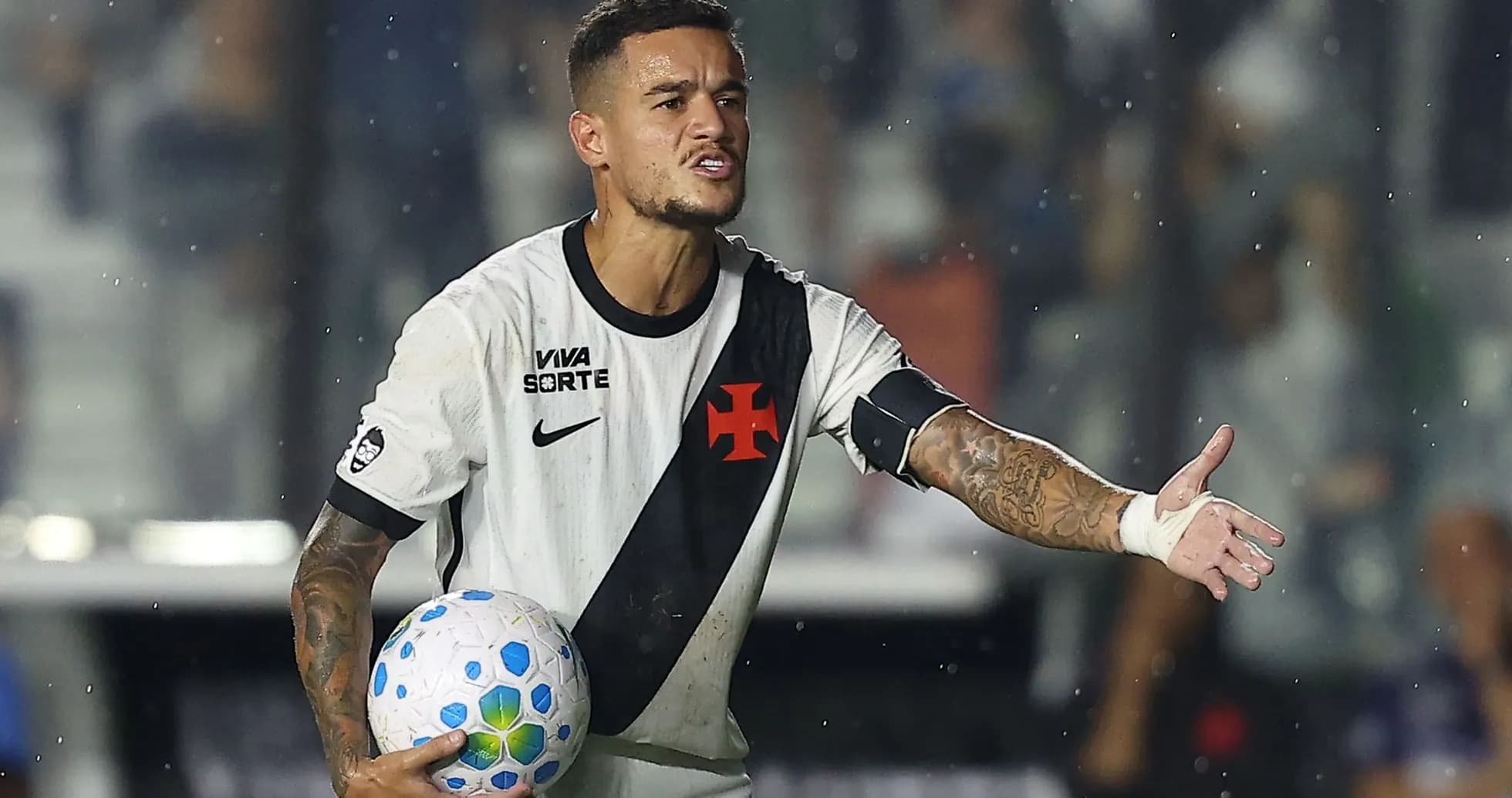
Philippe Coutinho has hit back at accusations of disloyalty, laying bare the financial and emotional cost of forcing through his return to Vasco da Gama – and the toll that ultimately drove him away.
Unveiled again in Brazil, the 32-year-old chose his presentation to confront the narrative that he walked out on his boyhood club. He did it with numbers, with detail, and with a clear sense of hurt.
“I've seen a few things, but I try to shield myself from it all. I know there has been a huge reaction. It saddens me,” Coutinho said, before adding pointedly: “But I have this platform to speak.”
“Vasco has always been my home”
Coutinho began by reminding everyone where his story started.
“Vasco has always been my home. I was raised at Vasco, played all through the youth ranks, and made it to the senior team,” he said. “I've always made clear the affection, gratitude, and love I have for the club.”
Then came the context. When Vasco called, he was still tied to a lucrative deal in the Middle East.
“When the opportunity to join Vasco came up, I still had a year left on my contract in Qatar, where I was earning $10 million net. I want to make that clear so people understand.”
He wasn’t only walking away from Qatar. He still had a year on his contract with Aston Villa as well.
“I've never spoken about this, and this is the only time I will,” Coutinho continued. “I also still had a year left on my contract with Aston Villa. In order for me to join Vasco, I always made it clear to everyone who works with me: Vasco wouldn't spend a single cent on my transfer. That was my priority.
“The only way for that to happen was by giving up a year's salary and the money I was owed by Aston Villa. I left everything on the table and came. Because my return to Vasco was always out of love for the club.”
The message was unmistakable: this was not a mercenary move. It was a sacrifice.
Final heartbreak at São Januário
Love, though, did not protect him from the brutality of the game.
Coutinho’s second spell brought him to the brink of glory. Vasco reached the Copa do Brasil final, only to fall short. That defeat cut deep.
“During my spell last year, we reached the Copa do Brasil final and unfortunately lost. That hit me very hard; I desperately wanted to win a title with Vasco,” he admitted. “I won countless trophies abroad and came back with the mindset of becoming a champion with Vasco and perhaps cementing myself as an idol. Unfortunately, it wasn't possible.”
The new year offered no relief. Results dipped at São Januário. Tension grew. So did the noise from the stands.
“The new year began, and we weren't doing too well in recent games at São Januário,” Coutinho said. “I know many say it was just a few boos, but anyone who was there knows. The entire stadium was insulting me and demanding I leave.
“That was extremely tough for me – even though I know that happens in football – because Vasco was always my home, and I did everything humanly possible to return.”
“The hardest decision of my life”
Under that barrage, Coutinho reached a breaking point.
“There were a number of difficult things going on, and then I had to make the hardest decision of my life, which was to prioritise my health,” he explained. “I knew the consequences, but I was completely honest with myself, and at no point did I abandon Vasco.”
He insists this was not a player turning his back on a club, but a person recognising he had nothing left to give.
“I had simply reached my limit, and in that state, I wouldn't have been able to contribute anything. I was honest with myself, honest with the people, and I made the decision.”
That decision has been dissected ever since. Coutinho knows the accusations. On this day, he wanted his side of the story on record – even if it meant revealing details he would rather have kept private.
“I think that answers your question, and also addresses those who don't listen to the player's side of the story,” he said. “I mentioned financial figures – which I perhaps would rather not have – but it will help people understand.”
He walked away from millions to come home. He walked away from home to protect his health. The numbers are clear. The scars, even clearer.