.svg&w=384&q=75 "Naijagoal logo")

Paul Scholes on Ronaldo's Role for Portugal: A Problem at 41
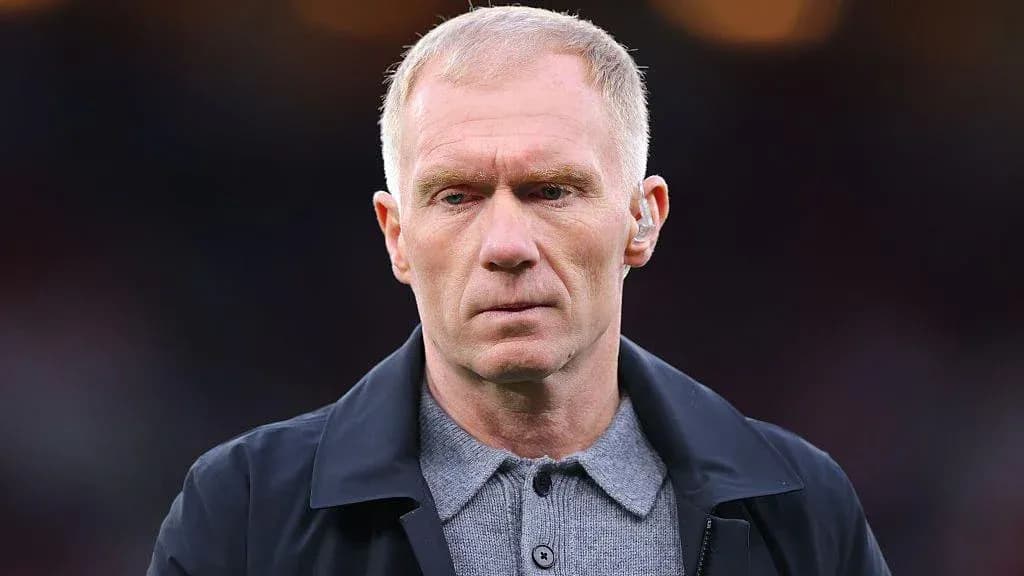
Paul Scholes believes Cristiano Ronaldo has become a “problem” for Portugal, arguing that a 41-year-old should not be leading the line at a World Cup.
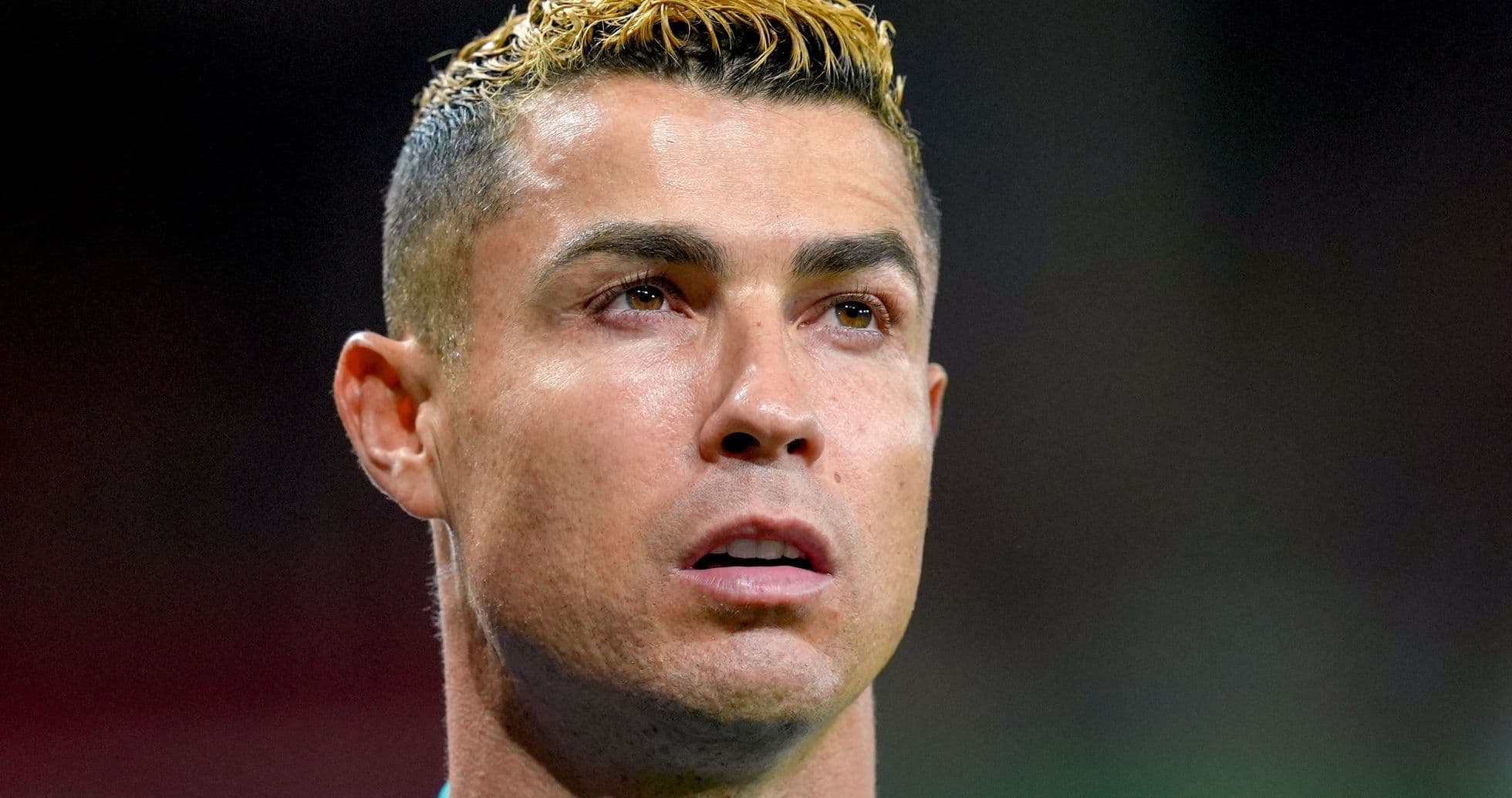
Ronaldo, who has now matched Lionel Messi’s feat of appearing at six World Cups, captained Portugal in their opening group game against DR Congo in Houston on Wednesday. The night was supposed to underline his enduring status on the biggest stage. Instead, it sharpened the debate around his place in Roberto Martinez’s team.
A flat night for Ronaldo, a missed chance for Portugal
Portugal started like a side with serious ambitions. Joao Neves struck in the sixth minute, a crisp early goal that hinted at a comfortable evening for the 2025 Nations League winners, one of the favourites for the trophy alongside France, Spain, England and defending champions Argentina.
They controlled the ball, dictated the tempo, pinned DR Congo back.
Then the pressure fizzled out.
Just before half-time, Newcastle forward Yoane Wissa punished them, scoring an equaliser against the run of play. From there, Portugal never truly reasserted themselves. The game drifted into a 1-1 draw that felt like a squandered opportunity for a squad brimming with talent.
In the middle of it all, Ronaldo barely left a mark.
Across a particularly bleak first half, he did not create a chance, did not take a shot, did not beat a man, did not win a single duel. For a player whose career has been built on decisive moments, it was a stark, almost jarring sight.
Martinez still kept him on until the final whistle. Pedro Neto, Vitinha, Bernardo Silva, Tomas Araujo and Nuno Mendes all made way. Ronaldo stayed.
Scholes: “For me, he has to be a player for the last 15 minutes”
Watching from afar, Scholes saw a manager trapped by the weight of a legend.
“I believe it’s challenging for the manager,” the former England and Manchester United midfielder said on The Good, The Bad & The Football podcast.
He revealed he had already put the question directly to Martinez off-camera during a Stick to Football recording. “I inquired, ‘Is he a problem for you?’, as I feel he is somewhat of a concern.”
For Scholes, the issue is simple: age and position.
“At 41 years of age… I believe there is only one position on the field where a player of that age should be starting, and that is as a goalkeeper, in my opinion.”
Ronaldo will still score goals, Scholes conceded. In a side that dominates possession, his penalty-box instincts and finishing remain dangerous. But tournaments are not won on sterile control alone.
“Once there’s a game where it has to be transition… and there will be games like that. His movement at 41 years of age…” Scholes let the point hang.
He argued that the five-time Ballon d’Or winner should now be used as an impact substitute, unleashed when legs are heavy and spaces open up.
“The trouble with Portugal is they haven’t really got an outstanding centre-forward anyway, have they? You’ve got to have somebody who runs,” he said.
“For me, he has to be a player for the last 15 minutes. For a 40 or 41-year-old to be playing centre-forward, I just don’t get it.
“You might get away with it at centre-half, you might do in a team that keeps the ball and you probably get away with it as a goalkeeper, but as a centre-forward at 41… it’s not right.”
The Modric warning and the Messi shadow
Scholes pointed to another great of this generation as a cautionary tale.
“We saw it with Croatia and Luka Modric last night at 40 years old. Central midfield at 40…” The implication was clear: even the most gifted technicians eventually run into the physical demands of modern tournament football.
Layered on top of that is Ronaldo’s own competitive fire, which Scholes believes will be raging as his peers continue to deliver headline moments.
“Cristiano will be so pissed off because Lionel Messi got a hat-trick, Kylian Mbappe got two… it will be killing him.”
That psychology, Scholes suggested, feeds the dilemma for Martinez. Dropping or even rotating Ronaldo is not just a tactical call; it is a political and emotional one inside a dressing room built around his aura for almost two decades.
“I feel sorry for Martinez because he’s trying to embrace it and he’s saying, ‘No, I’ve got the best goalscorer in the world’, but deep down he must know that’s hurting his team.”
Portugal still have the talent to go deep in this tournament. The question, sharpened by a flat draw in Houston and by Scholes’ blunt assessment, is whether Martinez is prepared to reduce the role of his greatest goalscorer to give that talent the best chance to breathe.