.svg&w=384&q=75 "Naijagoal logo")

Nobby Stiles Inquest Ordered: Football's Duty of Care Questioned
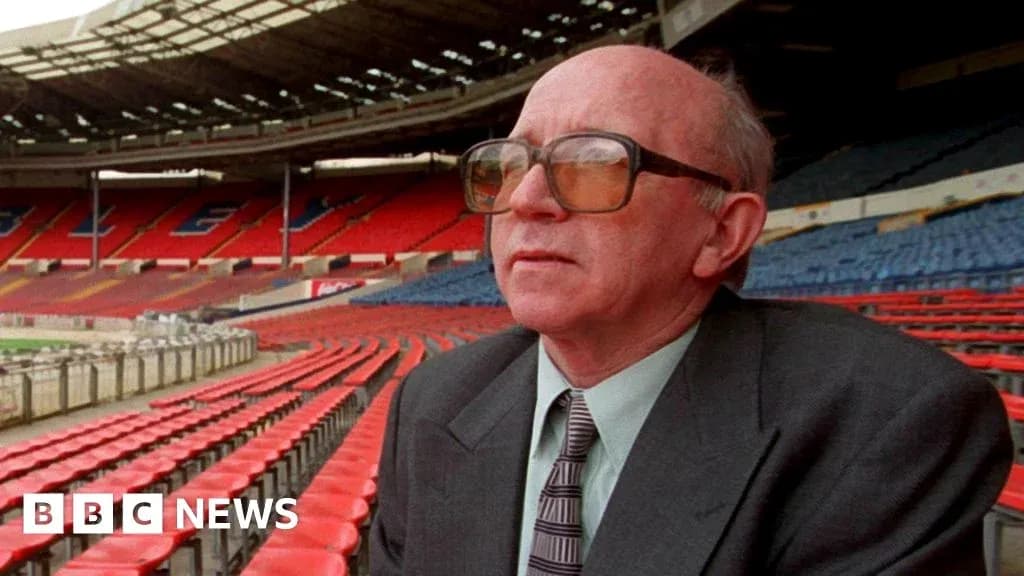
Nobby Stiles, one of English football’s most enduring images from 1966, died with a traumatic brain injury and chronic traumatic encephalopathy (CTE), a court has heard, as a coroner ruled that an inquest into his death must finally take place.
The former Manchester United midfielder, who was 78 when he died in 2020, had CTE – a degenerative brain disease repeatedly linked to head trauma – along with other serious neurological conditions. His family have long argued that years of heading heavy footballs and the physical demands of the game played a central role in his decline.
Coroner orders full inquest
Chris Morris, area coroner for Greater Manchester South, told Stockport coroner’s court that a full inquest was now required after a brain specialist reviewed Stiles’s medical records. That expert evidence confirmed high-stage CTE as a contributing factor in his death.
Morris said Stiles’s cause of death included traumatic brain injury, high-stage CTE, “stage three limbic predominant age related TDP-43” and small vessel cerebrovascular disease. On that basis, the coroner said he was “satisfied an inquest is required into the sad death of Mr Stiles.”
What troubled Morris was how long it had taken to reach this point. He told the court that, “for reasons not entirely clear to me”, Stiles’s death had not been reported to the coroner’s office at the time, and that the investigation only began after his family came forward with further information.
The full inquest hearing will be held on Wednesday at the same court.
A hard man from a harder era
Norbert “Nobby” Stiles, born in Manchester in 1942, embodied the unforgiving edge of English football’s old school. A fierce, tough-tackling defensive midfielder, he won 28 caps for England and played nearly 400 times for Manchester United, anchoring Sir Matt Busby’s side and helping deliver the 1968 European Cup.
The image of Stiles dancing on the Wembley turf in 1966, socks rolled down, World Cup in one hand and false teeth in the other, became part of English football folklore. Behind the smile and the steel, his later years brought a far darker story.
His family have been vocal in their belief that football left him with devastating, avoidable damage. They are part of a growing chorus demanding that the sport confronts its past and its duty of care.
Families push football to answer
John Stiles, Nobby’s son, heads the Football Families for Justice (FFJ) group, which is pressing governing bodies to do more for former players living with – or dying from – brain conditions linked to their playing careers.
He is among dozens of ex-players and relatives suing the Football Association, the Football Association of Wales and the English Football League. The legal claim alleges that those organisations were “negligent and in breach of their duty of care” to players by failing to protect them from the long-term dangers of repeated head impacts.
Lawyers acting for the families argue that football’s authorities knew, or should have known, for decades that repeatedly heading a ball in training and matches was likely to cause brain injuries. They say the risks were not new, and not hidden.
The governing bodies reject that accusation. In March, lawyers for The Football Association told the High Court that it has “not been established by science” that heading a ball or “occasional” concussion leads to permanent brain damage.
That clash between lived experience and legal argument now hangs over almost every case like Stiles’s.
A pattern that’s hard to ignore
Stiles is not alone. In January, an inquest into the death of Gordon McQueen, the former Scotland, Manchester United and Leeds United defender, concluded that heading the ball was “likely” to have contributed to a brain injury that played a part in his death at 70.
Each ruling adds another layer to a grim pattern: the old heroes of British football, particularly those who played in defence or midfield and attacked countless crosses with their heads, are turning up in coroners’ courts with similar diagnoses.
The Stiles inquest will not settle the science. It will not end the legal battle between grieving families and football’s governing class. But it will put, on the public record, the medical story behind one of England’s most iconic champions.
For a sport built on memory and mythology, the question now is stark: how many more World Cup winners and terrace idols must pass through a coroner’s courtroom before football finally rewrites its own rules?