.svg&w=384&q=75 "Naijagoal logo")

Morocco's Prime Minister Reprimands Football Federation Over World Cup Final Claims
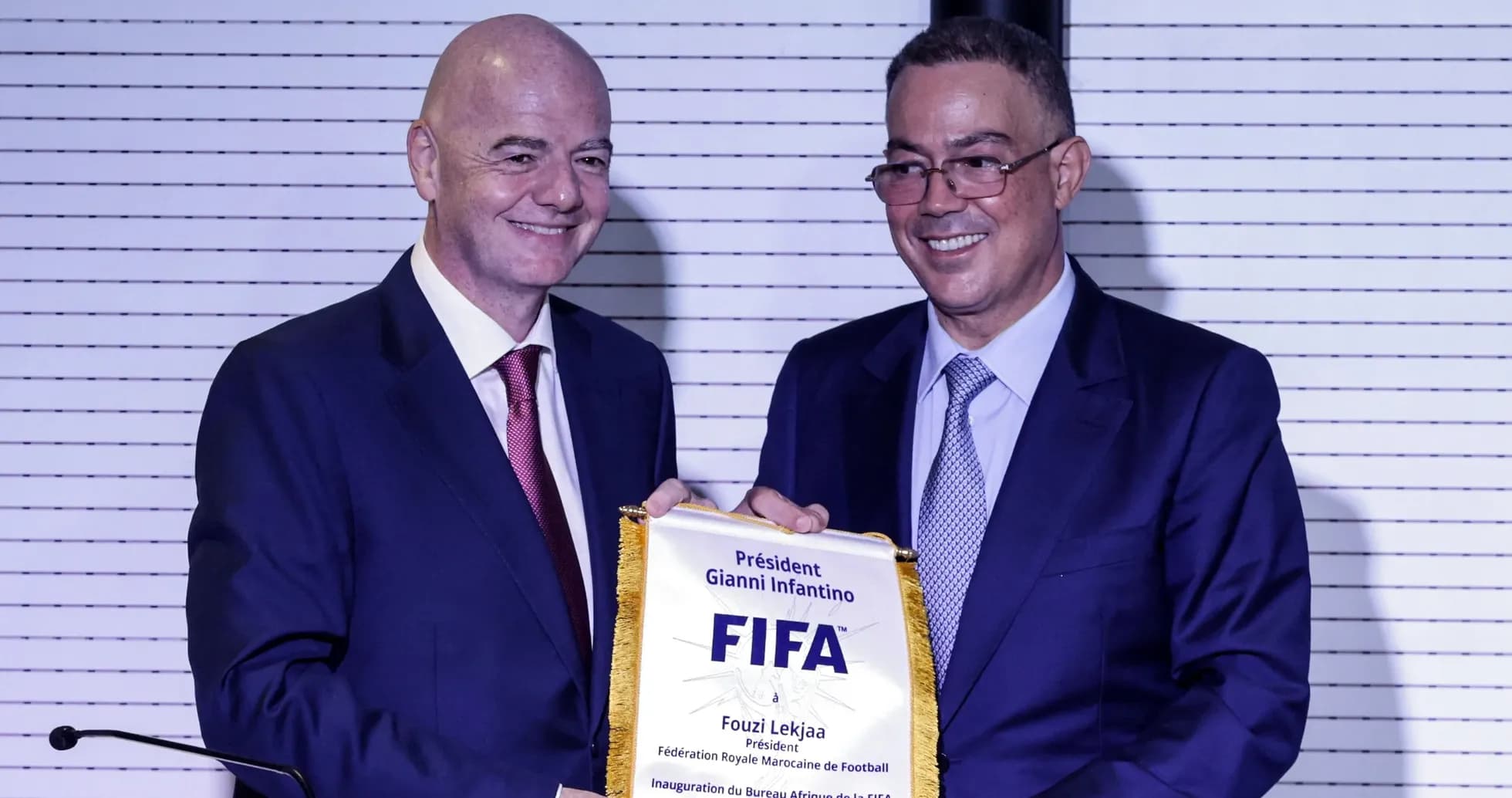
Morocco’s prime minister has publicly rebuked Royal Moroccan Football Federation chief Fouzi Lekjaa, ordering him to stop promising that Casablanca will host the 2030 World Cup final.
The warning cuts straight to the heart of a growing power play around the showpiece match of a centenary tournament that Morocco is due to co-host with Spain and Portugal.
Political slap on the wrist
The flashpoint came when Lekjaa, speaking at a political party event, declared that Morocco’s planned new super-stadium in Casablanca would have the “honour” of staging the final. It was a bold statement. Too bold for his own government.
Prime Minister Aziz Akhannouch hit back in public, using a rally to call out the federation president and cool the rhetoric.
“Do not offer to host the big final game in Morocco while we still have not discussed the matter with our allies, Spain and Portugal,” Akhannouch said. “There should be some respect, brothers. Stop using electoral promises to pull the rug out from under us. These are huge matters. Deciding where the final will be held is a major issue.”
The message was unmistakable: Morocco may be dreaming big, but it cannot afford to antagonise its European partners before FIFA has even spoken.
FIFA silent, battle lines drawn
For now, world football’s governing body is staying out of the crossfire. FIFA has not named a host city for the 2030 final, saying only that “a decision will be made in due course.”
That vacuum has encouraged both camps to push their case.
Morocco is desperate to bring the final back to Africa for the first time since Johannesburg in 2010. Spain, fresh from another wave of on-pitch success and armed with heavyweight stadiums, believes the decision is already tilting its way.
Tension between the co-hosts is exactly what Akhannouch wants to avoid. Hence the very public attempt to rein in Lekjaa before a political boast hardens into a diplomatic problem.
Spain turns up the volume
Across the Mediterranean, the Spanish federation is not whispering its ambitions.
Rafael Louzan, president of the RFEF, has been emphatic about where he thinks the final belongs.
“Even though no decision has been taken, I believe Spain is the place because it cannot be any other way,” he told Cadena SER radio. “As you know, we are currently world champions. I believe Spain’s organisational capacity for major events is beyond question and that is why reality dictates that the grand final cannot and must not be held anywhere other than in Spain.”
That confidence leans heavily on recent success. Spain’s men’s national team beat Argentina this past summer to claim a second World Cup title, reinforcing the country’s image as a modern giant of the game.
Then there is the hardware. The revamped Santiago Bernabeu in Madrid, the ongoing expansion of Barcelona’s Spotify Camp Nou, and a network of elite venues give Spain a ready-made platform. From the RFEF’s perspective, the infrastructure argument is already won.
Morocco’s mega-stadium gamble
Morocco’s answer is to build something the world has never seen.
The country is pressing ahead with a 115,000-seat stadium project, designed to be the largest football-specific venue on the planet. The Casablanca arena is intended not just as a home for the final, but as a statement that Morocco can stand shoulder to shoulder with Europe’s grandest grounds.
It is ambitious, expensive and politically loaded. Every brick laid strengthens the narrative that the final should cross the Strait of Gibraltar.
Yet the prime minister’s intervention shows the government wants that push framed as a joint bid, not a solo crusade that risks alienating Spain and Portugal before negotiations properly begin.
Decision on the horizon – but not yet
The timeline offers both hope and uncertainty. The 2026 World Cup final host city was only confirmed in early 2024, when New Jersey’s MetLife Stadium finally got the nod. By that standard, FIFA can afford to wait.
That delay leaves room for more lobbying, more stadium unveilings, more political theatre.
For now, Morocco is trying to walk a tightrope: sell the dream of a historic African final, keep domestic expectations in check and avoid a rift with its partners.
The stadiums are rising. The rhetoric is heating up. When FIFA finally points to a city, whose vision will it reward?