.svg&w=384&q=75 "Naijagoal logo")
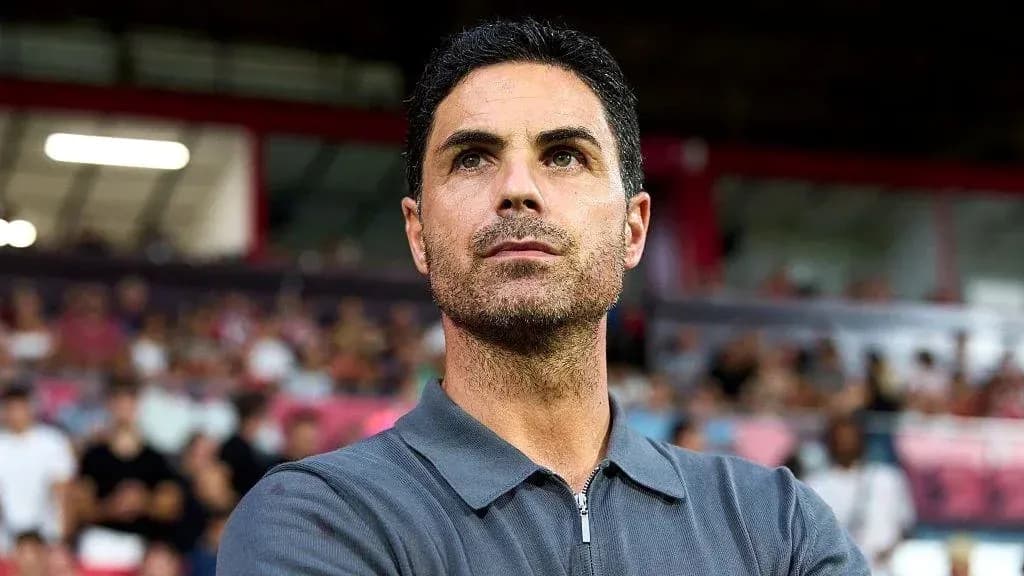

Mikel Arteta's New Contract: Arsenal's Most Important Deal
At Arsenal this summer, opinion has split over the transfer window. On one thing, though, there is no debate inside the Emirates: the most important deal of all is the one they are now trying to close.
The window is shut until January. Arsenal’s focus is not on a new midfielder or forward, but on the man who has reshaped the club. The hierarchy are working to finalise Mikel Arteta’s long-awaited new contract, a deal viewed internally as every bit as significant as any marquee signing.
Talks, which have dragged on for months, have accelerated in recent weeks. Well-placed figures around the negotiations are confident the Spaniard will commit. Arteta himself has already tried to kill any lingering uncertainty.
“Everybody feels comfortable that the timing of the contract is not going to be an issue because my will certainly is to be here and I'm very happy here,” he said last month. “My feeling from the club is the same one. That's why everyone is doing things in a very organic way.”
Those words aligned with the message from chief executive Richard Garlick, who has described the agreement as a simple “matter of time” before being confirmed as a long-term deal.
When the paperwork is finally signed, Arteta will be paid like a manager at the very top of the game. Arsenal have committed to a substantial upgrade on his current package, worth around £10m a year plus an additional £5m if the club qualify for the Champions League. The new contract is expected to place him among the highest earners in world football.
Arsenal’s powerbroker
For supporters, the announcement cannot land quickly enough. Arteta’s present deal has dipped into its final nine months, a dangerous territory for a coach whose influence runs through every layer of the club.
He arrived in December 2019 to a side drifting away from the elite. Arsenal had slipped out of the Champions League and looked a long way from the superclubs they once traded blows with. Under his watch, they have climbed back to the summit, winning the Premier League last season for the first time in 22 years.
That title has changed everything. Arsenal now go into this campaign as overwhelming favourites to retain their crown. They are also being widely backed to launch a serious tilt at the one trophy the club has never lifted: the Champions League.
With that resurgence has come authority. Like Arsene Wenger before him, Arteta has become the dominant football voice at Arsenal. From training ground culture to transfer strategy, his imprint is everywhere. Nothing of consequence happens with the first team without his sign-off.
People often insist the manager should always be the most powerful figure at a club. The reality in modern football is usually very different. Arsenal are one of the exceptions, and that is largely down to Arteta’s rise.
His influence stretches beyond the touchline. When Arsenal pushed to sign Julian Alvarez and Vinicius Jr last month, it was Arteta leading the club’s charm offensive, selling his project, his vision, his dressing room. Those deals did not materialise, but the process underlined his central role.
For the ownership, the idea of removing him from that structure is unthinkable. One day, Spain will almost certainly call. A return to his homeland, and the lure of Real Madrid or Barcelona, will be hard to ignore. Yet Arteta understands that in those political giants he is unlikely to enjoy the same sweeping authority he currently holds in north London.
Right now, the pull for him is Arsenal.
A squad at its peak
This is a group that has grown under his hand. The average age of the squad stands at 26.2, one of the oldest in the Premier League. That figure does not point to a team on the slide, but to one in its prime, built to compete now and to build a legacy from this point.
Arsenal’s actions in the market have backed that ambition. The club committed serious money to bring in Bruno Guimaraes and Ezri Konsa, both of whom turn 30 next year. These are not speculative signings for the distant future; they are players for the here and now.
The failed moves for Vinicius Jr and Alvarez still mattered. They showed Arteta that the Kroenke ownership is prepared to spend aggressively on elite talent, the calibre of footballer required to keep Arsenal among Europe’s heavyweights. That level of intent is understood to have been a key demand from Arteta as contract talks advanced.
His tenure at the Emirates has already stretched to six years, making him by far the longest-serving manager across the Premier League and EFL. The new agreement will push him closer to a decade in charge, a rarity in the modern game and a clear statement of continuity from a club once accused of drifting.
There is, however, no sense of a man easing off after reaching the summit. Arteta’s standards have not softened, his drive has not dimmed. Arsenal are tying down their manager at the height of his powers.
The question now is simple: how far can he take them from here?