.svg&w=384&q=75 "Naijagoal logo")
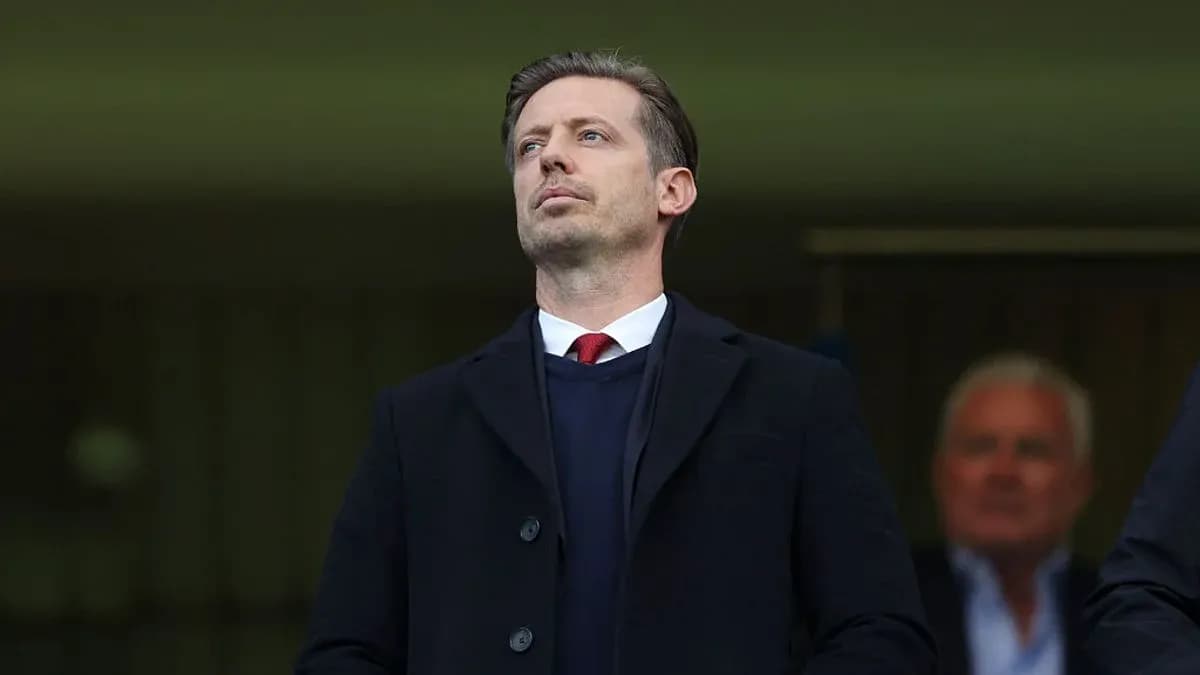

Michael Edwards' Early Exit from Liverpool: Unfulfilled Promises
Michael Edwards’ second act at Liverpool was meant to be bigger, broader, more ambitious. Instead, it has ended early, clouded by frustration and unfulfilled promises at the very top of Fenway Sports Group.
The architect of the modern Liverpool, the man credited with driving the signings of Mohamed Salah, Sadio Mané and Andy Robertson, had returned in 2024 not simply to steer the club through the post-Jürgen Klopp era, but to help build something larger: a multi-club empire under FSG’s banner. That project never materialised. The fallout has now claimed him.
A grand plan that never left the drawing board
When Edwards walked away from Anfield in 2022 after a decade of transformative work, he did so at the peak of his reputation. Manchester United wanted him. Chelsea wanted him. He waited.
Two years later, he came back, not as Liverpool’s sporting director but as FSG’s CEO of football — a new, elevated role that sat above the club and was tied explicitly to a multi-club model. The pitch was clear: Liverpool would be the flagship, supported by at least one more European club under the same ownership, a structure already embraced by several of Europe’s biggest operators.
That vision was central to his decision to return. Edwards himself admitted that the multi-club strategy was crucial in convincing him to sign on again. He was not coming back to simply repeat the job he had already mastered. He was coming to reshape FSG’s entire football operation.
Yet two years on, FSG have still not bought a second club. The anticipated expansion has stalled. Plans that once sounded bold and imminent now look parked, if not abandoned. According to reporting from The Athletic, that failure to move decisively left Edwards “frustrated” and helped push him towards the exit door, a year before his contract was due to end.
Power, promises and a quiet departure
Publicly, the parting has been wrapped in the usual politeness. In his statement, Edwards called it “a privilege to return to Fenway Sports Group and Liverpool Football Club at such an important moment,” and insisted he leaves believing “Liverpool is in a strong position, with outstanding people, a clear direction and the foundations in place for continued success.”
He also addressed the broader project that never truly got off the ground.
“When I returned, I was excited not only by the opportunity to help guide Liverpool through an important period of transition, but also by the chance to help shape FSG’s wider football ambitions,” he said.
“While that broader project ultimately evolved differently to how we had originally envisaged, I am proud of the work our team undertook in presenting ownership with a broad range of thoughtful and well-developed options for the future.”
Carefully chosen words. The message between the lines is harder.
Edwards and his team had drawn up the roadmap. FSG did not take it. For a man used to clarity, conviction and follow-through in recruitment and planning, that hesitation cut deep.
Hughes in, Hughes out, Gordon returns
Edwards’ influence on Liverpool’s structure will linger, even in his absence. One of his key early moves on returning was to bring in Richard Hughes as sporting director, a trusted figure he had previously worked alongside.
Hughes arrived to oversee transfers and squad planning at Anfield, taking on the role of the club’s primary football executive. At Bournemouth, where he worked with Andoni Iraola, the head coach did not hold full control over transfers; that responsibility sat squarely with Hughes. Liverpool were set up in similar fashion, with the sporting director at the heart of recruitment.
Now that framework is already shifting again. Hughes is reportedly set to leave Liverpool at the end of the summer to join Al-Hilal, cutting short his own tenure just as it begins to take shape.
With Edwards stepping away and Hughes preparing to follow, FSG have turned back to a familiar face. Mike Gordon, the group’s president and long-time key figure in Liverpool’s modern era, is understood to be resuming day-to-day operations at the club. He has done the job before. He knows the terrain. But his return underlines how quickly the grand redesign of FSG’s football structure has been rolled back.
A project stalled, a question left hanging
Edwards’ departure does not erase what he built the first time around. His fingerprints remain on a squad, a recruitment model and a culture that dragged Liverpool back to the summit of English and European football. That legacy is secure.
What lingers now is a different question: where FSG actually want to take their football operation.
They had one of the most respected sporting minds in the game, armed with a clear plan to expand into a multi-club model. They had the time and the leverage to act. They didn’t.
Edwards leaves with warm words, thanks to Mike Gordon, John Henry, Tom Werner, everyone across FSG and Liverpool, and above all the supporters “whose passion makes this club so special.” He says he will always be grateful to have been part of its story.
The story moves on without him. Whether FSG’s broader ambitions ever do is another matter entirely.