.svg&w=384&q=75 "Naijagoal logo")
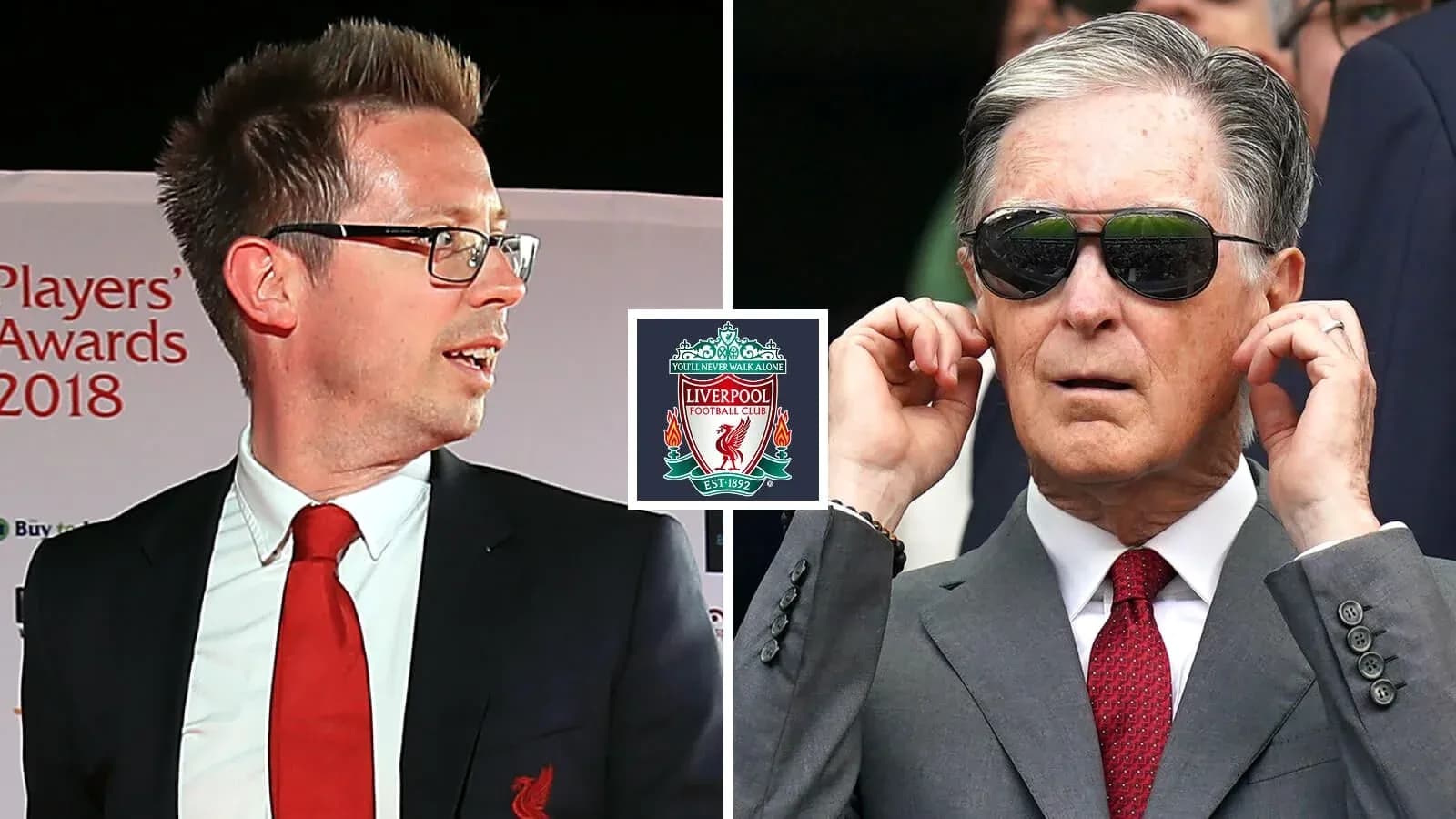

Michael Edwards Leaves FSG as Multi-Club Dream Fails
Michael Edwards is leaving Fenway Sports Group before the start of next season, drawing a sharp line under a second spell at Liverpool that never became the project he was sold.
The architect of much of Liverpool’s modern success under Jurgen Klopp returned in 2024 as FSG’s CEO of football, a promotion in title and scope from his previous role as sporting director. This time, the hook was clear: he would not be coming back to run recruitment, but to build and lead a multi-club model under the FSG umbrella.
That model never arrived. The frustration never really left. Now the exit is official.
From transfer mastermind to stalled strategist
Edwards, who had previously worked at Tottenham before joining Liverpool and rising to sporting director, became synonymous with the club’s resurgence under Klopp. Smart deals, ruthless timing, a clear plan – his fingerprints were all over the era that took Liverpool back to the top of English and European football.
He left in 2022, seemingly at peace with a job completed. When he reappeared in 2024, it was on very different terms. No return to the old role, no repeat of the same cycle. He wanted scale. He wanted a network.
Upon his comeback, he made it clear: the appeal lay in leading a multi-club project, with FSG expanding their football portfolio beyond Liverpool. Targets were explored. Bordeaux was examined. Getafe was seriously considered. The idea was to turn FSG from single-club owners into players in the multi-club landscape that now shapes elite football.
Then the brakes went on.
In March, The Athletic’s Liverpool correspondent James Pearce reported that FSG had “effectively shelved plans to buy a second club,” leaving Edwards “frustrated by the impasse”. The grand design he had signed up for was stuck in neutral.
The contracts told one story – Edwards and sporting director Richard Hughes tied down until 2027, Arne Slot initially in the same position before being sacked after a poor 2025/26 campaign – but the reality behind the scenes told another. The job Edwards ended up doing was not the one he thought he had accepted.
“A privilege” – and a parting shot in all but words
With his departure confirmed, Edwards struck a respectful tone on the way out.
“It has been a privilege to return to Fenway Sports Group and Liverpool Football Club at such an important moment,” he said. “I leave believing Liverpool is in a strong position, with outstanding people, a clear direction and the foundations in place for continued success.”
FSG president Mike Gordon paid a fulsome tribute, underlining just how central Edwards has been across both spells.
“Michael has made an extraordinary contribution to Liverpool Football Club and Fenway Sports Group throughout his time with our organization,” Gordon said. He highlighted Edwards’ broader leadership role on his return in 2024, praising the way he helped Liverpool “successfully navigate a significant period of transition” before the club secured its historic 20th English league title – a landmark Gordon said Edwards had “made an important contribution” towards.
Gordon closed with a personal note, thanking Edwards “for his outstanding service, friendship and leadership” and wishing him and his family “every success and happiness in the future.”
The words were warm. The underlying tension was clear enough.
The role that changed – and the one that never came
Reporting for The Athletic, Pearce revealed that Edwards had actually informed the FSG hierarchy of his decision to leave last autumn. The key moment came when it became clear that FSG were not going to expand their football portfolio after all.
The job stopped matching the brief.
Journalist Ben Jacobs backed up that picture, stating that the failure to deliver on the multi-club plan was the decisive factor in Edwards’ departure. He reported that Bordeaux had been looked at and Getafe explored, but once the Getafe move stalled, Edwards’ exit became “inevitable”.
Jacobs underlined one crucial point: Edwards had never wanted to return to a pure recruitment role. The main attraction was to drive the purchase of a new club and oversee a wider network. When that vision faded, the position he occupied became “very different to the one he’d been promised”.
Even so, he stayed on to support Richard Hughes and help Liverpool through a major transition, including the title win that gave the club its 20th English league crown. The work was serious. The fit, increasingly, was not.
No external replacement – Gordon resumes control
Liverpool will not be searching the market for a like-for-like successor.
Pearce reports that FSG do not intend to appoint an external replacement for Edwards. Instead, Mike Gordon is set to resume control of running their football operations, effectively stepping back into a more hands-on role that he has previously held.
It is a move that keeps power concentrated within the existing FSG structure rather than opening the door to another high-profile executive from outside. The message is continuity at Liverpool, even as one of the key architects of the club’s recent era walks away.
Edwards, meanwhile, is unlikely to be short of offers. Jacobs notes that he will now be in demand and is not expected to take another long break from football.
A proven builder of elite squads, a strategist who wanted to shape an entire network and not just one team, he leaves FSG with his reputation intact and his ambition clearly signposted.
The multi-club project he was promised never truly got off the ground. The next question is simple: whose project will he shape next?