.svg&w=384&q=75 "Naijagoal logo")

Mexico's World Cup Hopes: Aguirre's Last Chance
The clock is ticking loudly for El Tri. An entire country leans in, waiting to see if this will finally be the generation that does more than survive a group, more than fall in the same place, in the same way, yet again.
Getting out of the group is non-negotiable. Doing it as group winners is the real target, the route that might keep the tournament’s heavyweights at arm’s length until the last 16. Mexico know the script by heart. The question is whether they can finally tear it up.
Aguirre’s last dance
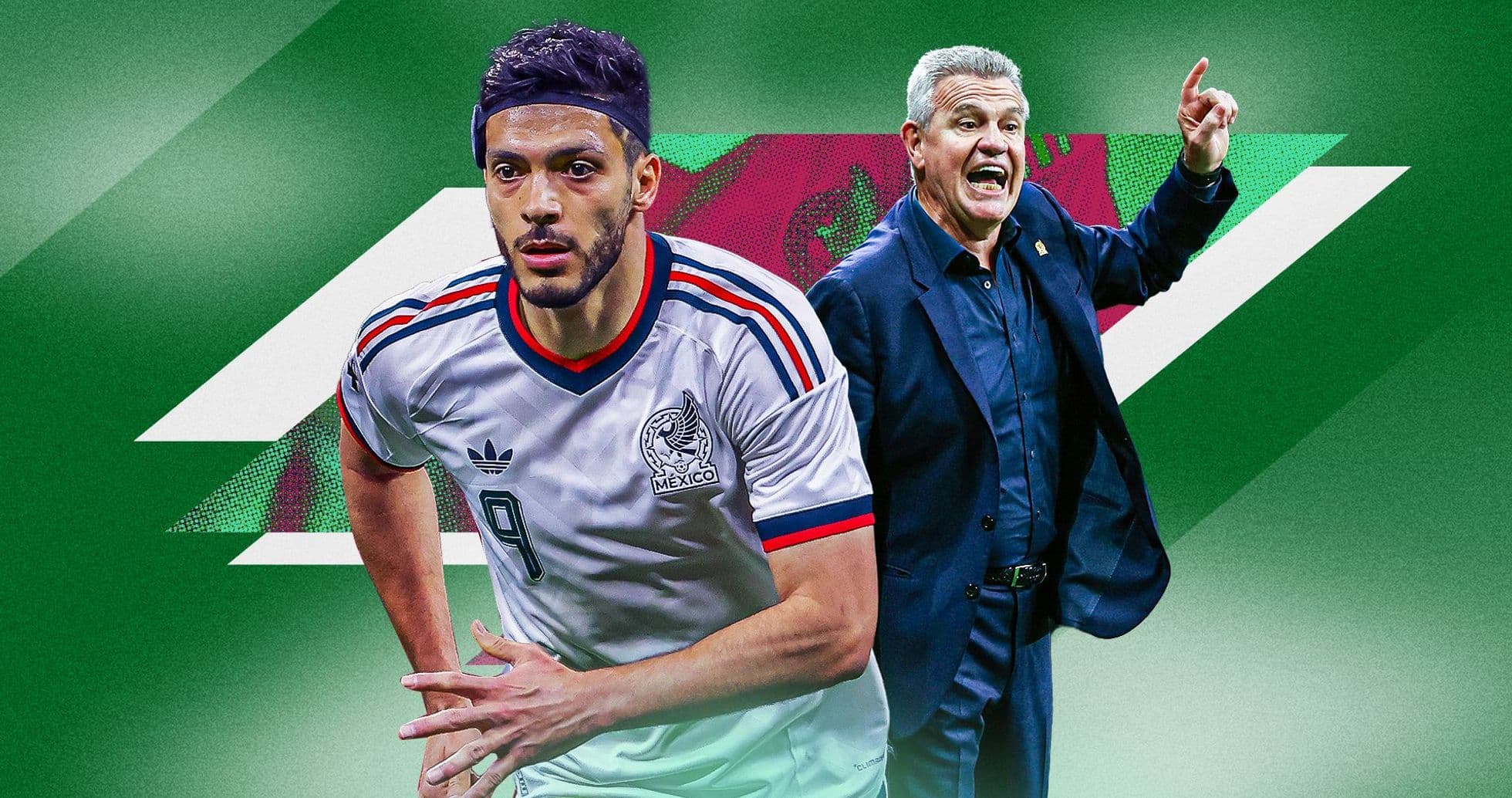
On the touchline, a familiar figure returns for one last run. Javier Aguirre, ‘El Vasco’, leads Mexico into a World Cup for the third time, with the handover to assistant Rafa Marquez already written into the epilogue. That knowledge hangs over everything: this is a short, sharp era, not a long project.
Aguirre arrives as a two-time Gold Cup winner, but also as a lightning rod. Mexican fans have never been shy about their doubts. They see a coach who leans on caution, who trims risk from his football, who often prefers solidity over spectacle. His squad choices draw as much debate as his tactics.
True to form, he has turned again to Liga MX as his backbone. Long before the domestic season wound down, the league had already supplied 12 players to the preliminary camp. The European-based names joined later, but the message was clear: the domestic core still matters, and Aguirre trusts what he knows.
A new spine, a different edge
If Mexico are to push beyond the usual ceiling, they will do it through a strong spine rather than a galaxy of stars.
At the back, Johan Vasquez and Cesar Montes anchor a central defence that looks like one of this team’s genuine strengths. They give Mexico height, aggression, and a measure of calm that has not always been present in high-pressure tournaments.
In midfield, the blend shifts. Alvaro Fidalgo brings control and passing range, while Obed Vargas offers youthful legs and a willingness to carry the ball into tight spaces. Over them all stands Edson Alvarez, the captain who has battled through an injury-hit campaign just to be here. His presence changes the mood: with Alvarez on the pitch, Mexico feel more secure, more organised, more themselves.
Some big names from recent cycles are missing. Diego Lainez is out. So is Chucky Lozano. Once central figures in Mexico’s attacking identity, they now watch this chapter from afar as Aguirre reshapes the team in his own image.
Jimenez, the standard-bearer
Up front, the picture is far simpler. This is still Raul Jimenez’s team.
At 35, the Fulham striker walks into his fourth World Cup carrying the weight of a nation and the evidence to justify it. In 2025, across two trophy-winning campaigns, he scored nine of Mexico’s 22 goals. When the stakes rose, he delivered. Nobody else in this squad comes close to his status or his reliability.
Santiago Gimenez, coming off a difficult season at AC Milan, cannot yet challenge him for that role. So Jimenez remains the reference point, the man every cross seeks, every counter-attack looks for. As long as he stays fit, Mexico’s attack orbits around him.
Ochoa, the eternal guardian
Behind them, a familiar face has stepped back into the frame. Guillermo Ochoa, who seemed to be drifting out of the national-team picture, has been pulled back in by circumstance. An injury to Luis Malagon reopened the door, and Ochoa walked through it with the same calm he has carried for two decades.
This tournament could be his sixth consecutive World Cup. That places him alongside Lionel Messi and Cristiano Ronaldo in the record books, a staggering measure of endurance and relevance. For Mexican fans, his presence is more than nostalgia. It is a comfort, a reminder of penalty saves and impossible nights when Ochoa refused to yield.
A 17-year-old spark
If the veterans provide the structure, the electricity may come from a teenager.
Gilberto Mora is only 17, but he arrives as one of the most exciting talents Mexican football has produced in years. An attacking midfielder with a natural feel for the final third, he sees passes others miss and plays them with a confidence that belies his age.
His path has not been smooth. An injury kept the Tijuana youngster out for much of the Liga MX season, slowing the hype but not dimming it. Now he is back, and already rewriting records at home while Europe’s biggest clubs circle, preparing their pitches to bring him across the Atlantic.
Mexico do not always create chances freely. Their structure can be rigid, their play a little predictable when the tension rises. That is where Mora comes in. His creativity, his willingness to take risks in tight spaces, offers something different, something unpredictable. If Aguirre gives him the stage, he has the talent to light up not just games, but entire nights.
A nation waits
So Mexico arrive with a cautious coach, a Liga MX core, a 35-year-old talisman, an eternal goalkeeper, and a 17-year-old prodigy asked to add colour to a team that often lives in grey.
The pressure is enormous. The expectations are familiar. The round-of-16 wall still stands, unbroken across generations.
This time, with Jimenez leading, Ochoa watching, Alvarez organising, and Mora daring to create, can El Tri finally smash through it?