.svg&w=384&q=75 "Naijagoal logo")
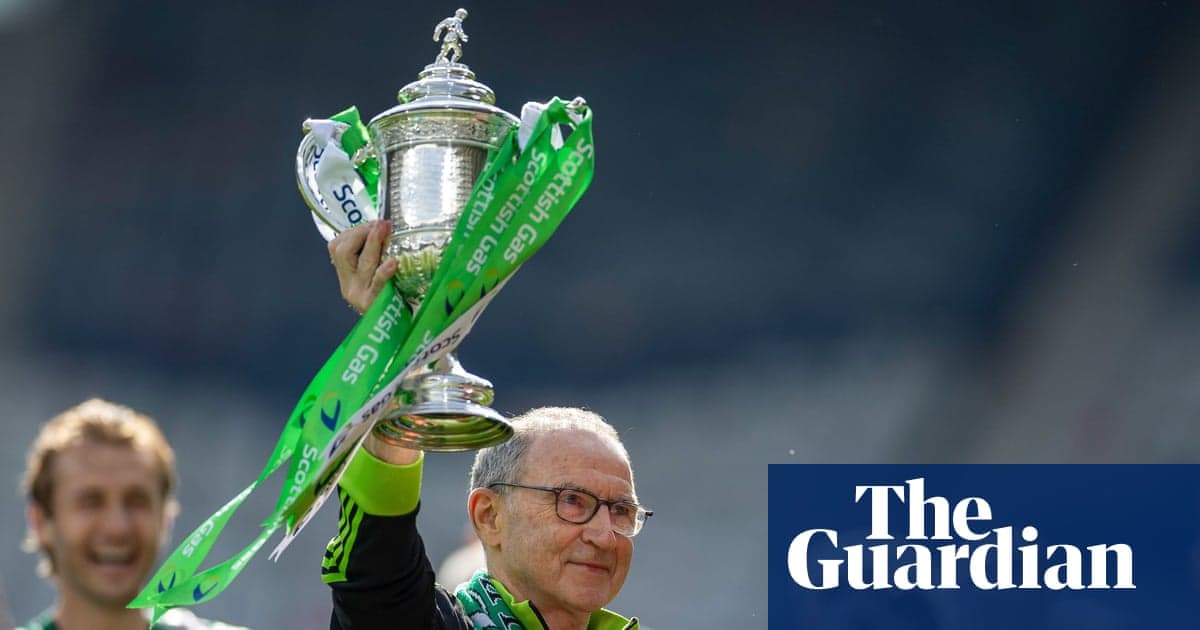

Martin O’Neill Returns to Celtic as Permanent Manager
Martin O’Neill is set to take Celtic into the future by stepping back into their past.
The 74-year-old has agreed a one-year deal to remain in charge in Glasgow, with the club expected to confirm his appointment as permanent manager. The contract carries an option for a second year, a nod to the belief inside Celtic Park that this is more than a sentimental stop-gap.
O’Neill has already reminded Celtic of his touch. Installed twice this season as interim manager, he steadied a listing campaign and then finished it with a flourish, delivering a domestic double and rekindling an old connection with the support. The Scottish Cup final win over Dunfermline, which closed that caretaker spell, prompted him to ask for time to reflect. The answer, in truth, never felt in serious doubt.
While O’Neill weighed up his future, Celtic’s hierarchy explored a different path. Robbie Keane emerged as a serious contender, holding talks earlier this week with Dermot Desmond, the club’s principal shareholder. Keane’s coaching résumé includes a spell in charge of Maccabi Tel Aviv before he moved to Hungary and Ferencvaros, where he resigned at the end of May.
The reaction was instant and fierce. A section of the Celtic support railed against the prospect of Keane’s appointment, objecting in particular to his time working in Israel. What might have been a bold, modernist choice quickly became politically charged and deeply divisive.
The mood around O’Neill could hardly be more different. His return to the dugout has carried the weight of history and the comfort of familiarity. Twenty-six years have passed since Desmond first persuaded him to leave Leicester City for Glasgow, a move that transformed Celtic at the turn of the century and reshaped the balance of power in Scottish football.
That first era under O’Neill still looms large. Three Scottish titles. Three Scottish Cups. Two Scottish League Cups. And a run to the 2003 Uefa Cup final, where Celtic fell to José Mourinho’s Porto in Seville after an epic, draining night that nonetheless stamped the club back on the European map.
Those memories now bleed into the present. O’Neill returns older, of course, but also with the authority of a man who has already proved he can handle the scale, scrutiny and expectation that come with the Celtic job. The domestic double he has just delivered as interim manager suggests his methods still land in a dressing room that has changed generations since he first walked through the doors.
Celtic, bruised by recent uncertainty and wary of a support ready to mobilise, have chosen the known quantity over the contentious experiment. The club will now discover whether a manager who once rebuilt them can do it all over again, in a very different era and under a very similar pressure.