.svg&w=384&q=75 "Naijagoal logo")

Martin O'Neill's Celtic: A Crossroads of Decision
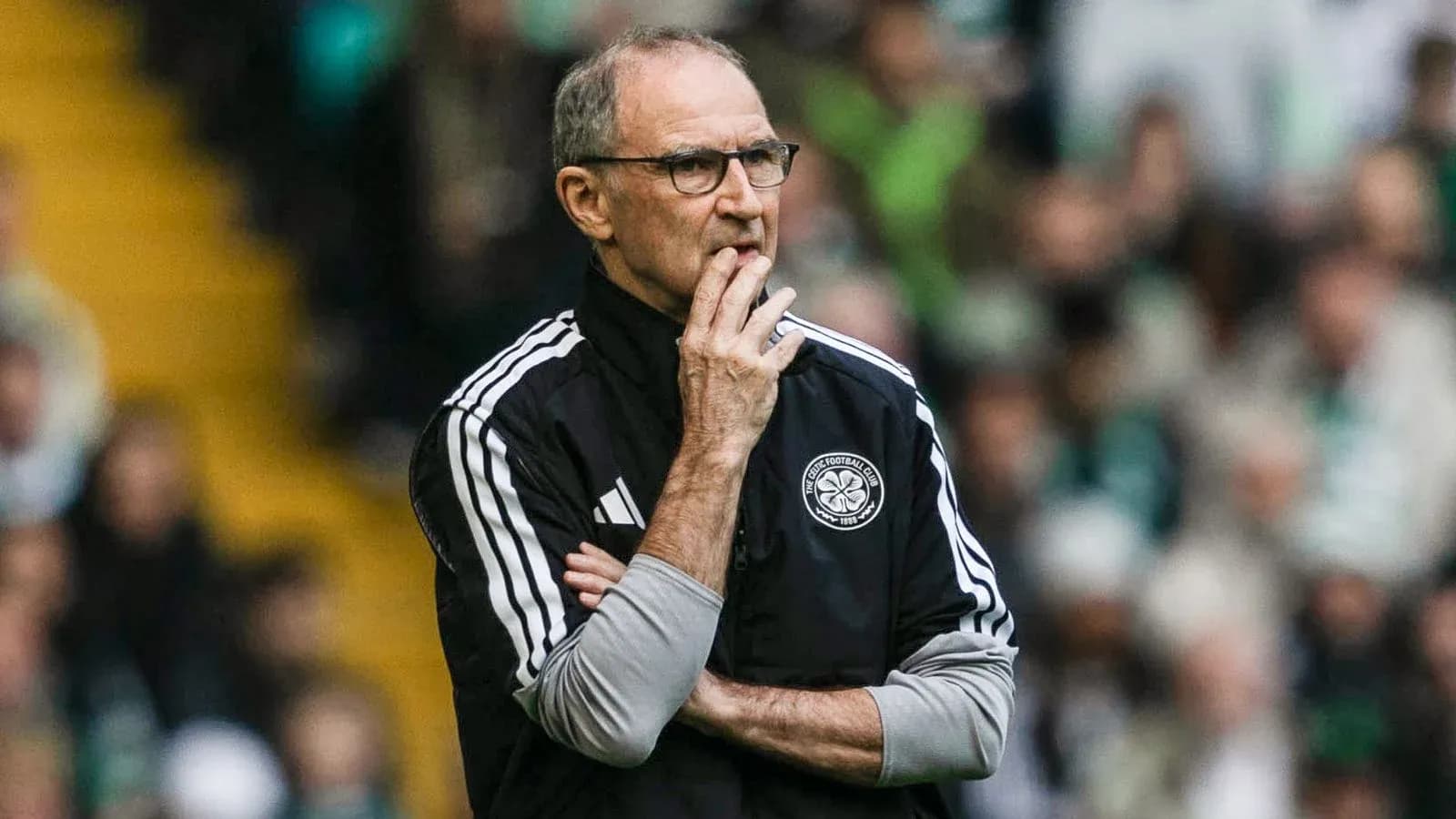
Martin O'Neill will always walk into Celtic Park as a legend. That status is not in question. The uncomfortable issue for Celtic now is whether that legend should still be in the dugout.
At 74, O'Neill has already admitted he will stop and decide if it is "time to wrap it up" after a bruising week that ended with a 1-0 defeat to Rangers at Parkhead. That loss, in front of 60,000 of their own supporters, came just days after another Old Firm defeat in the Scottish League Cup and a 3-1 reverse to Ferencvaros in the Europa League.
Three big games. Three damaging performances. One huge dilemma.
From perfect start to painful questions
On paper, Celtic’s league position does not scream crisis. They are top of the Scottish Premiership going into a three-week international break. But the details tell a harsher story.
They opened their title defence with six straight league wins, yet even then there were signs the machine was stuttering rather than purring. The real alarm sounded in Europe. From 4-0 up in their Champions League play-off against LASK, they contrived to crash out 5-4 on aggregate. That collapse did not just knock them out of the competition; it ripped open doubts about the manager and the mentality of his squad.
The response? A heavy beating by Rangers in the Scottish League Cup. Then another flat, worrying display in the Europa League against Ferencvaros. Then the 1-0 Old Firm defeat at home, where Rangers looked the more assured side.
Celtic could have gone into the break eight points clear. Instead, their lead is only two. The margin for error has shrunk. The mood has darkened.
Bigger than one man
When results go wrong, the manager is usually first in the firing line. Yet Celtic’s problems run deeper than the technical area.
Fan protests against the board last season were loud and visible. The calls for change upstairs have not disappeared. If anything, this summer’s business has sharpened the debate.
The club backed O'Neill in the market. Record signing Kasper Hogh and Camilo Duran arrived before the Champions League exit. Then, as the window ticked down, almost £20m went on Mika Baur, Haissem Hassan and Joel van den Berg. Five more late signings followed.
That is serious money for Scottish football. But money spent is not the same as a squad built.
O'Neill is still wrestling with how to fit them all together. He has churned through different midfield combinations without finding a balance. Against Rangers on Sunday, he went even further, ripping up his usual shape, ditching wingers altogether, starting with five defenders and pushing Kieran Tierney further forward.
The result? No spark, no breakthrough, and the same outcome: another defeat.
This is a club that has won 14 of the last 15 league titles while routinely selling key players and trusting the structure to absorb the losses. Some supporters now believe that dominance bred complacency in the boardroom, just as Rangers and Hearts have grown stronger and more ambitious.
Celtic have spent big this summer. Many fans fear only a trophyless season will finally force home the message that a healthy bank balance is no substitute for the right players, in the right positions, at the right time.
The weight of a legacy
Few managers in Celtic’s modern history carry the aura of Martin O'Neill. His first spell brought seven major trophies and a run to the UEFA Cup final in 2003. His Celtic were rugged, relentless, horrible to play against.
This version is the opposite. They are easy to get at. Easy to unsettle. Easy to beat in the games that matter most.
Last season, O'Neill twice came back as interim manager and steadied a listing ship, somehow turning an unconvincing campaign into a league and cup double. It was enough to tempt him out of retirement permanently, 21 years after his first spell ended.
The romance of that return is now colliding with reality. He is still adored by the Celtic support, but even the most loyal voices are starting to ask if it is time for him to walk away before the story turns sour.
His recent decisions have not helped his case. He made bold changes after the loss at Ibrox, then more big calls for the Ferencvaros tie. They failed. He ripped things up again for the latest Old Firm showdown. That failed too.
He can still match last season’s trophy haul. The fixtures are there, the points still on offer. But if he cannot quickly solve the structural issues in this squad, he risks finishing the season empty-handed and with a legacy frayed at the edges.
A league lead, and a lifeline
Strip away the noise, and one simple fact remains: Celtic are still top.
After Sunday’s defeat, O'Neill told Sky Sports he did not believe "there's very much between the teams" and leaned on the club’s history, insisting "the history of the club proves it will fight back" from a week of turmoil. He urged perspective.
"It's concerning. Is it a disaster? I don't think so. We have to rethink and reset," he said.
He is right about one thing. The season is not lost. Far from it.
Celtic have played just seven of their 38 Premiership fixtures. They still have seven Europa League matches to navigate. There is time to regroup, time to find a shape that fits, time to turn this from a wobble into another chapter of resilience.
But that time will not stretch forever.
The run that will define them
The schedule after the international break offers no hiding place, only opportunity.
Motherwell away on October 11, live on Sky Sports. A tricky restart, and a test of nerve.
Then a trip to Benfica on October 15 in the Europa League, under the lights and under pressure. After that, Hearts come to Celtic Park on October 18, a domestic clash with a side sensing weakness.
Celta Vigo visit Glasgow on October 22 in Europe, followed by a lunchtime trip to Hibernian on October 25, again live on Sky Sports. Dundee United then arrive at Parkhead on October 28.
Six games. Three competitions. One manager under scrutiny from every angle.
Celtic’s current turmoil could yet be remembered as the storm before another season of success. Or the moment when a giant of the club stayed in the job one year too long.
The next month will tell O'Neill – and everyone else – which way this story is going.