.svg&w=384&q=75 "Naijagoal logo")

Manchester United's Midfield Dilemma: The Risk of Miscasting Manu Kone
Manchester United’s search for a midfield anchor is edging towards a familiar mistake. They know there’s a missing piece. They just look dangerously close to picking the wrong shape.
With Casemiro gone on a free and Manuel Ugarte sidelined by serious injury, United moved quickly. Andrey Santos and Youri Tielemans have arrived, restoring depth and sprinkling in top-flight know-how. On paper, the numbers add up again.
On the pitch, they don’t. Not yet.
United still lack what Michael Carrick needs most: a Michael Carrick of his own. A specialist to sit in front of the back four, to control traffic, to take the sting out of chaos. Not just someone who can tackle, but someone who lives in that space.
Carrick himself was never a destroyer. He was a conductor stationed deep, a metronome in the shadows. That distinction matters, because it underlines a crucial point: “defensive midfielder” is not one job. It’s a family of roles. And that’s exactly where the risk lies with Manu Kone.
A World Cup shop window
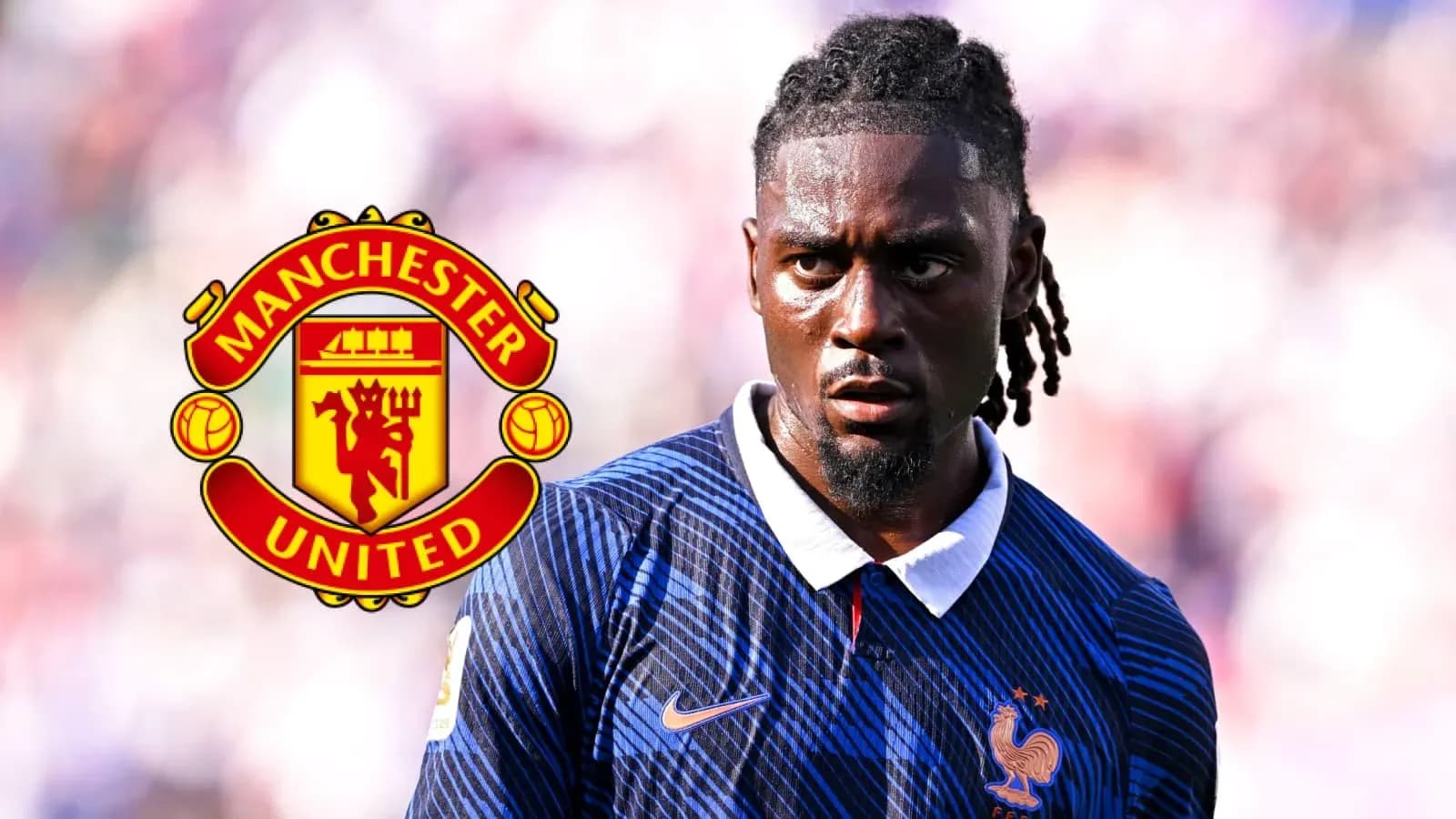
Kone has caught the eye for France at the World Cup. That stage can be a mirage, flattering players who ride a hot streak for a month. In his case, it reflects what he already is: a serious talent entering his prime.
At 25, he has already lived the grind of Europe’s major leagues: three seasons in the Bundesliga with Borussia Monchengladbach, two in Serie A with Roma. Roma treat him like a prized asset, and with good reason. When he arrived on deadline day in the summer of 2024, he injected energy and purpose into a midfield that had grown predictable.
Not because he was screening the defence like a classic No 6. Because he was tearing through lines with the ball at his feet.
Kone’s debut Serie A campaign was defined by those surging runs. He would collect possession, lower a shoulder, and simply power past opponents, dragging Roma up the pitch. He played more like a No 8, a driving central midfielder, than a sitting anchor.
That changed under Gian Piero Gasperini.
Gasperini’s tweak – and the warning for United
When Gasperini arrived, many assumed Kone would be a natural fit. High intensity. Man-to-man pressing. Vertical football. It sounded made for a midfielder who thrives on aggression and forward thrust.
The reality was more nuanced. Gasperini had a different blueprint.
Kone’s licence to roam shrank. In build-up, he often tucked into Roma’s defensive line, offering an extra option at the back rather than an extra runner going forward. He still had a good season, but the fireworks dimmed. His influence became more subtle, less spectacular.
That version of Kone is the one United seem to be eyeing: the player who can drop in, help circulate the ball, cover ground, and “do a job” in the deepest role.
He can. But that’s not where he shines.
The numbers underline it. Last season he ranked in the 78th percentile among Serie A midfielders for the average distance of his progressive carries – and that was in a year when he wasn’t even allowed to drive forward as often. Restrict that side of his game further and you’re paying a premium to blunt his best weapon.
United should know this story by now. They lived it with Fred and Scott McTominay, two honest, hard-running midfielders miscast as a double pivot that never quite worked. Both were asked to be something they weren’t, and the whole structure suffered.
They tried to fix it with Casemiro. For a while, it worked. He brought authority, presence, big moments. But they were buying the 2022 version of a 2017 player. The ideal scenario would have been the same Casemiro, five years younger, five years earlier.
Then came Ugarte, whose tackling numbers in Ligue 1 with PSG looked perfect on a spreadsheet. They didn’t translate as cleanly into United’s system.
Now the danger is clear: repeat the pattern with Kone.
Not a destroyer, not a finisher – so what is he?
Kone is not a pure holder. At his best, he is a central midfielder who can defend, not a defensive midfielder who occasionally ventures forward.
He also carries an obvious flaw for a box-to-box role: he doesn’t score enough. Four goals in 82 games for Roma tell the story. In the final third, he often lacks conviction. Gasperini said as much last December, when Kone finally got off the mark for the 2025-26 campaign.
“If he scored more goals, he’d likely not be playing for Roma – he’d be on another level already,” the coach admitted. He added that it was a clear area for improvement. Since that goal, Kone has played 22 times for club and country and found the net just once. The pattern hasn’t shifted.
That lack of end product feeds a lazy assumption: if he doesn’t score or assist regularly, he must be a defensive midfielder. Watch him closely and that label doesn’t fit.
There are other rough edges. His off-the-ball movement in possession still needs work. Too often last season he failed to drift into the right pockets to receive, or he wandered into zones that blocked passing lanes for teammates. For a player tasked with anchoring a midfield, that kind of positional imprecision can be costly.
The price of potential – and the risk of miscasting
So what, exactly, are clubs paying for?
In today’s market, that’s a harder question than ever. Elliot Anderson just joined Manchester City for £116m after contributing fewer than 10 goals last season. Tottenham spent £85m on Mateus Fernandes, another midfielder United liked before stepping back.
Against that backdrop, Roma’s likely asking price of £50m-plus for Kone looks almost reasonable. The World Cup will only have fattened that figure, and they already rejected around £38m from Inter last year.
For that kind of money, you need clarity. Are you buying a tempo-setting No 6? A box-to-box carrier? A hybrid? If you get the role wrong, the fee starts to feel heavy very quickly.
From United’s side, the logic is obvious. Tielemans and Santos have not arrived to sit deepest. That vacancy still exists, and Kone looks like a convenient solution: athletic, tactically flexible, comfortable under pressure.
But the cost of using him as a pure sitter is clear. You strip away the part of his game that scares opponents most.
How United could make it work
There is a way to use him properly at Old Trafford, and it runs through the shape. In a 4-2-3-1, Kone could line up alongside Tielemans or Santos, forming a genuine double pivot rather than one holder and one runner.
The key would be balance. When Tielemans roams, Kone stays. When Kone surges, Tielemans drops. Simple in theory, harder in practice. It cannot become a situation where one player is permanently chained to a deeper role while the other enjoys the freedom. That would waste half of what Kone offers.
France have provided a rough template. At the World Cup he has played in similar structures with Adrien Rabiot and Aurelien Tchouameni. Both are comfortable holding when needed, allowing Kone to vary his position. At Roma, Bryan Cristante often did the same, even if the Italian himself pushed on more than many expected during the Serie A campaign.
Give Kone that kind of partner, and you start to see the best version of him: a midfielder who can carry, compete, and connect phases of play without being locked into a single, rigid job description.
The other suitors
United are not alone in circling. Atletico Madrid have been linked. Arsenal’s name has floated around. Liverpool, who first tracked him during his time in Germany, have re-emerged in the whispers.
The fit at those clubs looks different.
At Arsenal, the presence of Martin Zubimendi as a natural anchor would free Kone to operate higher and wider, much as Declan Rice discovered new attacking layers to his game once he no longer had to sit every minute. Arsenal, though, seem to be leaning towards Bruno Guimaraes, which could close that door.
Liverpool’s interest might be more persistent. They want a No 6, but if Andoni Iraola leans into a 4-2-3-1, Kone could form a dynamic pairing with someone like Ryan Gravenberch, sharing the burden of holding and breaking forward in turns.
In those environments, his profile makes immediate sense. He would not be mistaken for the lone shield. He would be part of a rotating, aggressive midfield machine.
A quality player, on one condition
Strip it all back and the assessment is straightforward. Manu Kone is a high-level midfielder with standout ball-carrying, solid defensive work, and clear room for growth in the final third and in his positional play.
He is not the second coming of Casemiro. He is not Michael Carrick. He is not the pure No 6 United have been chasing since they broke up the Fred–McTominay experiment.
If this is the summer he lands in the Premier League, someone will get a very good player. The question is whether they see him for what he is.
Because the club that treats Kone as a box-to-box force with shared responsibilities will unlock his potential. The one that plants him in front of the back four and asks him to solve all their structural problems might spend £50m to discover, once again, that the missing piece was never that shape in the first place.