.svg&w=384&q=75 "Naijagoal logo")

Manchester City’s Dressing Room Crisis: A Night of Open Revolt at Anfield
The walls of the away dressing room at Anfield had heard plenty over the years. But on that December night in 2024, as Manchester City slumped from champions to a side in crisis, they heard something different: open revolt.
City had just been beaten 2-0 by Liverpool, a result that plunged the reigning four-in-a-row Premier League winners into a run of seven games without a victory, six of them defeats. The mood was raw, brittle, close to snapping. Inside, the cameras of Amazon Prime Video’s documentary A Beautiful Obsession were rolling.
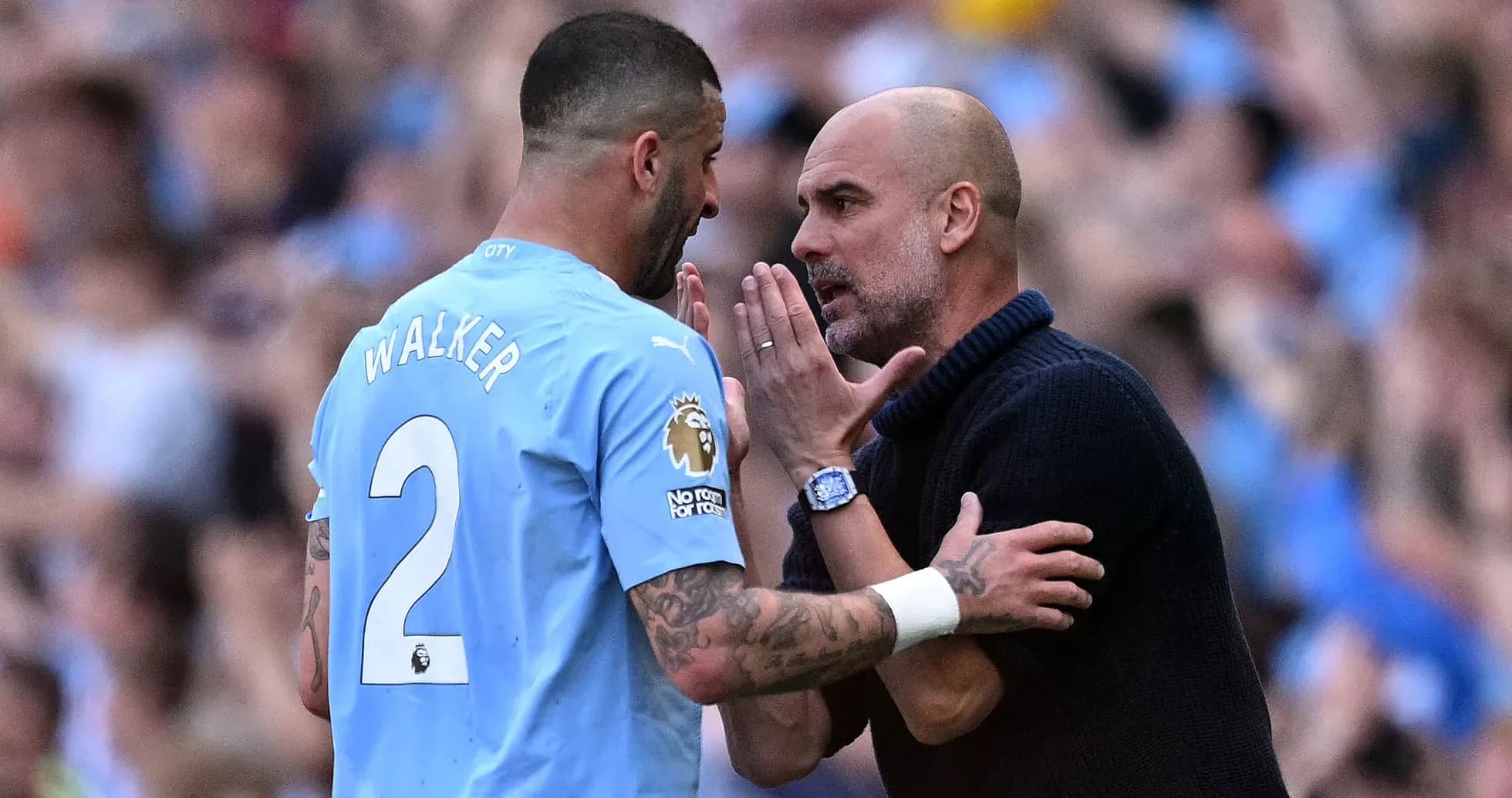
Kyle Walker snapped first.
“You keep saying my name, every meeting,” he exploded, voice raised, anger cutting through the silence. “Every f***ing meeting it’s my name.”
This wasn’t a fringe player lashing out. This was an England international, a long-serving pillar of the dressing room, a club captain. And he felt hunted. Targeted in team talks. Singled out in briefings. Treated, in his eyes, less like a leader and more like a convenient lightning rod for criticism.
For a club that had spent the previous season rewriting English football history with a fourth straight league title, the contrast could not have been starker. City were suddenly fragile. The swagger had gone. The defeats were piling up. And the tension that had been simmering beneath the surface finally boiled over.
Walker’s frustration went beyond one bad night at Anfield. He believed he was being used as a scapegoat for tactical failings across the pitch.
“I’ve reacted to someone else, I’ve lost the ball, you somehow bring my name into it,” he argued, pushing back against a pattern he felt had become routine. The message was clear: this wasn’t just about one mistake or one match. It was about a build-up of blame.
Pep Guardiola tried to step in. The City manager, fresh from signing a contract extension that was supposed to signal stability and renewed commitment, attempted to calm the storm. He explained that Walker’s name came up so often because of his status.
He was a captain. Captains get called out. Captains get challenged.
The explanation did not land.
“You didn’t want me to be a captain,” Walker shot back, cutting through the room. In that moment, it wasn’t just a tactical debate. It was a question of trust, of how the manager really viewed one of his most experienced players.
What followed was even more startling.
Guardiola, usually the intense, hyper-focused tactician, turned emotional in front of his entire first-team squad. The man whose standards had driven City to unprecedented success now stood in front of them, visibly fighting back tears, laying bare his doubts.
“If I am a problem, you have to tell me,” he said, voice cracking. “I won’t stay here for the money or just for the fact of staying. I extended the contract because I want to be with you, I want to fight in that position.”
This was not the Guardiola seen on touchlines, jabbing at the air and barking instructions. This was a manager questioning his own presence, his own impact, in front of the very players he had pushed to the summit.
“I don’t want you to feel like I’m leaving and running away from you,” he continued. “I don’t want to have the feeling that the pieces fall down. And I feel ‘No, I want to help you.’”
The message shifted from tactics to something deeper: loyalty, connection, the bond between dressing room and manager. Guardiola turned to his leaders first, then the rest.
“But if you feel, captains first and then the other ones, that there is a problem? Tell me. It’s not going to change the love I have for all of you. Not one second. But I want to fight. That’s all. I’m sorry.”
It was a remarkable scene: a captain accusing his manager of unfairly singling him out; a manager, fresh off a new deal, effectively inviting his players to tell him if he had become the issue.
For a club built on control, structure and relentless winning, this was chaos laid bare. The cameras caught it. The world now sees it.
What lingers is the question that hung in that Anfield dressing room: when a dynasty starts to crack from within, can the same voices that built it still be the ones to lead it back?