.svg&w=384&q=75 "Naijagoal logo")

Mahmoud Bentaieb's Potential Switch from Morocco to Egypt
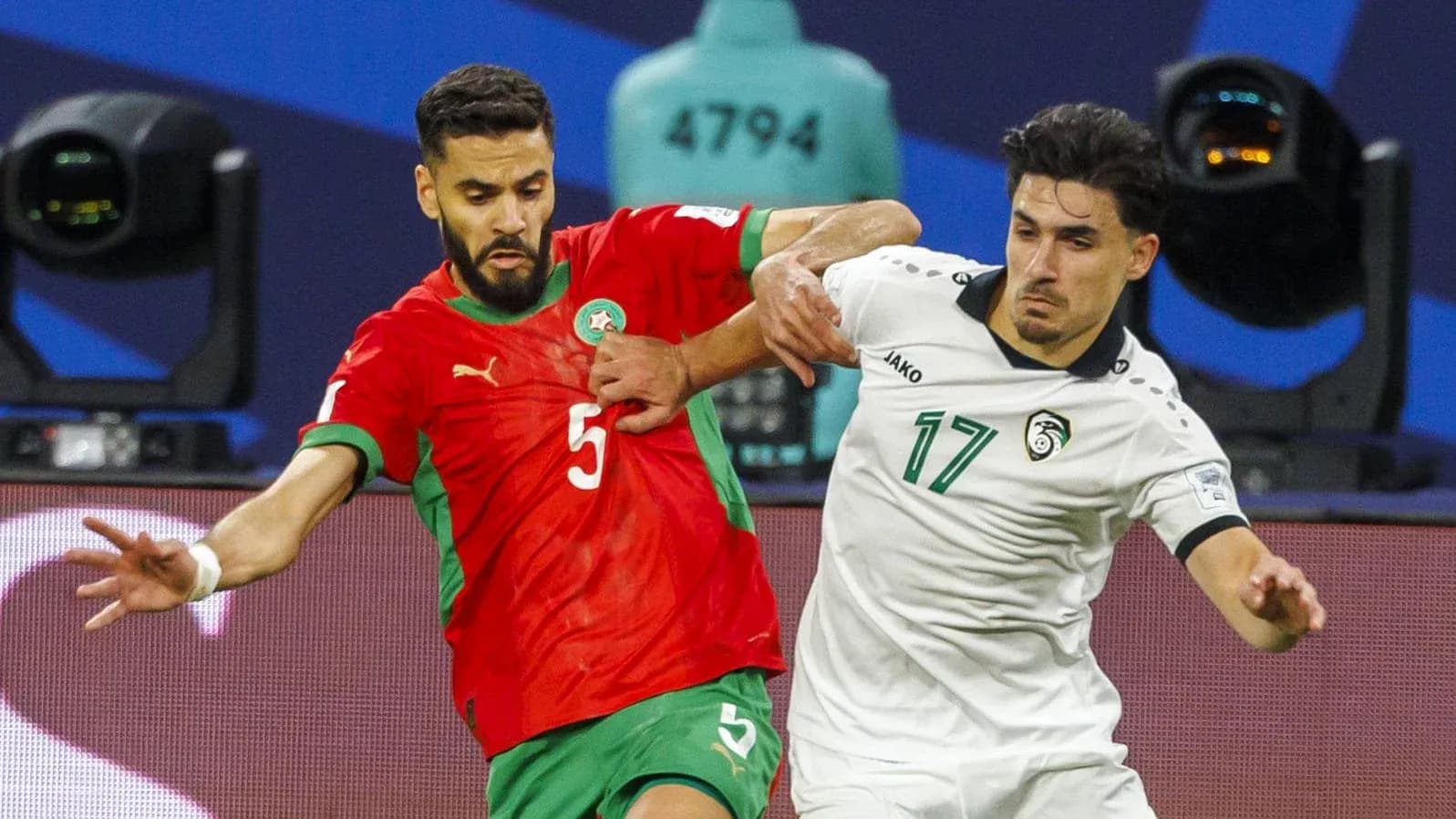
Mahmoud Bentaieb, the Zamalek defender who has already worn Morocco’s colours, is now seriously weighing up a switch to represent Egypt. The idea has inflamed debate in both Cairo and Casablanca. The key question hangs over it all: can he actually do it under FIFA rules?
The story burst into life when Egyptian outlets reported that Bentaieb wanted to turn his back on Morocco and line up for the Pharaohs instead. Moroccan media quickly pushed back, insisting there was nothing to it. Then his agent stepped in and flipped the narrative.
Youssef Massaad, speaking to Moroccan newspaper “Al-Omk”, revealed that Morocco coach Mohamed Ouahbi had stunned them by leaving Bentaieb out of the latest national team squad. The defender’s name, once firmly in the frame, was suddenly nowhere to be seen.
That omission opened the door. Massaad said some Egyptian officials floated the idea of Bentaieb switching allegiance to Egypt. The player, whose first choice had always been to represent his homeland Morocco, is now studying that option.
According to press reports, this is no idle thought. Bentaieb has already approached FIFA to ask about the legal possibility of changing his sporting nationality and is waiting on a formal answer.
The legal maze
Lebanese legal expert Ralph Charbel laid out the framework in comments to Kooora. FIFA’s regulations on changing national-team allegiance are clear on paper, brutal in practice.
For a player who has never represented another country at any age level, the path is relatively straightforward: he must obtain the new nationality and satisfy at least one of these conditions:
- He was born in the country.
- His father or mother was born there.
- His grandfather or grandmother was born there.
- He has lived in the country for at least three years if he moved before turning ten, or at least five years if he moved there after the age of ten.
On that checklist, Bentaieb immediately runs into trouble. He was born in Casablanca to Moroccan parents. No Egyptian roots through parents or grandparents. His only link to Egypt is his life there now and his marriage: he is the son-in-law of Ahmed Suleiman, a member of Zamalek’s board of directors, after marrying Suleiman’s Egyptian daughter.
Time is another problem. The 26-year-old has been in Egypt only since joining Zamalek from Saint-Étienne in the summer of 2024. That gives him roughly two years in the country, far short of the five-year residency threshold required for someone who arrived after the age of ten.
And just when it seems complicated enough, the Arab Cup steps in as a fresh obstacle.
Arab Cup caps change everything
Charbel underlined that even if Bentaieb were to satisfy the nationality and residency conditions, he would still have to clear another major hurdle. FIFA rules state that to switch, a player must not have played more than three matches for his current senior national team, and at least three years must have passed since his last appearance.
Bentaieb never represented Morocco at youth or junior level. That used to be a potential lifeline for many players. Not this time.
He did feature for the senior side at the 2025 Arab Cup in Qatar. He came off the bench in four matches, against Saudi Arabia, Syria, the UAE and Jordan. Morocco won every one of those games. He was also an unused substitute in the opening two fixtures against Comoros and Oman, both of which ended in draws.
Those four caps matter. They helped Morocco lift the Arab Cup under coach Tarik Sektioui, who now leads the Oman national team. They also push Bentaieb past the three-match ceiling that FIFA uses as a red line for switching allegiance.
Charbel stressed another crucial point: since 2021, FIFA has officially recognised the Arab Cup as a tournament under its umbrella. That recognition gives full international weight to every appearance in the competition, regardless of the fact Morocco fielded a second-string squad without its Europe-based stars.
Put together, the facts paint a bleak legal picture. Born in Morocco to Moroccan parents, less than five years’ residency in Egypt, and four official senior caps in a FIFA-recognised tournament. On the surface, Bentaieb is boxed in.
Charbel still left a tiny crack in the door. He admitted it will be “difficult” for Bentaieb to change his sporting nationality at this stage, but stopped short of declaring it impossible. The international lawyer noted he cannot be certain FIFA will reject the request, because he does not yet know what specific legal arguments or documentation the player’s camp might present.
For now, the defender waits. Morocco have moved on without him, Egypt are circling with interest, and FIFA’s verdict will decide whether this is the start of a new international chapter or the end of a bold, ultimately futile attempt to change flags.