.svg&w=384&q=75 "Naijagoal logo")

Luka Modric’s 200th Cap: Croatia’s Ageless Captain Revives Campaign
The number on Luka Modric’s back has never changed. The number next to his name has. On a tight, anxious night in Toronto, Croatia’s captain strode into the rarest of football clubs – 200 senior international caps – and did it the only way he knows how: deciding a match without ever needing to score.
At 40, he joined Cristiano Ronaldo, Lionel Messi and Bader al-Mutawa in the two-century club. Different continents, different eras, same relentless obsession with the game. Croatia marked it with black T-shirts reading “Infinite Legacy” and the number 200, a simple tribute for a player who has never chased the spotlight yet somehow always finds it.
“He is still influencing matches and to play for your country 200 times, that is a lot. We need to be very happy to have him in the team,” said Zlatko Dalic afterwards, the manager sounding more like a grateful witness than a coach. “Luka is very humble and this is why he is not for major celebrations. But I am very glad we marked this today in front of our fans.”
On the pitch, there was little room for sentiment. Croatia arrived wounded by an opening defeat to England, needing points more than pageantry. Panama, in their rugged 5-4-1, made sure of that.
Panama’s wall and Dalic’s gamble
The first half belonged to Thomas Christiansen’s plan. Panama sat deep, the lines tight, the spaces between midfield and defence almost non-existent. Croatia, for all Modric’s orchestration, struggled to punch through. Crosses drifted harmlessly. Shots were rushed. The anxiety of a campaign on the brink began to seep into every miscontrol.
Panama were not just spoilers. They carried threat. Jose Luis Rodriguez came closest, his header glancing off a Croatian defender and looping onto the underside of Dominik Livakovic’s bar. For a moment, the stadium held its breath. Croatia survived, but the warning was clear.
Dalic knew he needed a different kind of presence. At half-time he turned to Ante Budimir, the Osasuna all-time top scorer, and asked him to turn a suffocating tactical puzzle into something simpler: win your duels, live in the box, be a problem.
The pressure finally told.
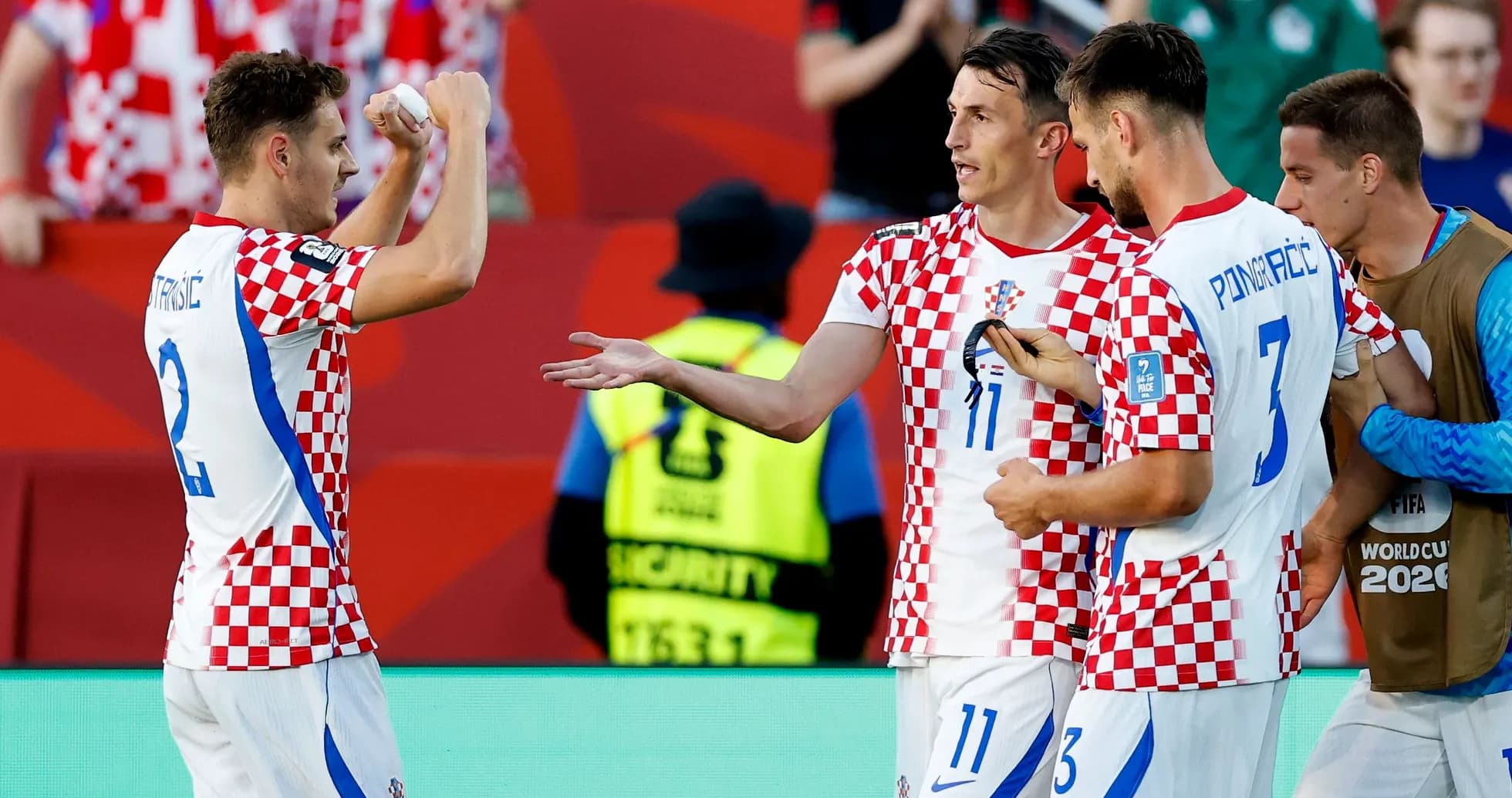
In the 54th minute, Croatia’s movement finally snapped Panama’s resistance. Marco Pasalic, drifting cleverly in the final third, produced a deft backheel into the path of Josip Stanisic on the right. Stanisic didn’t hesitate. A low, driven cross skidded through the area and found Budimir at the back post. One touch, one calm finish. 1-0, and a roar that felt like a release as much as a celebration.
Toronto turned red and white. The travelling Croatian support, tense for almost an hour, erupted. Flags, flares, the familiar chorus of songs that have followed this team from Moscow to Doha and now North America.
A narrow lead, a wide-open group
The goal changed the tone but not the stakes. Croatia suddenly had space to play, and Pasalic should have buried the contest. Slipped through one-on-one, he went for precision but met Orlando Mosquera at full stretch. The rebound sat up invitingly. He lashed it over.
That miss kept Panama alive, and they refused to go quietly. Christiansen’s side, already staring at elimination, played with the desperation of a team that knew this was their last real chance to stay in the tournament. They forced seven corners, hurled bodies into the box, and demanded sharp work from Livakovic during a frantic spell in the second half.
“They played with that hunger, with that dedication, with that spirit. That’s what we wanted of the team. I’m super proud of them,” Christiansen said. “They [Croatia] put two shots on goal and scored one.” It was a blunt summary of the fine margins that separate survival from the exit door.
For Panama, the numbers are unforgiving: two games, two defeats, no goals. Their 2026 journey ends in the group, with only England left to face and nothing tangible left to chase but pride.
For Croatia, everything is suddenly alive again.
England’s 0-0 draw with Ghana earlier in the day has blown Group L wide open. England and Ghana sit on four points, Croatia now right behind on three. The equation is brutally simple: beat Ghana in Philadelphia and Croatia are in the last 32. Anything less, and they start doing mathematics and praying Panama can trouble England.
Modric’s time, Croatia’s moment
Inside the Croatian camp, the mood shifted with that Budimir finish. The weight of the England defeat, the anxiety of a second stumble, all eased in one swing of a boot.
“We were pretty aware of our quality and the situation that we were in,” Pasalic admitted. “What we didn’t do in the first half, we did in the second half. We’ve been relieved of the burden and now we can move on.”
Move on to a straight shootout with Ghana, a team full of energy and running, against a Croatian side built on control, experience and one enduring figure at its core.
Modric will walk out again, cap number 201 on the horizon, still dictating the tempo, still setting the standard. Croatia’s golden generation has been inching towards its final chapters for years, yet here they are again, one win away from another knockout run.
The question now is no longer whether Modric’s legacy is infinite. It is how much deeper this 40-year-old can carve it into the story of 2026.