.svg&w=384&q=75 "Naijagoal logo")
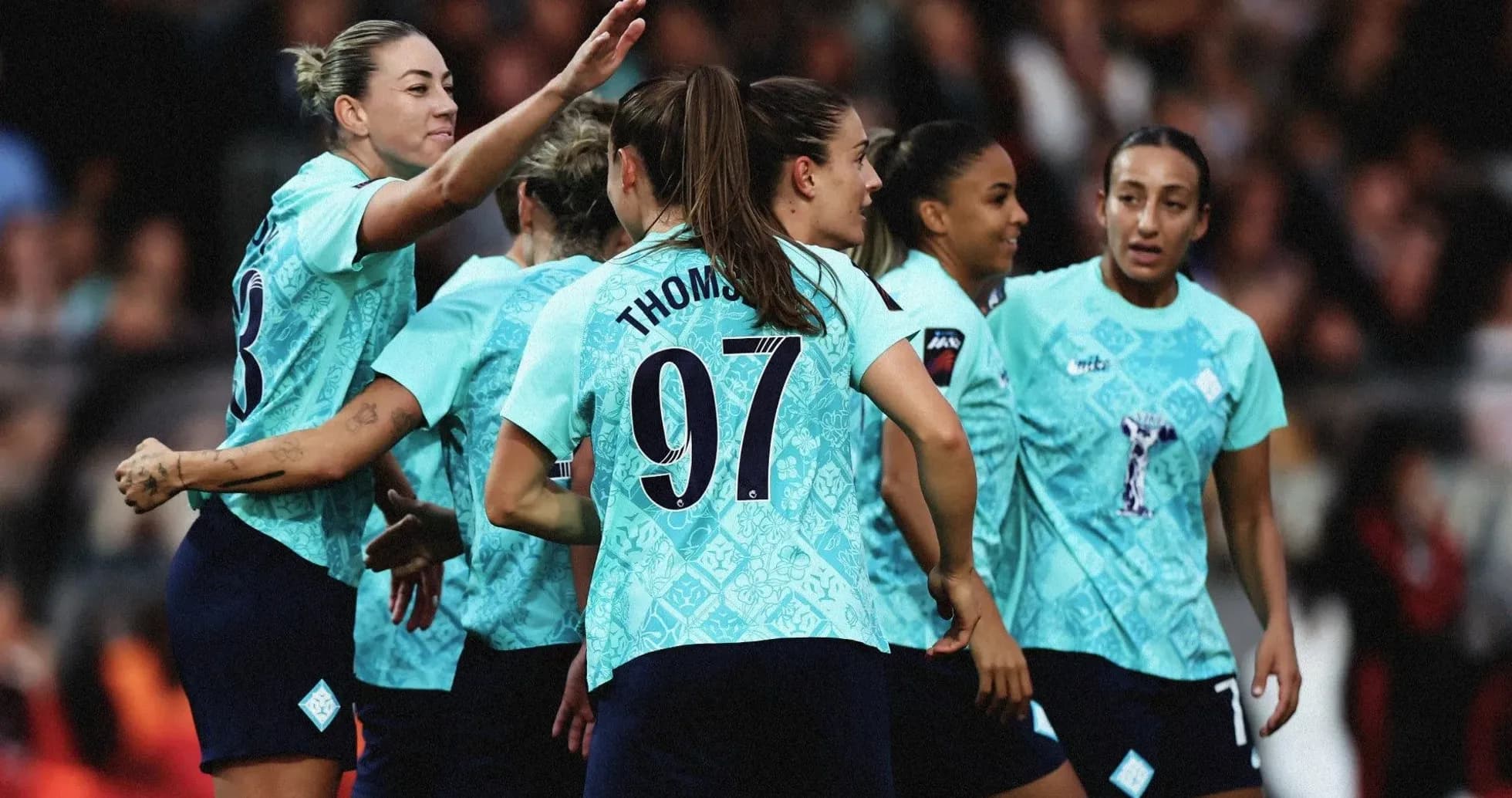

London City’s Impressive Debut: A Collective Statement
The word is clearly out. On a warm Friday night in the capital, London City drew a record-breaking sell-out crowd, proof that curiosity about this rebuilt side has spread far beyond their usual base. Many came to see the superstar names – to glimpse Alexia Putellas in club colours for the first time in a competitive game, to watch Mary Earps, a Lionesses icon, up close.
They left talking about the team.
This was not a one-woman show, nor a star vehicle. It was a collective statement, a much-changed squad playing with a cohesion that few expected this early in the season.
Putellas was steady, assured, quietly effective on debut. Earps watched from the bench as Elene Lete came agonisingly close to securing the first clean sheet of the WSL campaign, denied only in the 100th minute by Simi Awujo. That late goal barely dented the impression London City had already made.
Others stole the spotlight.
Grace Geyoro buzzed through midfield, snapping into tackles, demanding the ball, driving play. After a muted first year at the club following her world-record move, this looked like a reset, a reminder of why London City broke the bank for her.
Alongside her, Alanna Kennedy justified her selection in a star-studded midfield trio with Geyoro and Putellas. She set the tone out of possession, her aggressive pressing forcing Julia Zigiotti Olme into an early own goal that lit up the night and underlined London City’s intent.
Out wide, Rosa Kafaji tormented defenders, constantly asking questions and hinting that her difficult spell at Arsenal might yet be the making of her. On the opposite flank, Delphine Cascarino was electric. Sky Sports named her Player of the Match, and it was hard to argue: she ripped down the right, stretching Manchester United again and again, while Lucia Corrales mirrored that threat from the left, pinning the visitors back.
And that still doesn’t cover it.
Isa Kardinaal impressed at centre-back, reading danger and stepping in decisively, with her partner Leon catching the eye for her calm, incisive distribution from the back. Ahead of them, Danielle van de Donk knitted everything together in a false nine role. She dropped deep, dragged markers away, linked play, and capped it all with a clever flick to double the lead – a moment that summed up the fluidity of London City’s attack.
This was the performance Eder Maestre has been promising since he walked through the door at the winter break last season. Then, the change mid-campaign unsettled rhythms and habits. Now, with a full pre-season behind them, his ideas look embedded.
“Having to adapt to something new midway through the season, it's a little bit disruptive,” Kennedy admitted to GOAL in pre-season, reflecting on that transition. “I think we're in a good spot in terms of the cohesion and being able to have some time, real time, together, to hopefully do something special.”
On Friday night, it looked exactly like that: something special in the making.
London City hunted United relentlessly. They pressed high, swarmed second balls and never allowed the visitors to settle. When they had possession, they connected quickly and cleanly, rotating positions, dragging red shirts out of shape. Off the ball, their movement shredded United’s defensive structure, runners constantly appearing between the lines and in the channels.
Every pattern, every press, every trigger spoke of hours on the training ground. Maestre and his staff have clearly drilled this group hard, but the key detail was the buy-in. The players embraced the plan, and the result was a performance that felt both choreographed and instinctive.
United, by contrast, looked like a side still reading from a new script.
Head coach Marcela Olid, appointed only a month ago, has barely had time to imprint her style. Even so, with just one new signing in the starting XI, the lack of understanding was stark. This was not a team that moved as one.
The tactical shift played a part. Olid has asked her full-backs to operate differently, a change she acknowledged had been a “challenge” for them. “It's a little different [to] how they were playing,” she said this week. “These first weeks have been a challenge for that because it's different in our style of play.”
That confusion showed. At times it was genuinely difficult to tell if United were in a back three or a back four. On the left, Andrea Medina – the sole new starter – and Anna Sandberg looked like strangers still learning each other’s runs and preferences. On the right, Jayde Riviere, usually such a dynamic outlet, barely ventured forward, her usual thrust replaced by caution.
The tactical uncertainty was compounded by basic errors. Heavy touches, loose passes, poor decisions. United repeatedly invited pressure, and only Phallon Tullis-Joyce’s sharp goalkeeping stopped the scoreline from becoming embarrassing. She bailed her team out on several occasions, a lone figure standing firm as those in front of her wobbled.
“Players were nervous, without confidence,” Olid told Sky Sports afterwards. “That is not us.”
It didn’t look like United, either. Not the United that has pushed the league’s elite in recent seasons, at least. Right now, on this evidence, it is London City who appear the more credible threat to Manchester City, Chelsea and Arsenal in the race for Champions League places.
Van de Donk’s assessment after the final whistle only added to that sense of looming potential. “We don't even know our best level yet,” she told Sky Sports. “We've not really played together that much. Hopefully there's still more to come. We have loads to improve.”
If this is London City still finding themselves, the ceiling could be frightening.
United, meanwhile, face a very different kind of season. Olid’s project is in its infancy, her ideas only just starting to take root. There will be bumps, maybe more nights like this. The club believes the long-term payoff will justify the pain.
But while United wait for their future to arrive, London City look ready now.