.svg&w=384&q=75 "Naijagoal logo")

Liverpool's Defensive Dilemma: Replacing Konaté
Liverpool have made their decision. Or, more accurately, failed to make one in time.
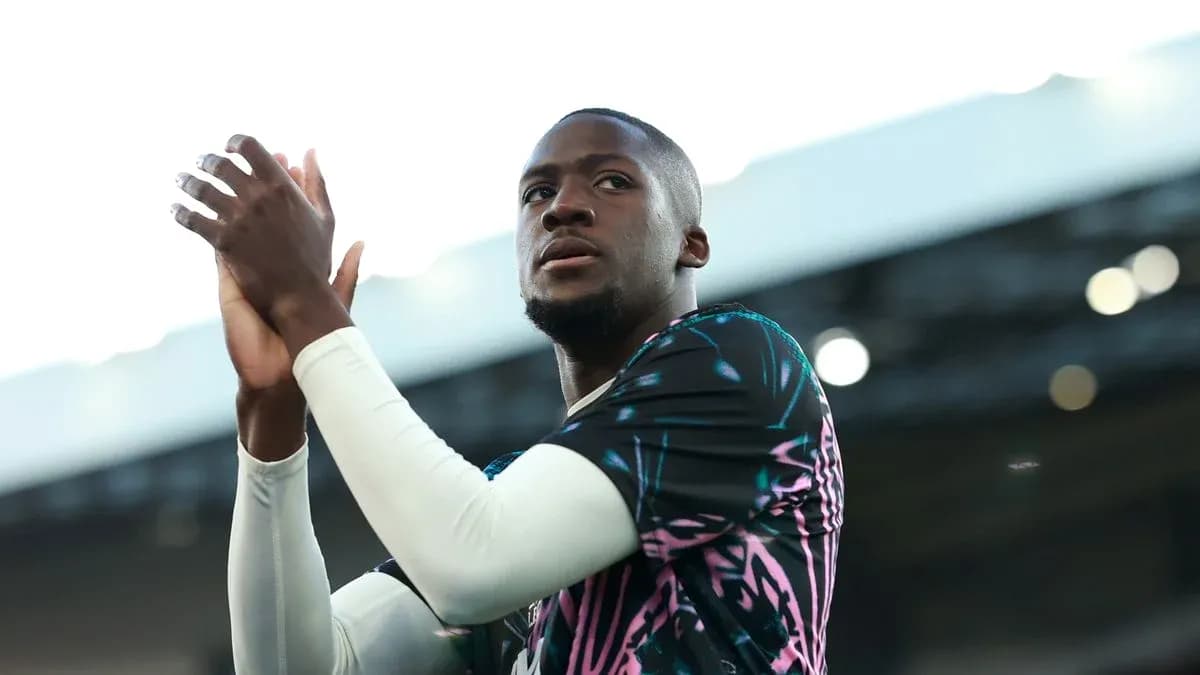
Ibrahima Konaté is set to walk away from Anfield when his contract expires, with no agreement reached on fresh terms. No fee, no compromise, no safety net. Just another cornerstone of the Jürgen Klopp era heading out of the door for nothing.
Andy Robertson has gone. Mohamed Salah too. Trent Alexander-Arnold left for Real Madrid last year. Four of the club’s most important players of the last decade, a combined transfer income of just £10 million. For a recruitment department once held up as the smartest in Europe, that’s a brutal line on the balance sheet.
Now comes the really awkward bit. Replacing Konaté.
Top-level centre-backs are scarce, expensive and heavily courted. Konaté has been Virgil van Dijk’s running mate since 2021, the athletic safety blanket on the right side of Liverpool’s defence. With him set to depart, Richard Hughes, Arne Slot and the recruitment team are staring at a market that knows exactly how desperate they are.
Four names stand out. None is straightforward.
Jan Paul van Hecke – Familiar Face, Familiar Football
If Liverpool want continuity of style, Jan Paul van Hecke sits near the top of the list.
Brighton’s Dutch defender has already been linked with Anfield, with reports in Voetbal International flagging interest. On paper, he ticks plenty of Liverpool boxes.
He’s played in a back three and a back four. He’s comfortable in a possession-heavy side. He steps into midfield, breaks lines, and doesn’t panic when pressed. Three goals and three assists in the Premier League this season hint at more than just a stopper.
Look a little closer and the numbers start to echo Konaté’s game. Van Hecke draws fouls at a similar rate – 1.21 times per 90 minutes in the league, against Konaté’s 1.19 – a sign he can handle pressure when opponents swarm the build-up. Off the ball, he plays on the front foot, sitting in the 72nd percentile for interceptions among Premier League centre-backs with 1.32 per 90.
He’s 6ft 3in but not as dominant in the air as Konaté. That matters, but perhaps less when you consider who he’d be playing next to. With Van Dijk still a force and imposing youngster Jeremy Jacquet due to join up for pre-season, van Hecke would be part of a unit rather than a lone aerial enforcer.
There’s another edge to his candidacy: familiarity. Van Hecke has 10 caps for the Netherlands and has been called up for the World Cup squad ahead of Matthijs de Ligt and Stefan de Vrij. He is expected to feature alongside Van Dijk in North America. That existing chemistry is gold dust for a team trying to rebuild on the fly.
Timing, though, is awkward. His World Cup involvement means Liverpool either move early or wait until later in the summer, by which point the queue for his signature may be longer and more expensive.
He will enter the final year of his Brighton contract this summer. That should make a deal more attainable, but it also invites competition. Tottenham have already been linked as Roberto De Zerbi reshapes his squad. Chelsea are circling too. Brighton are expected to demand around £50m.
Liverpool know this kind of negotiation well. They also know it rarely comes cheap.
Joachim Andersen – The Pragmatic Option
If van Hecke offers a stylistic bridge from Konaté, Joachim Andersen offers something else: certainty.
The Denmark international built his reputation as a cult FPL pick at Crystal Palace. Now at Fulham, he has become one of the Premier League’s most reliable, aerially dominant centre-backs. He wins headers, racks up clearances and interceptions, and still looks assured enough on the ball to operate in a possession-based side – even if he’s not as progressive as van Hecke.
His profile is different, but it covers a lot of what Liverpool are losing. Strong in the air. Physically robust. Positionally disciplined. In a league that is getting more intense and more physical by the season, that matters.
Andersen sits in the top 10% of Premier League centre-backs for touches and aerial duels won. He’s just a centimetre shorter than van Hecke, but has something the Brighton defender can’t match yet: six years of Premier League experience and 49 caps for Denmark.
There’s another angle here. Andersen’s presence would not only help replace Konaté but also give Van Dijk a genuine stand-in. Liverpool’s captain has played more minutes than any other 34-year-old this season. If the club want to manage his load without compromising the back line, they need someone who can anchor it. Andersen fits that brief.
He joined Fulham for £30m two years ago and would likely be the cheapest option on Liverpool’s shortlist. At 29, he offers a solid two-to-three-year solution without blocking the path for Jacquet or Giovanni Leoni, another young defender whose underlying data mirrors Konaté’s closely.
That’s the key strategic question: do Liverpool go for a stop-gap and trust their emerging centre-backs, or spend heavily on a long-term replacement? If they lean towards the former, there are few better qualified than Andersen.
Jarell Quansah – The One That Got Away?
This is the strangest name on the list, and in some ways the most revealing.
Jarell Quansah left Liverpool for Bayer Leverkusen just a year ago in a £35m deal. Now, with Konaté on his way out and the market thin for elite, right-sided centre-backs in Liverpool’s preferred age bracket, the decision to cash in on their academy graduate already looks questionable.
Quansah showed poise and maturity during Klopp’s final season, partnering Van Dijk and looking every inch a long-term option. Then came Slot’s arrival, a brutal half-time substitution in the Dutchman’s first game in charge, and a young defender whose confidence seemed to drain almost overnight.
Germany has changed that.
At Leverkusen, Quansah has re-emerged as one of Europe’s outstanding young centre-backs. He has earned a World Cup call-up with England this summer and is no longer just a promising prospect; he’s a proven performer in a title-winning environment.
The numbers from his Bundesliga campaign are stark. He was dribbled past just twice all season. His pass completion sits at 90.3%, and he averages 0.55 successful dribbles per 90. That is a defender not just surviving in possession, but actively contributing to it.
Liverpool saw this coming, at least structurally. They inserted a multi-tiered buy-back clause into his Leverkusen deal and even pre-negotiated contract terms for a possible return. The price this summer would be £69.4m.
BILD have suggested a reunion is more likely next year, when that clause drops to £52m. From a development standpoint, another year in Germany makes sense. From a squad-building perspective, the idea that Liverpool sold arguably their best pure defensive prospect since Jamie Carragher – only to consider buying him back at almost double the price – is a brutal reflection of how quickly planning can unravel.
The option is there. The cost, financially and reputationally, would be enormous.
Alessandro Bastoni – The Superstar Swing
Then there is the glamour play.
Alessandro Bastoni is the kind of name that lights up social media and sells shirts. A European champion with Inter, a left-footed defender with the passing range of a deep-lying playmaker and the defensive instincts of a seasoned centre-half.
But is he a Konaté replacement? Not really.
Bastoni looks more like a long-term Van Dijk successor. He can operate at left-back, which would help soften the blow of Robertson’s departure and the uncertainty around Kostas Tsimikas while Milos Kerkez finds his feet. His versatility would give Slot options in build-up and in-game tweaks.
His numbers in Serie A are elite. Bastoni ranks in the top 10% of centre-backs for assists, successful passes and accurate long balls. He sits in the top 5% for big chances created, total touches and xG conceded while on the pitch. He controls games from the back, dictates tempo and locks down his zone.
There was a moment this year when a departure seemed more plausible. Abuse following his red card against Bosnia and Herzegovina, which triggered Italy’s collapse and World Cup elimination, cast a shadow over his international standing and sparked speculation over his future.
But Inter’s hierarchy have pushed back. President Giuseppe Marotta told DAZN, via Goal, that Bastoni “has absolutely not expressed his desire to leave.” The message from Milan is clear: he is staying, unless someone makes an offer impossible to refuse.
Any move for Bastoni would reshape Liverpool’s defence. His status would demand a starting role centrally, likely nudging Van Dijk over to the right side of the pairing. That’s a huge structural shift at a time when Slot already has to absorb the exits of Konaté, Salah and Robertson.
Still, if there is even a sliver of opportunity, Liverpool cannot ignore it. Players of Bastoni’s calibre do not hit the market often, and when they do, the clubs with serious ambitions are always in the conversation.
Liverpool now stand at a defensive crossroads. Do they chase familiarity with van Hecke, experience with Andersen, redemption with Quansah, or stardust with Bastoni?
Whichever path they choose, the margin for error has shrunk. Letting Konaté leave for nothing guarantees that.