.svg&w=384&q=75 "Naijagoal logo")

Leeds United: A Tactical Revolution in the Premier League
Leeds United back in the rare air. Third in the Premier League. Elland Road humming like it did at the turn of the millennium, when top-five finishes were a habit rather than a dream.
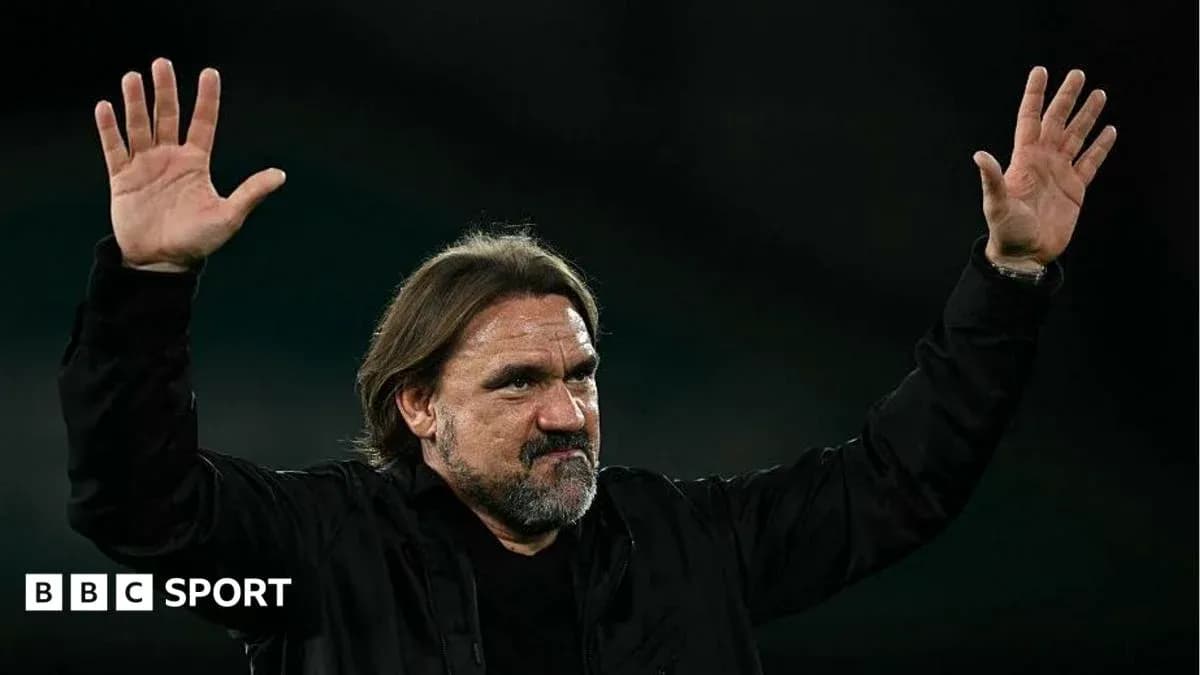
Monday night’s 4-1 dismantling of Newcastle United didn’t just extend Daniel Farke’s unbeaten start. It underlined something deeper: this is Leeds’ best opening to a top-flight season since 2001-02 under David O’Leary. Eight points from four games. A table that suddenly looks very familiar to older eyes.
This hasn’t come out of nowhere. The surge can be traced back to one decision, one half-time gamble in Manchester almost nine months ago.
The night everything flipped
On 29 November at Etihad Stadium, Leeds trudged in 2-0 down to Manchester City and staring at a long winter. Farke ripped up his back four and went to a back three. The change electrified his side. They fought back to 2-2 before finally being beaten in stoppage time.
The result stung. The performance stuck.
From the very next league game – a home win over Chelsea on 3 December – Leeds have been a different animal. Since that day, they have lost only five of 29 league matches. Stretch that run into a hypothetical table and they sit fifth over that period. That is not a blip. That is form.
Initially, the shift was about survival. Leeds had lost eight of their first 13 league games in 2025-26 and slumped to 18th, staring at relegation a season after edging Burnley to the Championship title. Reports swirled that Farke’s job was on the line.
He didn’t blink. He doubled down on his new shape and then, in the summer, built a squad to fit it.
Building a taller, tougher Leeds
The 2025 summer window at Elland Road had a clear theme: height, power, and presence. Farke and new sporting director Adam Underwood targeted players who could withstand the Premier League’s physical grind and dominate the penalty areas.
Of the 10 permanent signings, eight stand over 6ft: Jaka Bijol, Sebastiaan Bornauw, Dominic Calvert-Lewin, James Justin, Lukas Nmecha, Noah Okafor, Lucas Perri and Anton Stach. Set-pieces suddenly look very different in West Yorkshire.
Farke didn’t pretend it was accidental. Speaking in July 2025, he said: “I wouldn't say it's coincidence that they are all tall players but, of course, if you join the Premier League and you have one of the smallest groups, you expect that probably there is more pressure on you than there was in the Championship. You have to make sure that you're also good in defending crosses."
That logic shaped the defence again this summer. After losing centre-back Pascal Struijk to Brighton, Leeds went shopping at World Cup level, bringing in Bosnia-Herzegovina’s Tarik Muharemovic and Switzerland’s Nico Elvedi.
Muharemovic, despite his slip for Bazoumana Toure’s late consolation for Newcastle, has been a standout. He has played every league minute so far, stationed in front of 6ft 5in England international James Trafford – the most expensive British goalkeeper in history for the second time after his £40m move from City.
Add Harry Wilson, signed on a free from Fulham after emerging as one of last season’s standout performers in the division, and the recruitment looks sharp, deliberate, and aligned with Farke’s tactical vision.
The numbers back it up. Since the switch to a back three, among clubs ever-present in the division, only champions Arsenal, City and Nottingham Forest have conceded fewer goals than Leeds. A team that once leaked chances now imposes itself.
Calvert-Lewin reborn
The defensive solidity has grabbed attention. The real transformation, though, is happening at the other end of the pitch.
Dominic Calvert-Lewin is playing like a centre-forward unshackled. Since last December, only Erling Haaland, Ollie Watkins and Joao Pedro have scored more Premier League goals than his 14.
He used to labour as an isolated No 9 in a 4-3-3, feeding off scraps and waiting for wingers who rarely got close enough. The new system, oscillating between 3-4-3 and 3-5-2, has changed his world. Now he has company. Runners. A partner.
Often that support comes from Nmecha or Okafor. The latter arrives in form: seven goals and an assist in his past 11 league appearances. Defenders can no longer crowd Calvert-Lewin with impunity. Space opens. Crosses arrive. Chances fall.
Calvert-Lewin put it simply: “I enjoy having bodies around me.” The numbers suggest he means it.
On Saturday, with Crystal Palace visiting Elland Road, he chases a slice of club history. No Leeds player has scored in six consecutive league home games since Arthur Hydes in 1932. Ninety-three years of waiting sits on the line.
The stakes go beyond nostalgia. Calvert-Lewin missed out on England’s World Cup squad, but three goals in all competitions already this season, layered on his sustained league form, leave him firmly in the frame for a recall as Thomas Tuchel prepares his Nations League quadruple-header squad announcement on Friday.
Leeds, meanwhile, sit third, play with authority, and carry a threat in both boxes. European football has not visited Elland Road for 24 years.
If this is what a tactical gamble and a summer of tall, targeted signings can produce by September, what might this side look like when the season’s pressure really bites?