.svg&w=384&q=75 "Naijagoal logo")
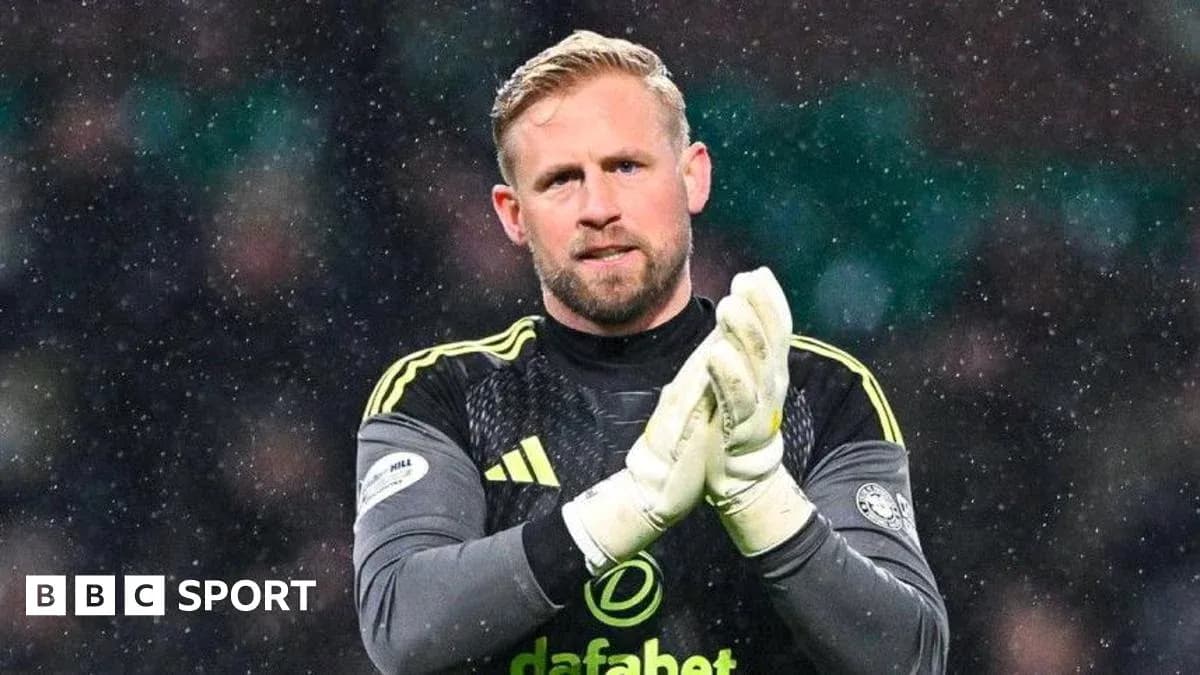

Kasper Schmeichel Retires at 39: A Warrior's Journey
Kasper Schmeichel has never been one to walk away easily. He played through pain, through pressure, through eras. But a damaged shoulder has finally done what strikers across Europe spent nearly two decades trying and failing to do: it has beaten him.
At 39, the Celtic and Denmark goalkeeper has retired, unable to recover sufficiently from the serious injury that has kept him out since February.
Out of contract soon at Celtic and out of options with his body, Schmeichel consulted surgeons and specialists before accepting what he called “a decision that has been made for me”. The competitive fire is still there. The joint is not.
A brutal end to a warrior’s season
The story of the injury is as stubborn as the man himself.
He first suffered the damage in March 2025, during Denmark’s Nations League quarter-final defeat to Portugal. Denmark had already used all their substitutes. Lesser characters would have gone off. Schmeichel stayed on.
He finished the match with a shoulder that, as he later discovered, was in far worse condition than he realised at the time. He admitted he “didn't realise how bad it was back in March”, but the price of that bravery only became clear as the months dragged on.
Any hope of recovery took another hit almost a year later. In Celtic colours, in a Europa League defeat to Stuttgart, he aggravated the same shoulder. From there, the clock was ticking.
By February, when he landed on it again, he knew. “I could tell straight away that something was seriously wrong,” he said. Multiple consultations followed, with surgeons and experts united in their verdict: do not expect to return to top-flight football.
He had been ready to commit to up to a year of rehabilitation to drag out his career for one more act. Medicine, and the joint itself, refused the extension.
A career measured in medals and memories
Schmeichel’s path was never simple. The surname alone guaranteed that.
He began his career at Manchester City, long before their current era of dominance, and spent his early years fighting to be seen as more than just Peter’s son. He did it the hard way, through lower-league loans and constant scrutiny, until Leicester City handed him a permanent home and a platform.
Leicester is where the story truly took off. Ten seasons. A dressing room of cast-offs and believers. And then the miracle.
In 2015-16 he stood behind Claudio Ranieri’s improbable champions, a calm, commanding presence as Leicester tore up the established order and won the Premier League. In 2021 he added the FA Cup, another landmark for a club that had spent most of its history on the outside looking in.
From there came a late-career tour of Europe: a move to Nice, then to Anderlecht, before the call of Glasgow and Celtic. In Scotland, he added more silverware and more minutes to an already heavy workload.
This season he featured 39 times for Celtic, helping secure a second Premiership winners’ medal in just two years in Glasgow. It was a fitting final full campaign: a veteran goalkeeper still setting standards at a club that demands trophies.
The heartbeat of Denmark
For Denmark, he became something more than just a reliable No 1. He became a constant.
Schmeichel earned 120 caps for his country, a landmark that speaks to durability and trust. He played at the 2018 and 2022 World Cups, standing tall on the biggest stage, and was at the heart of the side that surged to the semi-finals of Euro 2020, a run charged with emotion and resilience.
In a period when Denmark regularly punched above their weight, Schmeichel was a symbol of their steel. Big games rarely rattled him. The pressure often seemed to sharpen him.
Celtic, Leicester, Denmark – three very different football cultures, one common thread: a goalkeeper who commanded respect.
No fairytale farewell, but no regrets
Schmeichel has been candid about the way this has ended. “I think everyone dreams of saying goodbye on the field, but you don't always get what you want,” he said.
There was no final lap of honour, no carefully choreographed substitution in the 89th minute, no chance to soak in the applause knowing it was the last time. Instead, the end arrived in doctors’ rooms and scan reports.
Yet he refuses to lean into self-pity. “Football doesn't owe me anything,” he insisted. It’s a line that fits the arc of his career: nothing handed to him, everything earned, from the lower leagues to the Premier League title, from being “Peter’s lad” to Denmark’s undisputed No 1.
What lingers most for him is not the trophies or the statistics. “What stands out most are the friendships and connections I've made. The moments I've shared with them – for better or worse.”
For a goalkeeper whose career was defined by reflexes, organisation and big-game nerve, it is telling that he comes back to people, not saves.
A giant steps aside
There will be debates about where Kasper Schmeichel ranks among Premier League keepers of his generation, or among Denmark’s greats. The numbers and honours will fuel those arguments for years.
But one fact is beyond dispute: for nearly two decades, across clubs and continents, he carried a heavyweight name without ever shrinking beneath it.
He leaves the stage not on his own terms, but with his reputation intact and his legacy secure. The shoulder gave way. The career did not.