.svg&w=384&q=75 "Naijagoal logo")

Kairat Almaty vs Anderlecht: Tactical Analysis of the 0-3 Defeat
Kairat Almaty’s 0-3 home defeat to Anderlecht at Central Stadium was defined by structural imbalance and a brutal early sequence that exposed the fragility of Rafael Urazbakhtin’s 4-4-1-1 once it was forced to chase the game with ten men. Anderlecht, in a 4-3-3 under Vitor Bruno, turned clear territorial dominance (67% possession) into a controlled, low-risk away performance, using their extra man and superior circulation to suffocate any chance of a Kairat comeback.
Kairat’s starting shape was conservative on paper: a back four of E. Tapalov, A. Shirobokov, Lucas Africo and L. Mata, screened by a flat midfield line featuring A. Mrynskiy, J. Oksanen, G. Mendonsa and O. Jukkola, with M. Gual supporting Edmilson. The intention was clear: keep compact distances between lines, deny central spaces, and break through the lone striker’s mobility. However, the structure collapsed almost immediately. At 2', Oksanen’s own goal handed Anderlecht an early 0-1 lead, stripping Kairat of their primary asset: the ability to remain patient and compact.
From there, the possession split tells the story. Anderlecht’s 67% of the ball was not sterile; it was used to pin Kairat’s wide midfielders deep, effectively creating a back six for long stretches. Kairat managed only 2 shots on goal and 2 off goal, with just 1 blocked shot. That volume is extremely low for a home side needing to overturn an early deficit, underlining how rarely they reached the final third in any sort of structured manner. The 4-4-1-1 became a 4-4-0-1 after the red card, with Edmilson increasingly isolated and forced to chase long, hopeful balls rather than coordinated attacks.
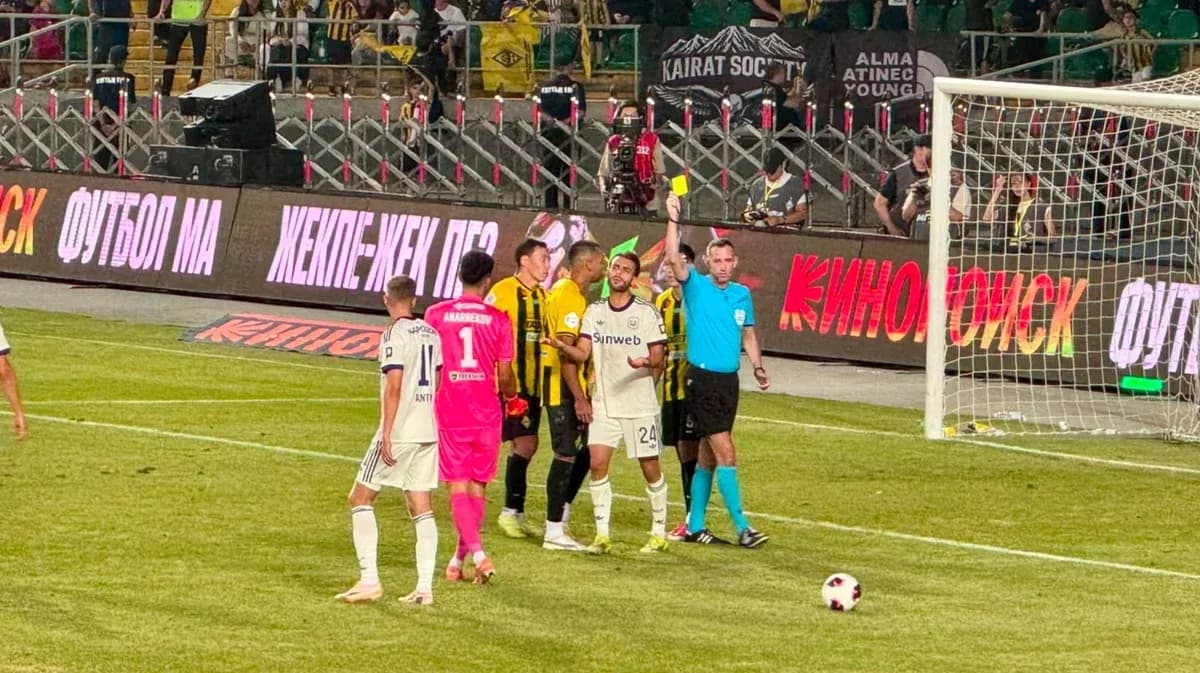
The turning point, beyond the early own goal, was Aleksandr Shirobokov’s red card at 39'. Down to ten, Kairat’s back line lost its right-sided balance and depth cover. Urazbakhtin’s response after the break was almost entirely reactive and defensive. At 46', A. Mrynskiy (OUT) was replaced by O. Baybek (IN), a move that aimed to refresh legs in the wide areas but did not alter the structural disadvantage. Subsequent substitutions at 60' and 72' — A. Tuyakbaev (IN) for M. Gual (OUT), I. Bekbolat (IN) for Edmilson (OUT), L. Kurgin (IN) for L. Mata (OUT), and A. Sadybekov (IN) for J. Oksanen (OUT) — were more about redistributing workload than changing the tactical script. Kairat never truly shifted into a coherent pressing or counter-attacking scheme; instead, they oscillated between deep survival and sporadic, disjointed counters.
Anderlecht's Structural Superiority
Anderlecht’s 4-3-3, by contrast, was structurally superior and ruthlessly pragmatic. The back four of L. Augustinsson, G. Biancone, L. Petrot and A. Maamar enjoyed a relatively untroubled evening, reflected in Kairat’s meagre shot output and the absence of recorded goalkeeper saves for C. Coosemans. In midfield, L. Ambros and E. Llansana provided verticality and control, with M. Kana anchoring and stepping into the defensive line when needed. The front three — M. Cvetkovic, D. Sikan and J. Nga Kana — stretched Kairat’s back line horizontally, creating channels for Ambros’ late arrivals.
The shot profile underlines Anderlecht’s control: 4 shots on goal, 2 off goal, and a striking 5 blocked shots. The high number of blocked efforts suggests sustained pressure around the Kairat box, with defenders forced into last-ditch interventions rather than proactive defending higher up. It also hints at Anderlecht’s willingness to shoot from promising zones repeatedly, trusting that volume and territory would eventually tell — which it did, with three first-half goals and no need to overextend in the second period.
Discipline and duels further highlight the game’s pattern. Anderlecht committed 17 fouls to Kairat’s 11, an indicator of how often they were breaking up potential transitions at source once they had established their lead. The visitors also collected 4 yellow cards, while Kairat received 1 yellow and the crucial red. Even without explicit reasons listed, the card distribution fits a narrative of Anderlecht using tactical fouls to manage tempo and prevent Kairat from turning rare recoveries into dangerous counters.
Substitutions and Game Management
Substitutions from Vitor Bruno were textbook game management. At 46', T. Degreef (IN) replaced M. Cvetkovic (OUT), followed by O. Antman (IN) for J. Nga Kana (OUT) at 63', M. Winkler (IN) for A. Maamar (OUT) at 74', N. Ojea (IN) for E. Llansana (OUT) at 84', and A. Bertaccini (IN) for D. Sikan (OUT) also at 84'. Each change preserved the 4-3-3 skeleton while refreshing energy in key pressing and wide zones, ensuring that Anderlecht could maintain high possession and control without risking structural disorganization.
Set pieces also reflected the territorial imbalance: Anderlecht earned 8 corner kicks to Kairat’s 2. That volume of corners, combined with their possession share and blocked shot count, shows how often the Belgian side established long attacking sequences, pinning Kairat back and forcing clearances under pressure. Kairat’s lower foul count was less about discipline and more about their inability to contest high up the pitch; they simply spent too much time in a low block, reacting rather than engaging.
Without recorded xG or passing data, the clearest statistical verdict is still stark. A 0-3 scoreline, 33% possession, just 4 total shots (2 on goal, 2 off, 1 blocked) and only 2 corners for Kairat paint the picture of a side that never solved the structural puzzle posed by Anderlecht’s 4-3-3, especially after going down to ten men. Anderlecht’s 4 shots on goal, 5 blocked attempts, 8 corners and 67% of the ball illustrate an away team that combined territorial dominance with risk management, turning an early lead into a controlled, professional qualification platform rather than a frantic attacking exhibition.