.svg&w=384&q=75 "Naijagoal logo")

José Mourinho's Ambitious Attack: Real Madrid's New Era
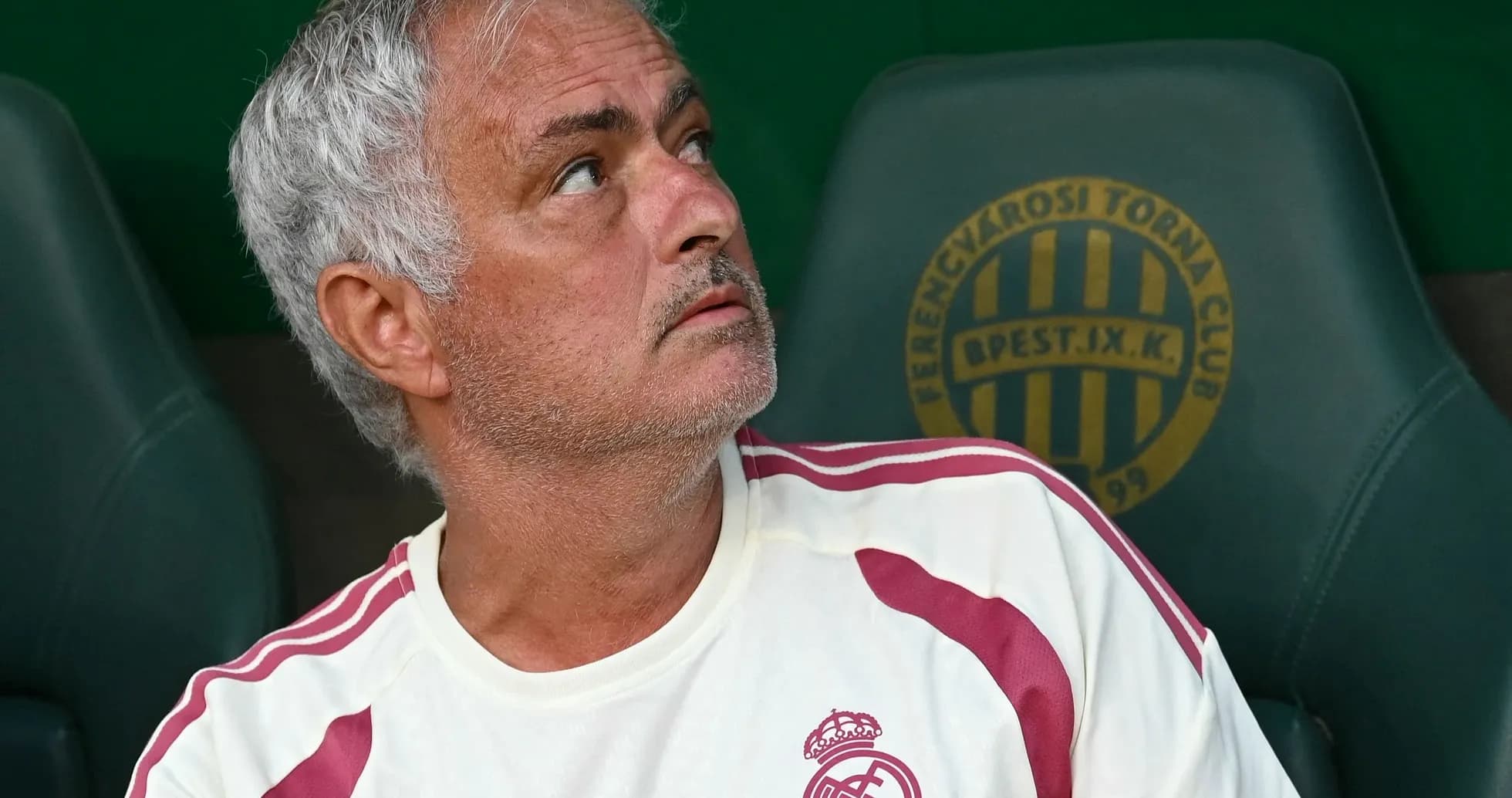
José Mourinho finally has the full picture in front of him.
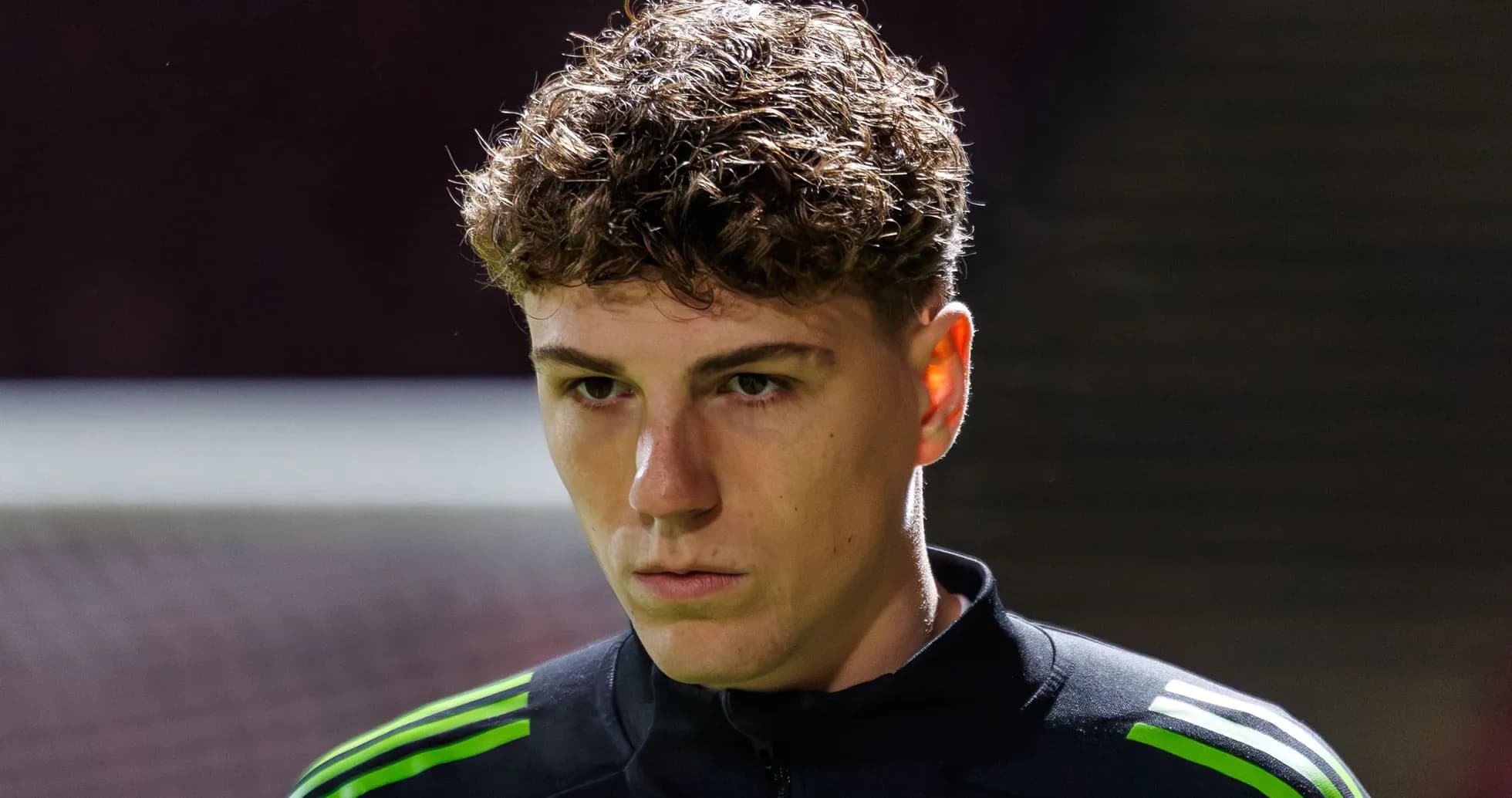
After a fragmented pre-season, the Real Madrid coach has at last been able to work with his complete squad, and with it the attacking quartet the club has built its new era around: Yan Diomande, Kylian Mbappé and Vinícius Júnior ahead of Jude Bellingham in the playmaker role. On paper, it is a forward line that bends the market and stretches the imagination.
Transfermarkt values the four at a combined 590 million euros. Mbappé sits at 200 million, Bellingham at 160, Vinícius at 140 and Diomande at 90. Those are video-game numbers, but Madrid’s accountants will point to something else: the actual outlay came to around 313 million euros before add-ons.
The breakdown is clear enough. Mbappé arrived as a free agent but with a signing-on bonus of nearly 40 million euros, an estimate the club has never officially confirmed. Diomande cost 125 million, Bellingham 103 and Vinícius 45. Once potential bonuses are included, the total climbs to 358 million euros, with 15 million more earmarked for Leipzig in the Diomande deal and around 30 million tied to Bellingham’s performance clauses. Even at the top end of that range, the bill still sits comfortably below their current combined market value.
The football, though, is what really interests Madrid.
The four could step onto the pitch together for the first time on Sunday in Gelsenkirchen, when Real Madrid face Schalke in their final friendly before the Spanish league opener against Espanyol on 22 August. That date has been circled for weeks at Valdebebas. The Schalke game offers Mourinho a dress rehearsal.
For now, he is not overcomplicating things. The 4-2-3-1 remains his base. Mbappé leads the line as the central striker, Bellingham drops into the No 10 role where he dazzled in his first season in Madrid and at the last World Cup under Thomas Tuchel, and Vinícius and Diomande attack from the flanks. It is a shape that keeps Bellingham close to the box, where his late runs and instinctive finishing turn him into a second forward as much as a creator.
We saw a glimpse of something different late in the friendly against Deportivo. A move to 4-4-2, and the occasional 4-3-3, dragged Bellingham further away from the danger zone and saddled him with more defensive work. That shift may return in tougher games, but it runs against the club’s main idea: to unleash this quartet as a pure attacking force, not dilute it.
Madrid are not hiding the scale of their ambition. The reference point is obvious: the “BBC” era of Karim Benzema, Gareth Bale and Cristiano Ronaldo. Yet internally there is a sense that this project is designed not just to revive that memory, but to go beyond it. The club has stacked an attacking weight in a single lineup that is rarely seen in the modern game, especially with Financial Fair Play limits tightening around Europe.
The numbers from last season explain the excitement. Between them, Mbappé, Vinícius, Diomande and Bellingham scored 121 goals and delivered 36 assists. Mbappé led with 42 goals, Vinícius added 22, Diomande 13 and Bellingham 8 in an injury-affected campaign. In terms of creativity, they supplied 7, 14, 10 and 5 assists respectively.
Madrid expect those figures to rise. Bellingham has already shown his ceiling in Spain with a 23-goal, 13-assist debut season in white. Diomande arrives from Leipzig having carried far more responsibility in a less explosive attacking unit; now he plugs into a front line loaded with pace, movement and finishing.
Strip Bellingham out and look only at the front three of Mbappé, Vinícius and Diomande and the picture is still formidable: 77 goals and 31 assists last season. Across Europe, only two trios outperformed that output.
- At Bayern Munich, Harry Kane, Luis Díaz and Michael Olise combined for 109 goals and 61 assists, an outrageous return that set the benchmark.
- Barcelona’s Ferran Torres, Raphinha and Lamine Yamal produced 85 goals and 33 assists, driving their own title challenge.
- Manchester City’s trio of Erling Haaland, Jérémy Doku and Savinho finished with 57 goals and 26 assists, still elite by any standard.
- In France, Paris Saint-Germain relied on Khvicha Kvaratskhelia, Ousmane Dembélé and Désiré Doué, who together hit 52 goals and 33 assists.
- Arsenal’s attacking line of Viktor Gyökeres, Gabriel Martinelli and Bukayo Saka closed at 43 goals and 19 assists.
This is the company Real Madrid now expect to dominate, not merely join.
The financial gamble is clear, the tactical framework is taking shape, and the first real test looms in Gelsenkirchen. The question is no longer whether this quartet is expensive enough or hyped enough. It is how far they can drag Madrid, and how quickly, back to the very top of Europe.